
Guides
Weave & Fabric Guides
The craft behind the drape — where each weave comes from, what makes it distinct, and how to care for it. Every guide is paired with the pieces we currently have in stock.
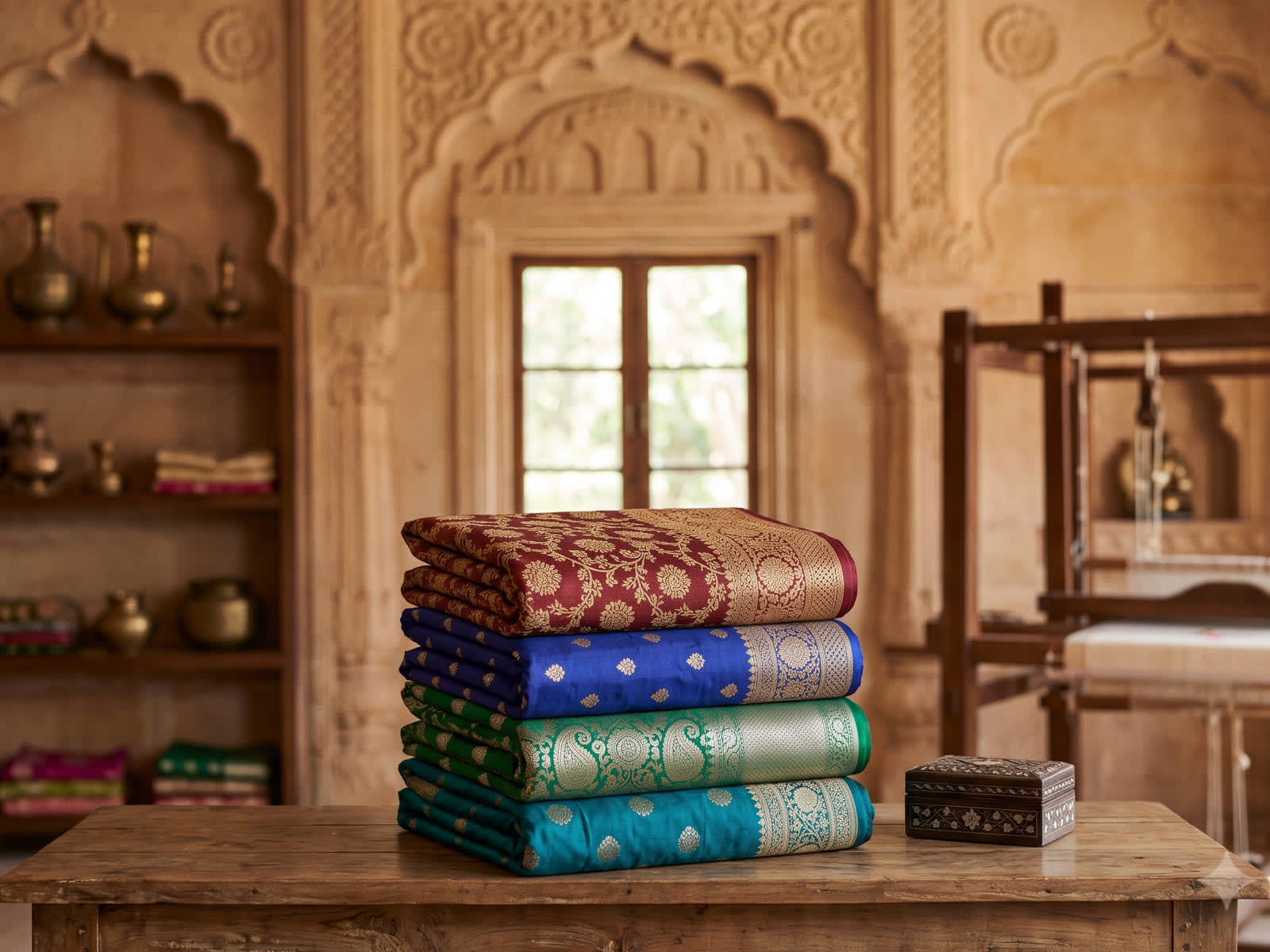
Varanasi, Uttar Pradesh
Banarasi Sarees
A Banarasi is the saree most Indian families reach for when the occasion actually matters. It is woven in Varanasi on handlooms that have not fundamentally changed in four centuries, and you know one by its weight, its Mughal-descended florals, and zari that finds the light from across a room. A modest one takes a couple of weeks. A serious one takes months.
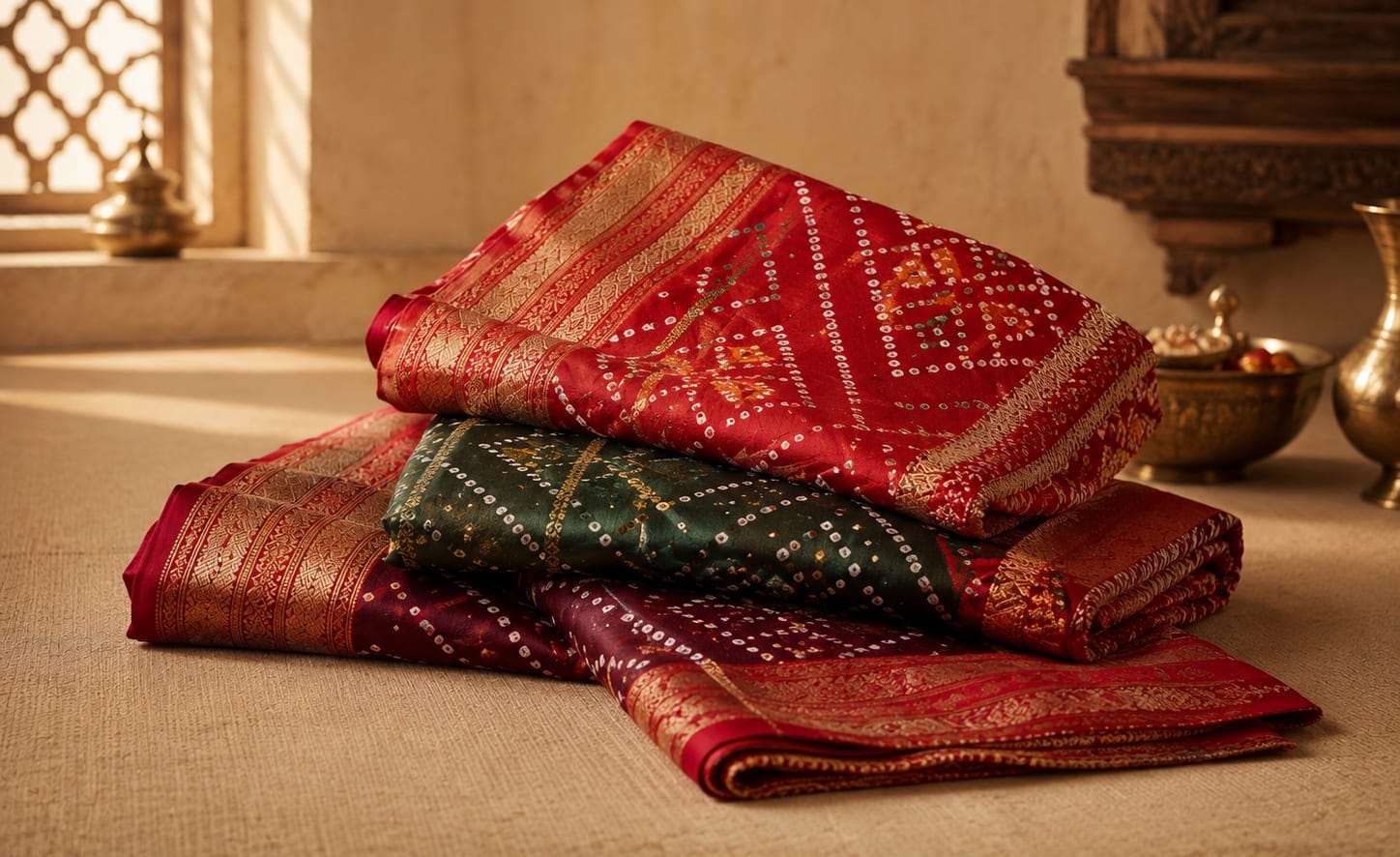
Kutch, Gujarat
Gajji Silk Sarees
Gajji is a satin-weave silk from Kutch, and it behaves unlike any other silk you have handled — glassy and light-catching on the face, quietly matte and grippy on the reverse. It is the cloth Gujarat traditionally reserves for bandhani, because that same dense satin surface holds a tie-dyed dot without letting it bleed. Most Gajji sarees worth owning are really two crafts stacked on top of each other.
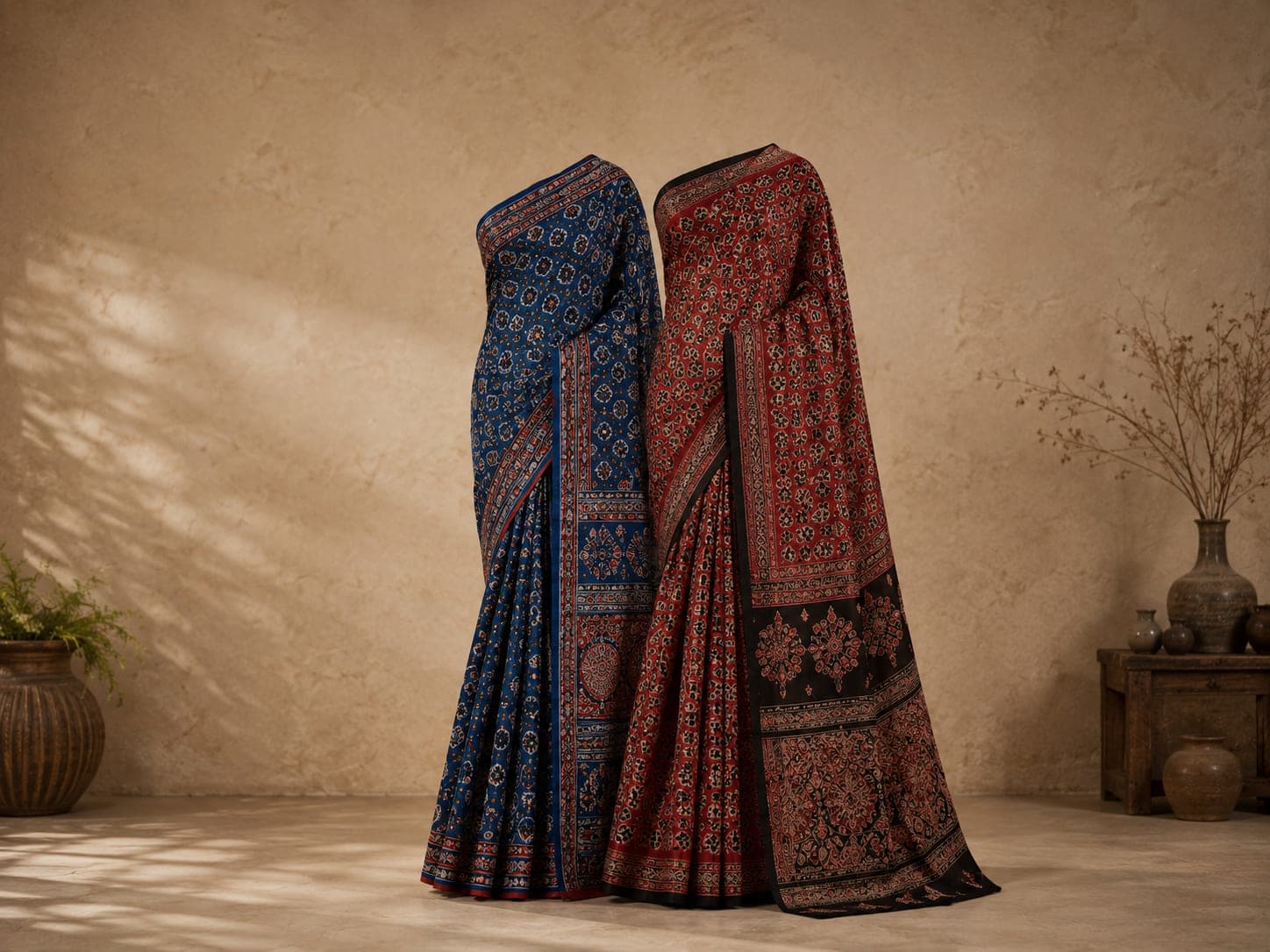
Ajrakhpur and Bhuj, Kutch, Gujarat
Ajrakh Sarees
Ajrakh is a resist block print from Kutch that takes about a month and sixteen separate stages to produce, using indigo, madder root, iron, myrobalan and — genuinely — camel dung and river water. The result is a deep blue-and-madder-red geometry that has barely changed in four hundred years. It is one of the very few Indian textiles still made almost entirely with natural dyes.
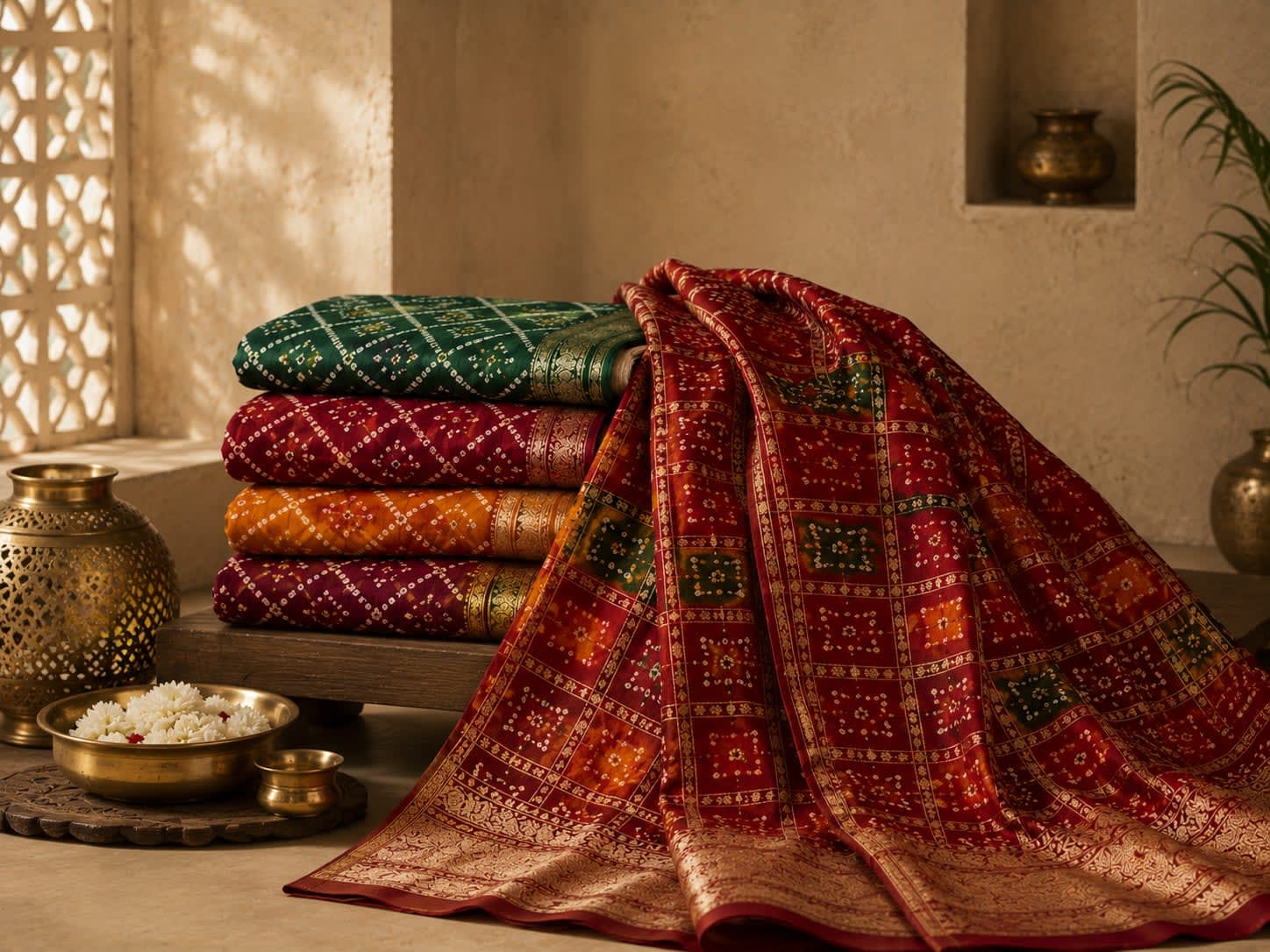
Kutch and Jamnagar, Gujarat; Jodhpur, Sikar, Bikaner and Udaipur, Rajasthan
Bandhani Sarees
Every dot on a Bandhani saree is a knot. Thousands of points are pinched up and bound with thread before the cloth goes near dye, which is why the reverse of a real one looks almost the same as the front. The craft belongs to Khatri dyers in Kutch and Jamnagar in Gujarat, and to Marwar and Shekhawati in Rajasthan. Printed imitations are common.
West Bengal
Jamdani Sarees
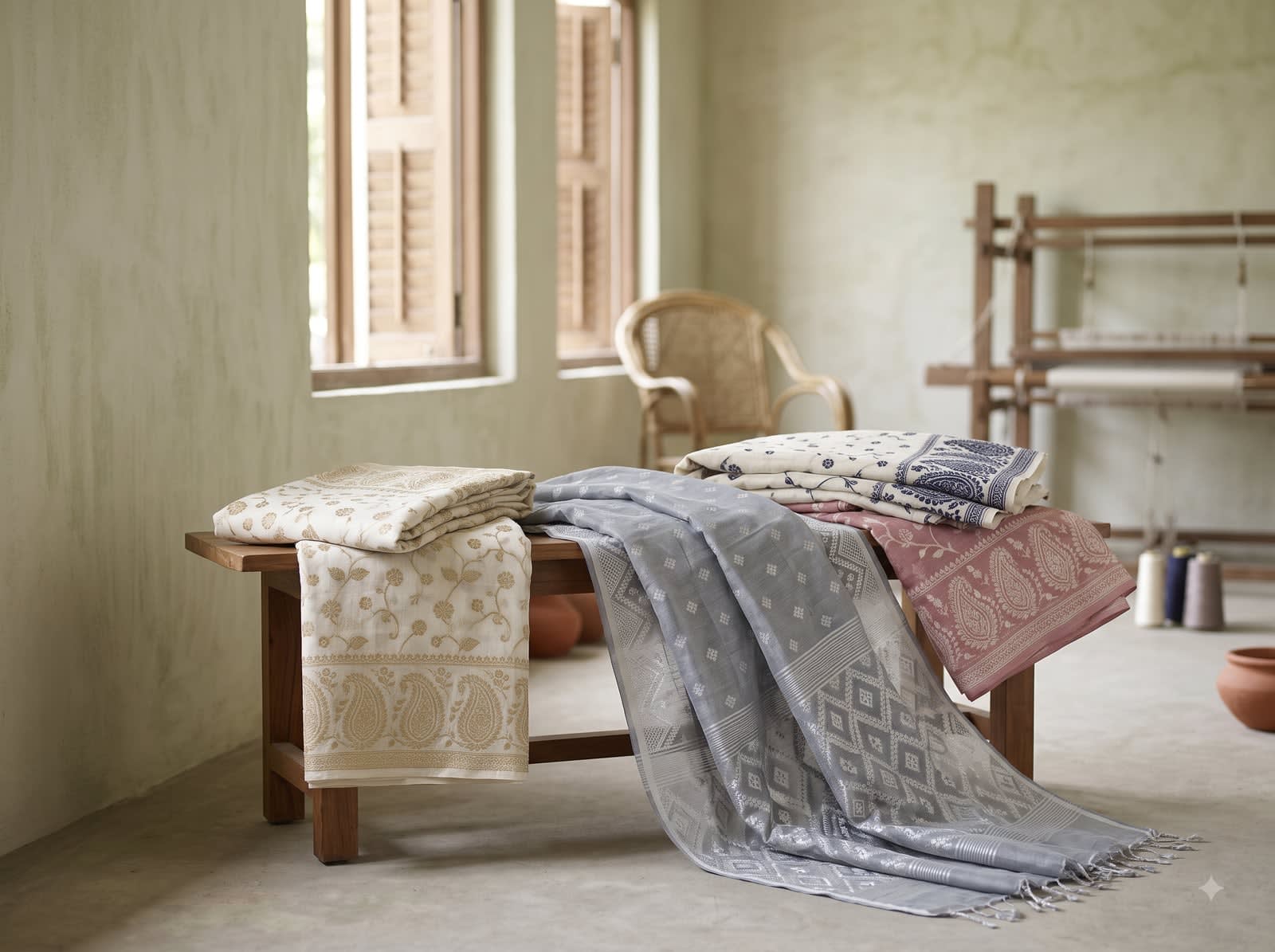
A Jamdani saree carries its pattern inside the cloth. Every motif is picked in by hand at the loom, each from its own small spool of thread, which is why a fine one takes months and why the reverse of a real one looks nothing like a machine copy. The technique is Bangladeshi in origin, UNESCO-listed since 2013, and woven in India as well.
Srikalahasti and Machilipatnam, Andhra Pradesh
Kalamkari Sarees
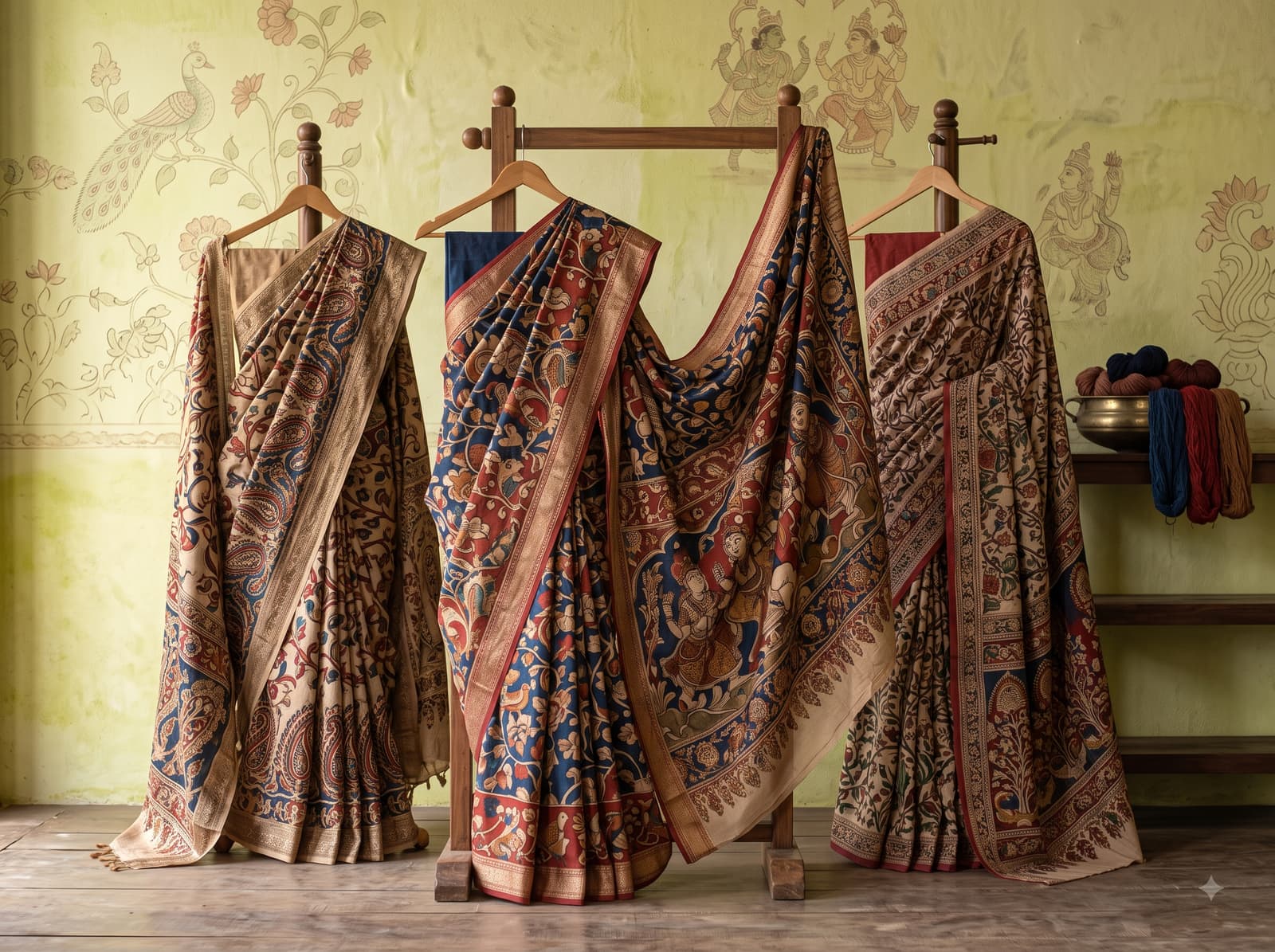
A Kalamkari saree is one of two quite different crafts that share a name. Srikalahasti Kalamkari is drawn freehand with a bamboo pen. Machilipatnam Kalamkari is printed from carved teak blocks. Both use natural dyes, and both hold Geographical Indication tags. Most of what sells as Kalamkari today is neither of them: it is screen print on mill cotton.
Bhoodan Pochampally, Puttapaka and Koyyalagudem, Yadadri Bhuvanagiri district, Telangana
Pochampally Ikat Sarees
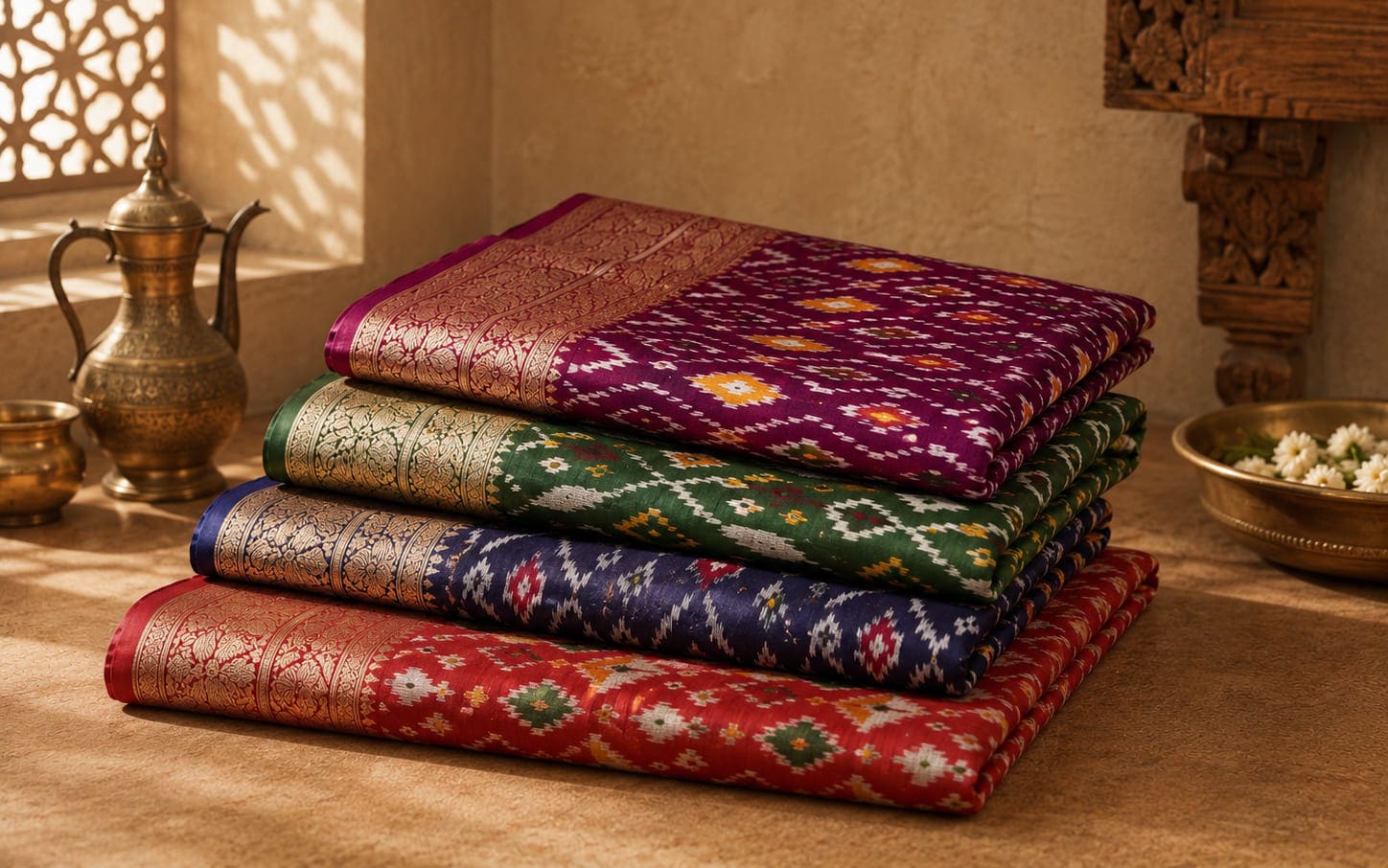
A Pochampally Ikat saree carries its pattern in the yarn rather than on the cloth. The threads are tied and dyed to a calculated design before a single pick is woven, which is why the pattern reads on both faces and why the edge of every motif is faintly blurred. The craft belongs to Bhoodan Pochampally and the villages around it in Telangana.