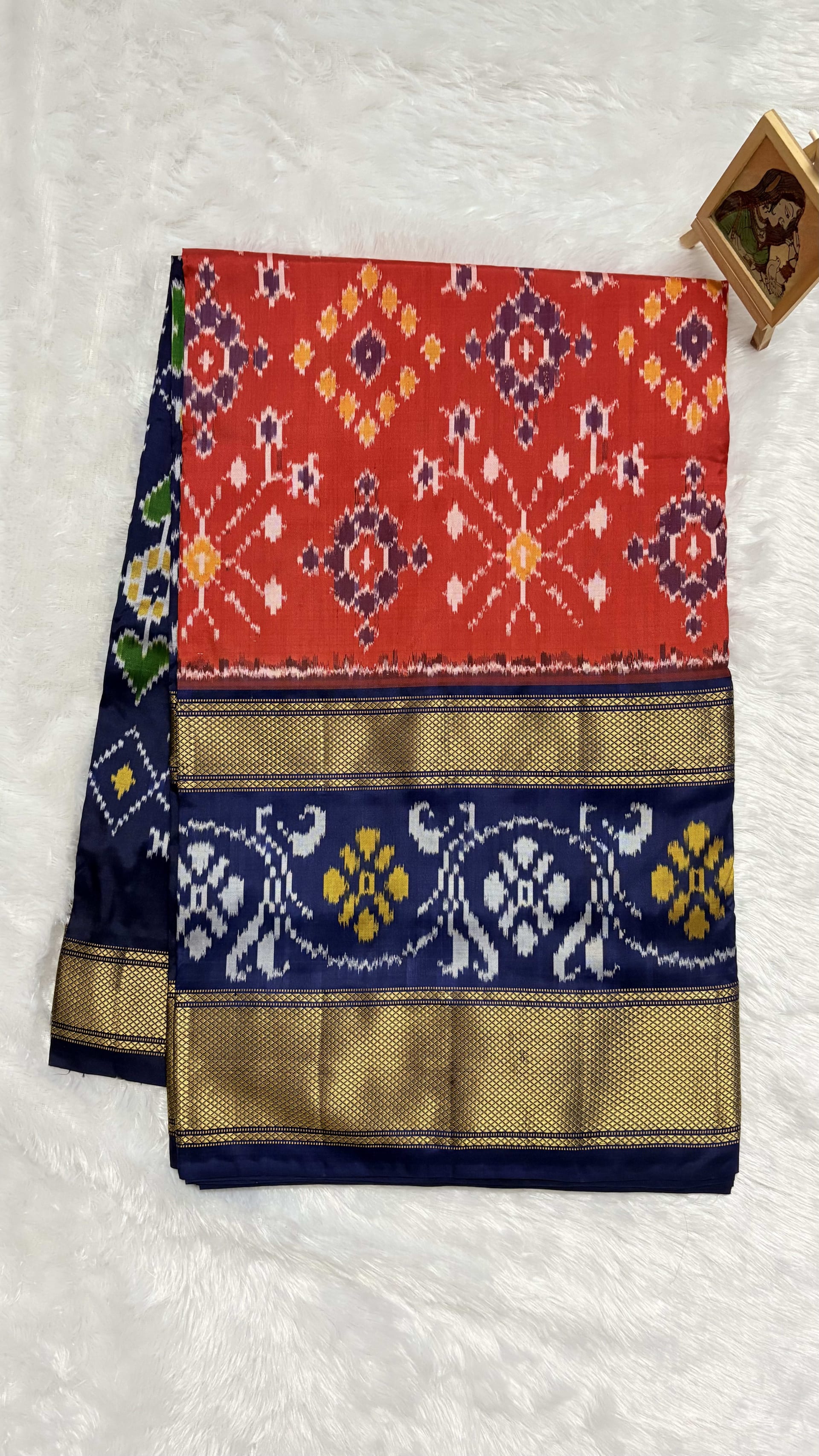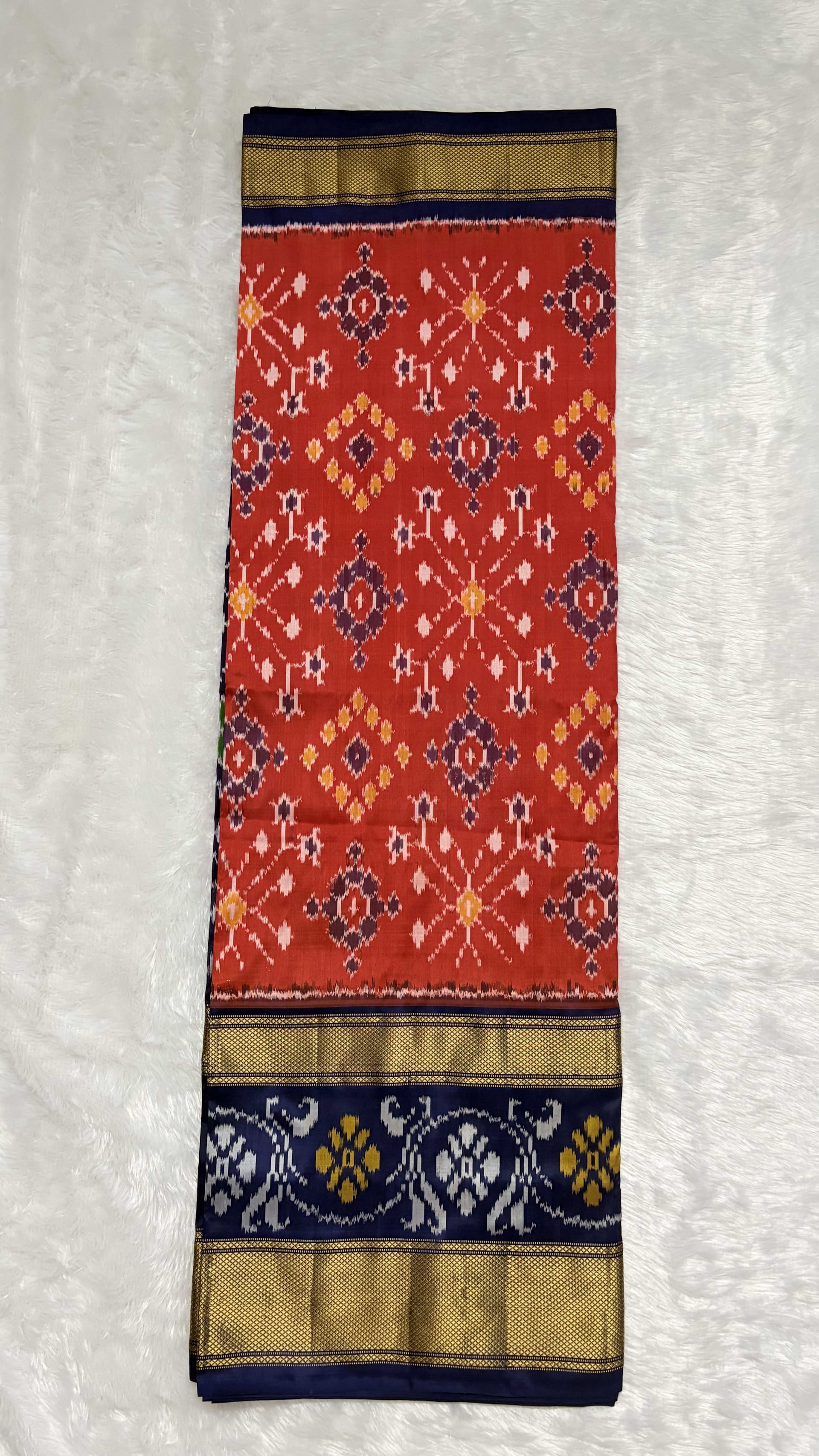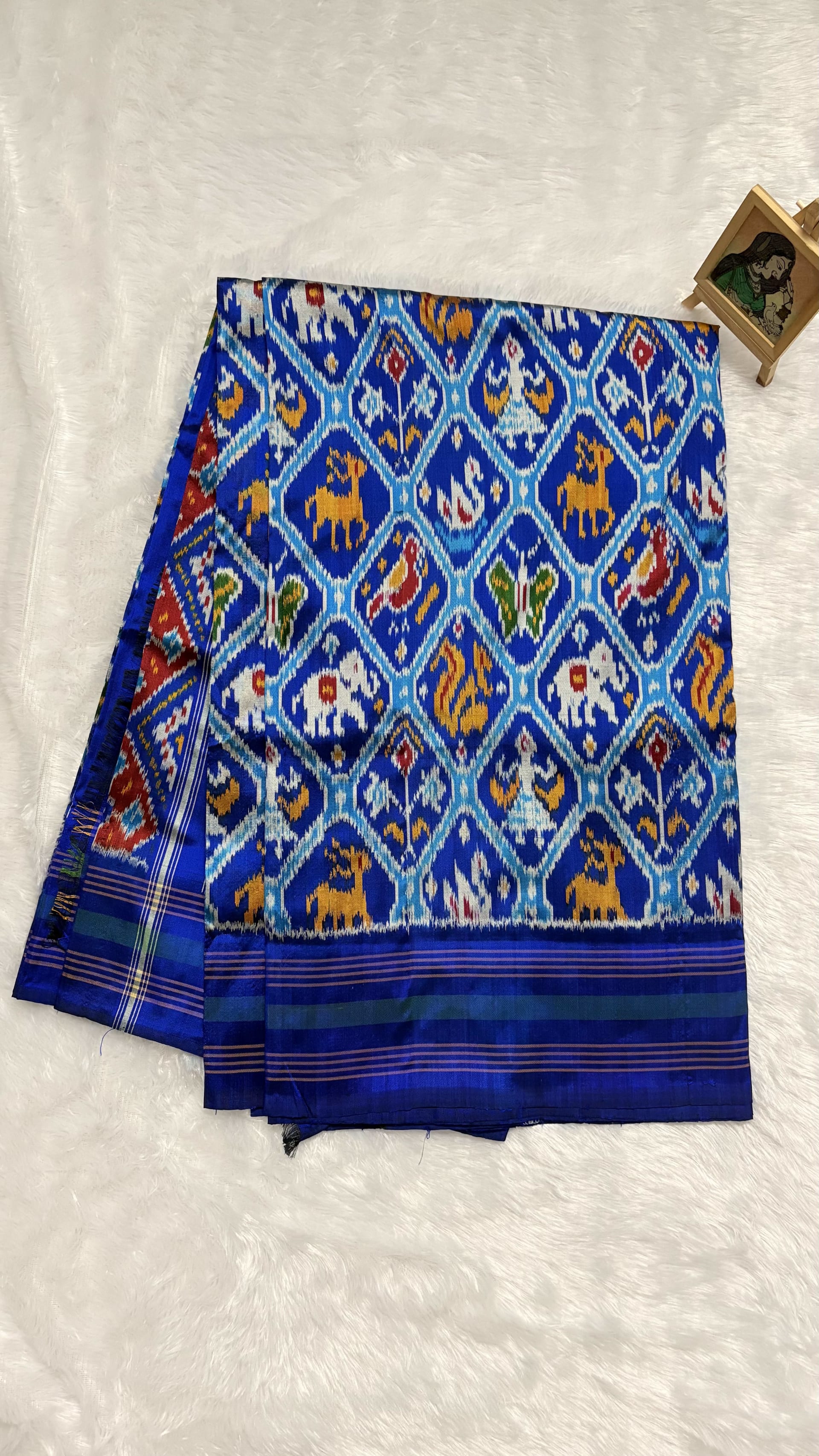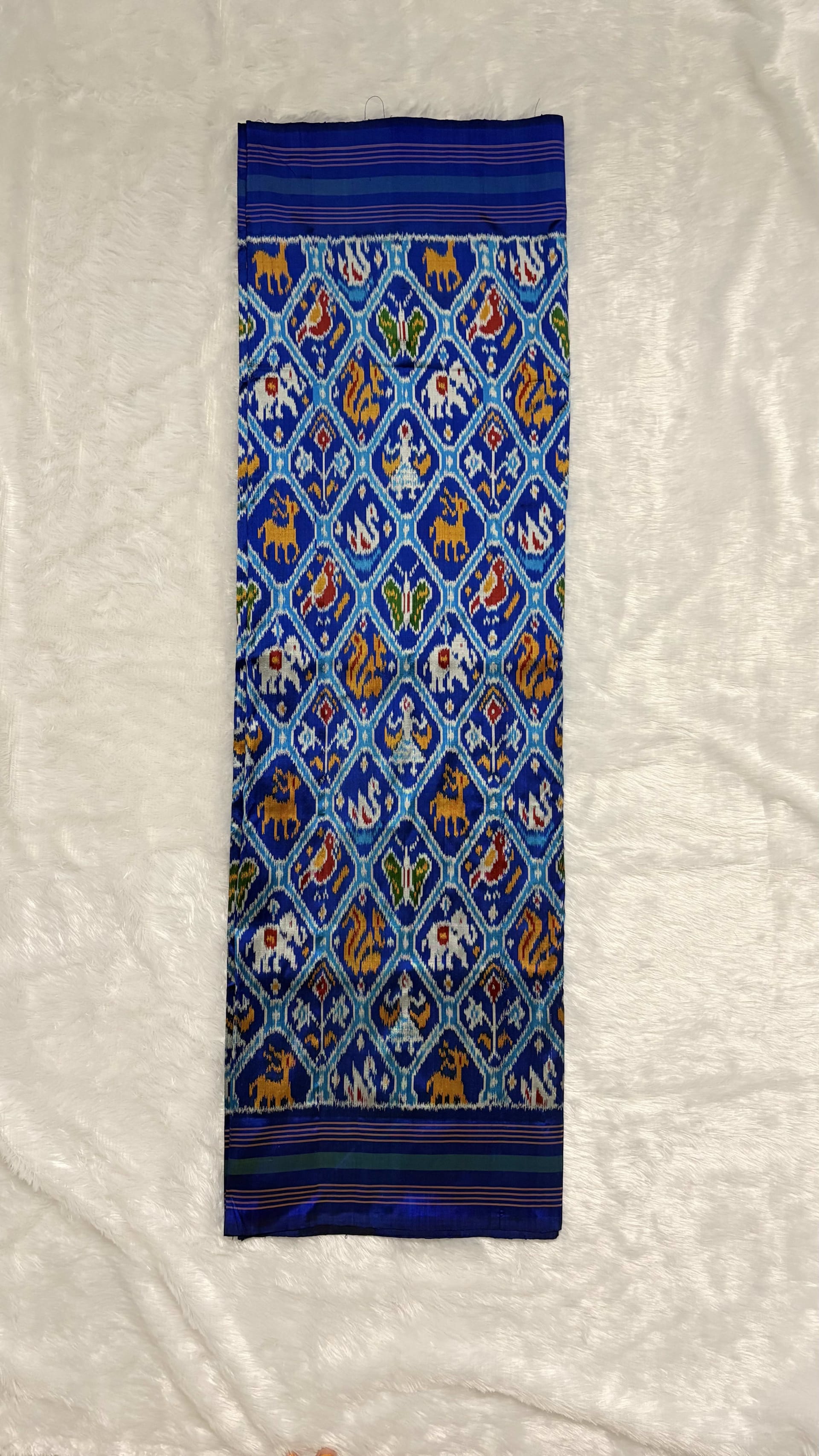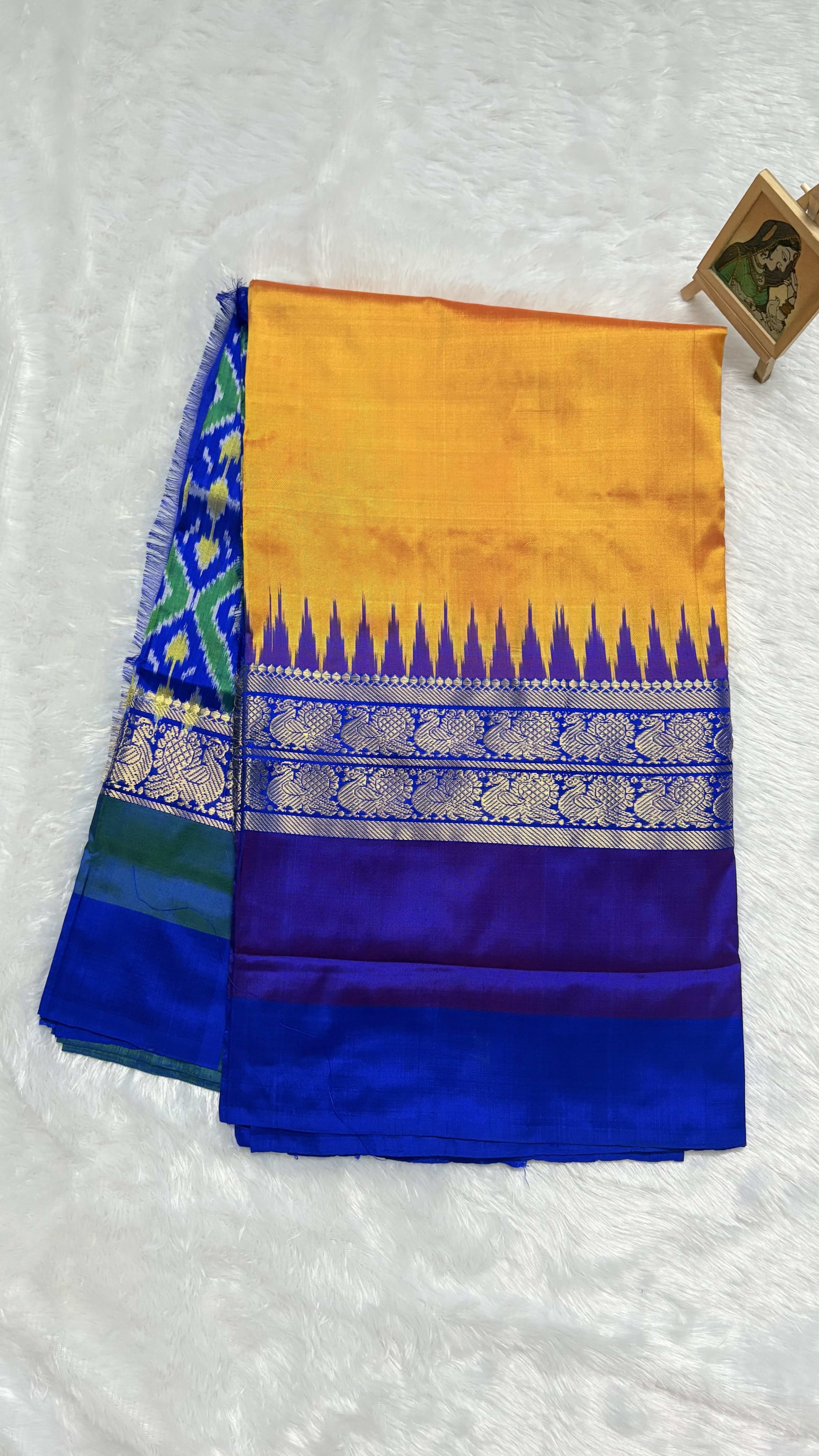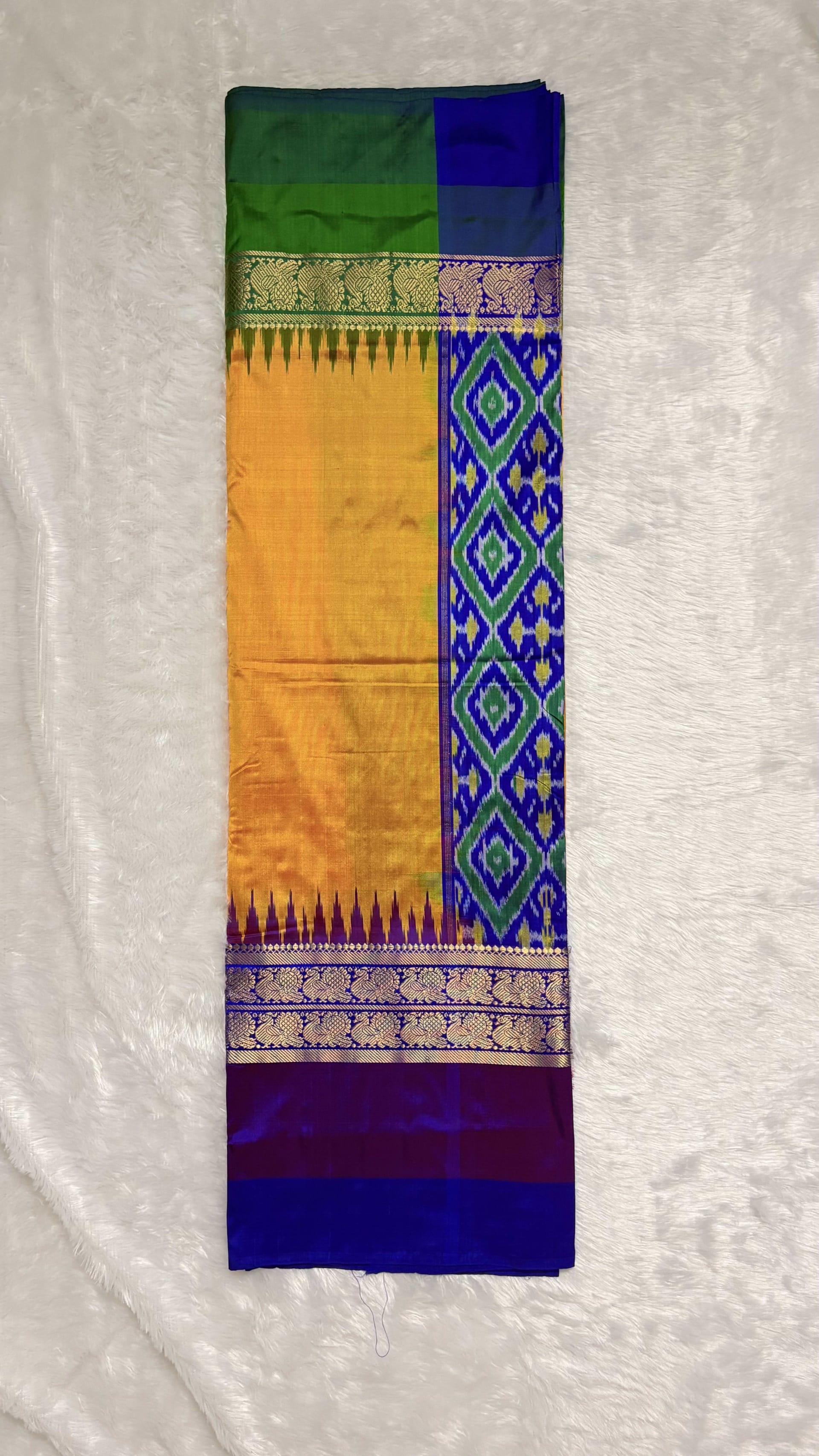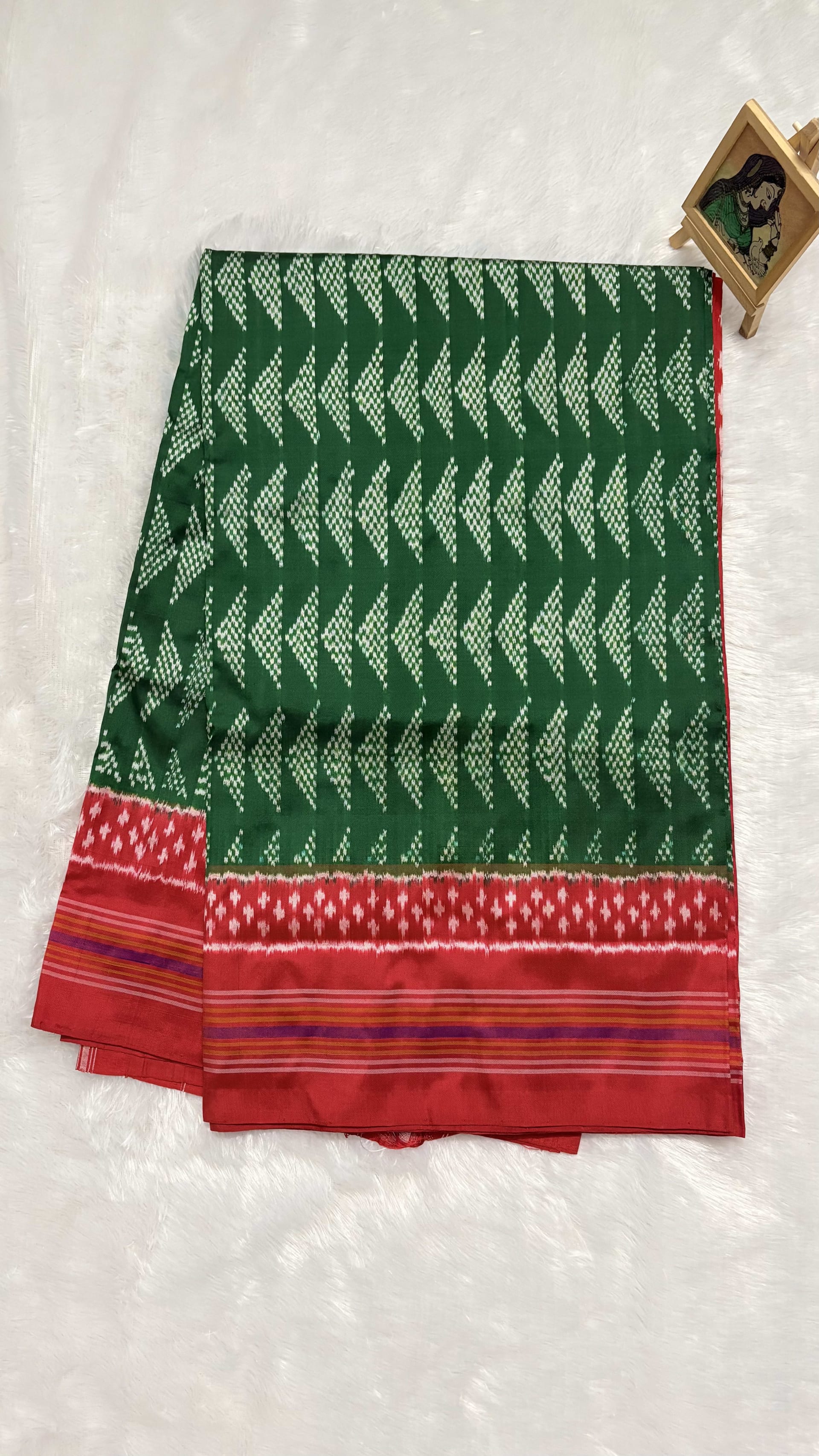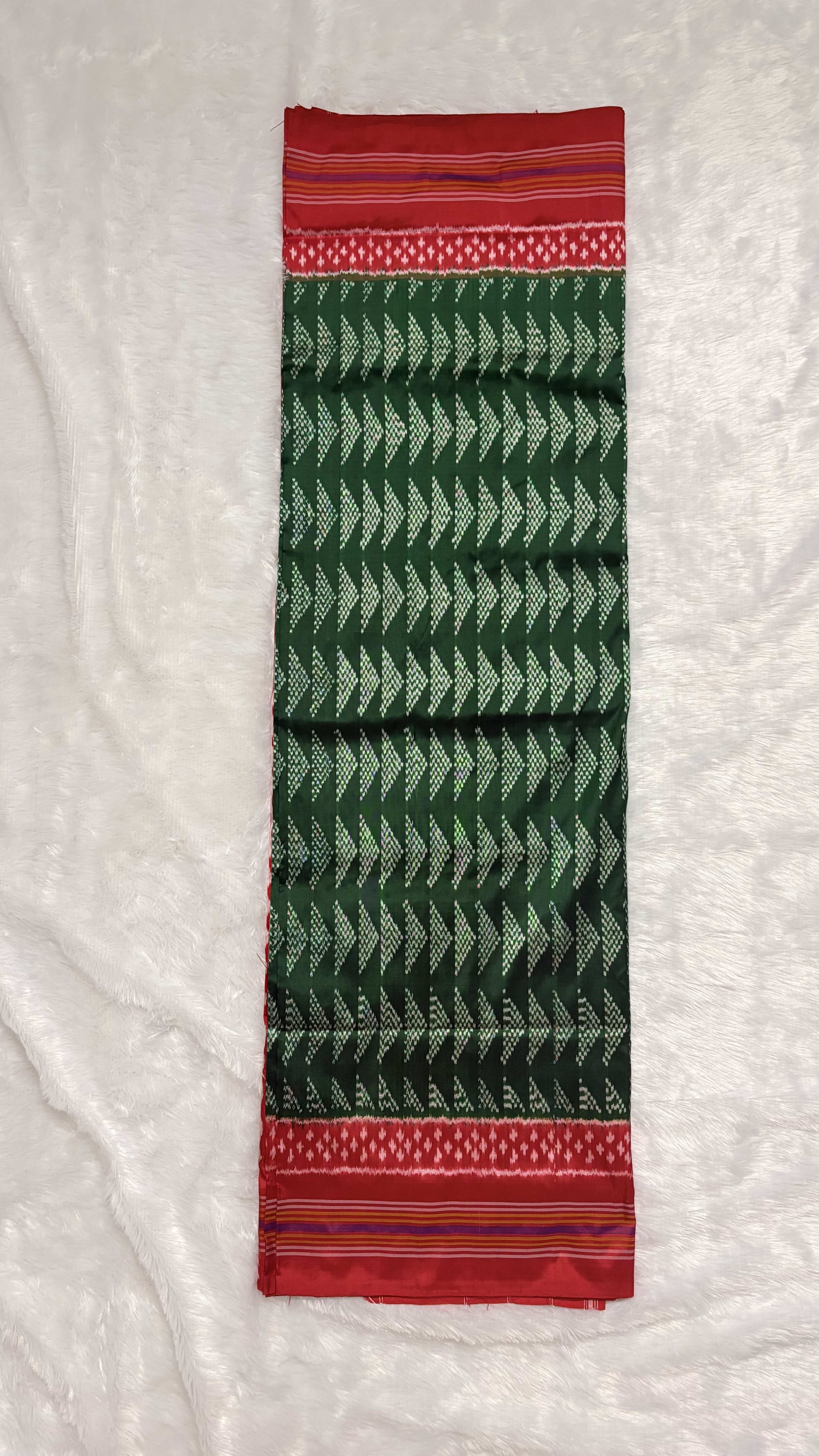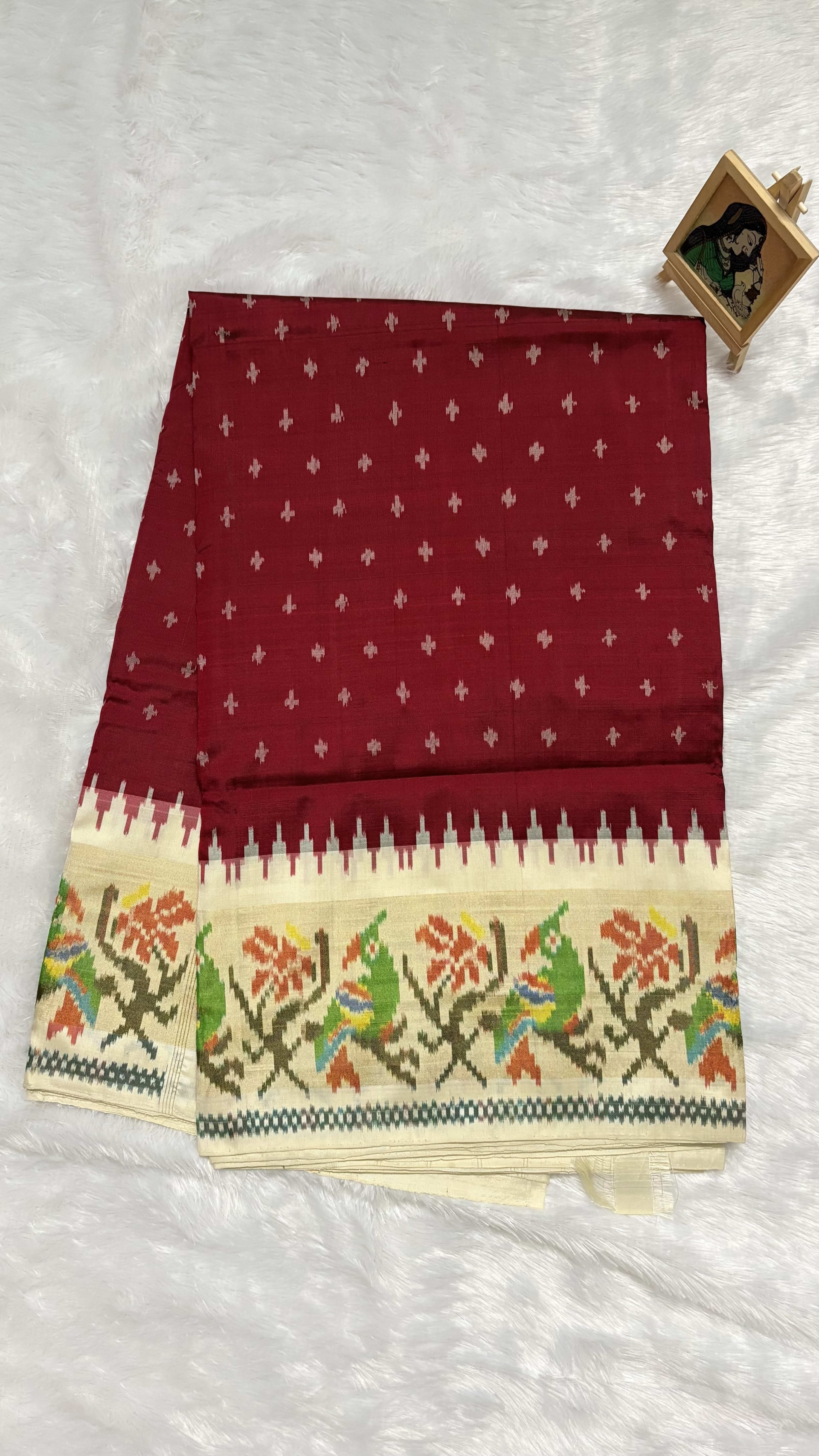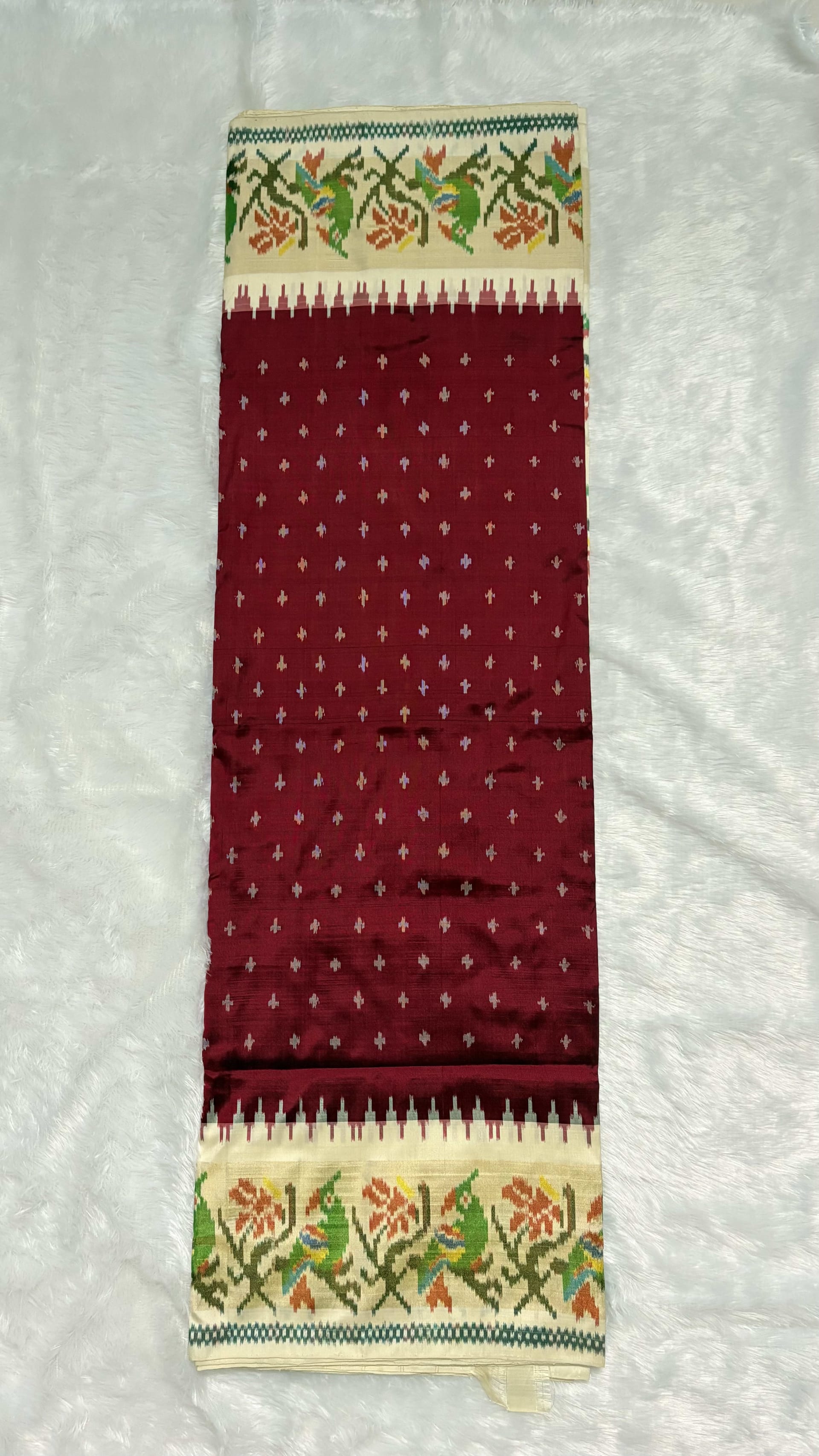
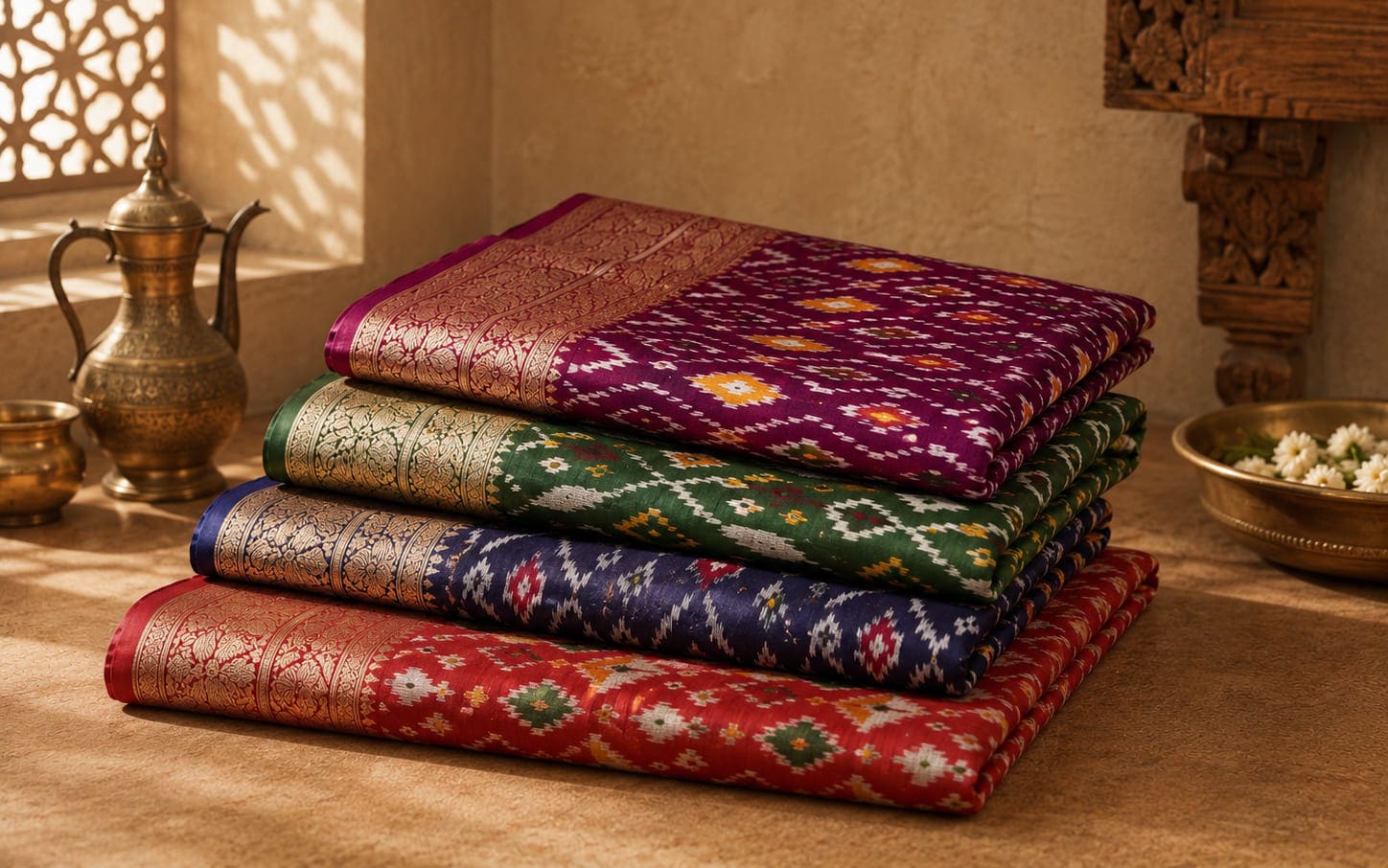
A place, not a pattern
Pochampally is a place. The name on a label should mean the cloth came from there or from the villages around it, and nothing else.
The town is Bhoodan Pochampally, in Pochampalle mandal, roughly 50 kilometres east of Hyderabad. Get the district right, because most writing on the subject has not caught up. It sat in Nalgonda district for decades and is still quoted that way almost everywhere, but Telangana's 2016 reorganisation moved it into Yadadri Bhuvanagiri district. A seller who says Nalgonda is usually not lying to you. They are reading an old map, along with most of the internet. The weaving cluster itself is wider than the one town and always was, spread across the old Nalgonda and Warangal areas. The villages that matter alongside Pochampally are Puttapaka, Koyyalagudem, Chautuppal and Gattuppal. Published surveys count over 5,000 looms in Pochampally itself and more than 10,000 weaving families across roughly a hundred villages.
The Bhoodan in the name is not decorative. On 18 April 1951 Vinoba Bhave came to the village, landless families asked him for land, and a local landowner, V. Ramachandra Reddy, gave 100 acres that same evening. That gift began the Bhoodan land-gift movement, and the village took its name from it.
The craft is older here than the town's fame. Ikat reached the coastal town of Chirala first, and spread inland to Pochampally and Puttapaka in the first quarter of the twentieth century. Textile scholarship traces double ikat's arrival in the region to Gujarati patolas transhipped through Masulipatam in the seventeenth century, and reads simple weft-ikat bands into the Ajanta murals long before that.
On the Geographical Indication, be precise, because the loose version of this story gets repeated everywhere. Pochampally Ikat is application number 4 in the Indian GI register, among the very first products registered in the country and the first handloom among them. Sources disagree on the year, as they usually do: the registration date is generally given as 31 December 2004, though some references say 2005. The first ten-year term ran to 14 December 2023 and was renewed the following day for another decade. Reports also differ on who holds it, naming either the Pochampally Tie and Dye Association or the local weavers' cooperative society and manufacturers' association. Both disagreements are worth reporting rather than tidying away, because a seller who states any of it with total confidence is telling you how little they checked.
Two other recognitions are real. Pochampally was named one of the UN World Tourism Organization's Best Tourism Villages in 2021. And Bhoodan Pochampalli mandal and Koyyalagudem sit on UNESCO's tentative World Heritage list, added in April 2014 within the serial nomination Iconic Saree Weaving Clusters of India.
The design goes into the thread first
Ikat dyes the yarn, not the cloth. Everything else follows from that.
A printed saree is woven plain and then has a pattern applied to its surface. An ikat saree has no pattern to apply. The design is already inside the threads before they reach the loom, put there while the yarn was still loose, and the weaver's job is to rebuild it by putting those threads back in exactly the right order.
The Telugu name for the technique is paagadu bandhu, yarn tie-resist dyeing. You will also hear chitki and buddabhashi. The word ikat is an import, from the Malay mengikat, to tie.
Work starts on graph paper. The design is plotted square by square, and from that the weaver calculates which threads take which colour over which exact length. Get the arithmetic wrong and the pattern will not assemble on the loom.
The yarn is grouped into bundles and stretched on a frame; Puttapaka weavers use a curved pegged frame called a chitkaasu for the weft. Sections that must stay clear of a colour are bound tightly with cotton thread and rubber tyre tube. In the dye bath the exposed lengths take the colour and the bound lengths do not. The bindings are then cut, moved, and the yarn dyed again darker. Dyeing runs light to dark, one full tie-dye-retie cycle per colour.
The dyed yarn is dried, wound and mounted on a pit loom, and this step decides whether the saree works. Every thread must sit where the arithmetic says, and the weaver keeps correcting alignment as the cloth grows.
Published timings vary so widely that you should distrust any single figure. Accounts run from about a week for a simple piece, to twenty days of yarn preparation before a week at the loom, to four months for complex designs.
The most demanding version is the telia rumal, and the extra work is all in the yarn. Cotton is steeped for a day in dung and water, then worked by hand in a paste of sesame or castor oil and castor-pod ash, pressed and sun-dried. That cycle repeats daily, most accounts say for sixteen days, before any tying begins. The oil softens the yarn, helps the red strike, and leaves a faint smell of gingelly oil in the finished cloth.
Single, double, combined
Three arrangements exist, and the word ikat on its own does not tell you which one you have. Ask before you ask anything else about a piece, because most of the later questions depend on the answer. Single ikat resist-dyes either the warp or the weft, with the other direction plain. Double ikat resist-dyes both, and the two patterns must meet at every intersection. Combined ikat uses dyed warp in one part of the cloth and dyed weft in another. Pochampally works all three. Most of what is sold is single ikat, and there is nothing at all wrong with that as long as it is described and priced as single ikat.
The blur is the proof
The dominant fake here is not a powerloom ikat. It is an ordinary saree with an ikat pattern screen-printed onto it, and once you know where to look it gives itself away in seconds.
Turn it over. This is the whole test in one move, and it works because of how ikat is made. The yarn was dyed before it was woven, so the colour goes right through the thread and the reverse of a genuine ikat shows the pattern at close to the same strength as the front. A print sits on the surface: its back is pale, muddy, or blank. Fold the saree so the front and back lie side by side and compare them directly rather than from memory.
Look at the edge of every motif. True ikat has a soft, feathered, faintly stepped edge where two colours meet. It is neither a design choice nor a defect. Pre-dyed threads shift very slightly as the cloth is beaten up on the loom, and that unavoidable movement blurs the boundary. Razor-sharp edges mean a print, an embroidery, or a jacquard.
Then check whether the feathering is irregular. This matters more than the feathering itself, because printers now reproduce the blur deliberately. A printed blur is copied from one original and comes out identical everywhere the motif repeats. Real feathering varies from motif to motif, because each one records a slightly different movement of yarn.
Compare two repeats of the same motif. Find the same shape near each end of the saree and hold them against each other. Hand-aligned yarn drifts, so the repeats will be very slightly out of register: a millimetre here, a fraction of a motif there. A screen registers identically every time, all day.
Sight along the weft in raking light. Hand-thrown picks vary a little in density over a metre because a person is beating them. A powerloom is metronomic.
Ask which ikat it is. Single or double, and if single, whether the warp or the weft carries the pattern. Anyone genuinely working with the cluster answers that immediately. Double ikat shows pattern definition running in both directions and is priced accordingly, so the answer should match the price.
Ask about the registration. Pochampally Ikat is a registered Geographical Indication with a registered proprietor and authorised users, so a GI authorised-user or Handloom Mark claim is a fair thing to ask about. The word ikat protects nothing at all. Only the place name is registered.
If you can only do one of these, do the first.
You are paying for what happened before the loom
Ikat is priced by preparation, and that is why the numbers confuse people. Most of the skilled labour in the saree happened before the loom was threaded, where the buyer cannot see it.
Colour count is the single biggest driver. Each additional colour is a complete extra cycle: cut the old bindings, re-tie the sections that must be protected, dye, dry. It is not a matter of dipping the yarn in one more bath. A four-colour design is not marginally more work than a two-colour one, it is closer to double, and the retying is the skilled part.
Single against double ikat is the next step change, and a large one. In single ikat only one set of threads carries pattern and the other direction is plain. In double ikat both are resist-dyed and the two patterns have to meet at every intersection, so the tying arithmetic doubles and the alignment work at the loom multiplies. Expect a genuine double ikat to sit well above a single ikat of similar size.
Motif density and fineness compound both of the above. Fine, small-scale patterns need more separate tied sections in the same length of yarn, and each one is bound and unbound by hand.
The design itself is real, non-recoverable labour. Plotting a pattern on graph paper and calculating the dye lengths takes days before anyone touches yarn, and that cost is spread over however many sarees come off that warp. A one-off design or a short custom run carries far more of it than a repeated pattern does.
Fibre sets a floor before any of this. Cotton, sico, the silk-cotton blend, and pure mulberry silk sit at different levels, and silk costs more to dye as well as to buy.
Risk is a genuine cost that sellers rarely mention. If the calculation is wrong or the alignment slips badly, the piece is spoiled and the yarn preparation cannot be recovered. Someone pays for that, and it is priced into the good pieces.
Telia rumal work is dearer for a specific, countable reason: roughly sixteen days of daily oil-and-ash treatment on the yarn before a single thread is tied.
Natural dyes add cost through extra baths, lower yields and a narrower palette. What should not add anything is packaging, a label, or a shop's framing.
The sanity check runs downward. If an ikat saree is priced anywhere near printed fabric sold by the metre, it is printed fabric. No amount of tying, dyeing and re-tying at an honest wage reaches that number.
Colour in the yarn cuts both ways
Ikat's strength and its weakness are the same thing: the colour is in the yarn. That makes the pattern permanent, and it makes the first few washes the risky part.
Expect colour to move early on. Ikat is dyed in deep saturated shades, reds and maroons most of all, and cloth dyed in the yarn holds a lot of surplus dye. Before any wash, dab an inside hem with a damp white cloth and see what transfers. Then wash the saree entirely on its own for the first two or three washes, whatever the test showed.
Cotton and sico ikat can be hand-washed at home. Cold water, mild detergent, work quickly, and do not soak it. Pure silk ikat, and anything with zari, should be dry-cleaned. Never machine wash any of them.
Do not wring or twist. Press the water out between flat hands or roll the saree in a towel.
Dry in shade, always, and never in direct sun. This is the one rule that matters most for ikat specifically. The pattern is not printed over the cloth as a protective layer, it is the fibre itself, so fading is not a surface problem you can live with. It takes the design down with it. Strong sun on a wet, freshly dyed saree is the fastest way to lose it.
Iron on low heat, on the reverse, ideally through a cotton cloth. Keep the iron off zari entirely. Avoid steaming and avoid sprinkling water, since droplets can leave rings on a saturated ground.
If you own a telia rumal piece, the faint oily smell is the process, not a fault. It softens with time and airing. Do not attack it with strong detergent or hot water trying to remove it, because you will take the colour with it.
Store it folded, wrapped in muslin or plain cotton, never sealed in plastic. Plastic traps moisture, which yellows silk and corrodes zari. Keep it away from lighter-coloured garments in case of dye transfer.
Refold along different lines every two or three months so a crease never becomes a permanent line, and do not leave it on a hanger for long periods.
Spray perfume and deodorant before you drape, not after. Alcohol marks dyed cloth and reacts with metallic zari.