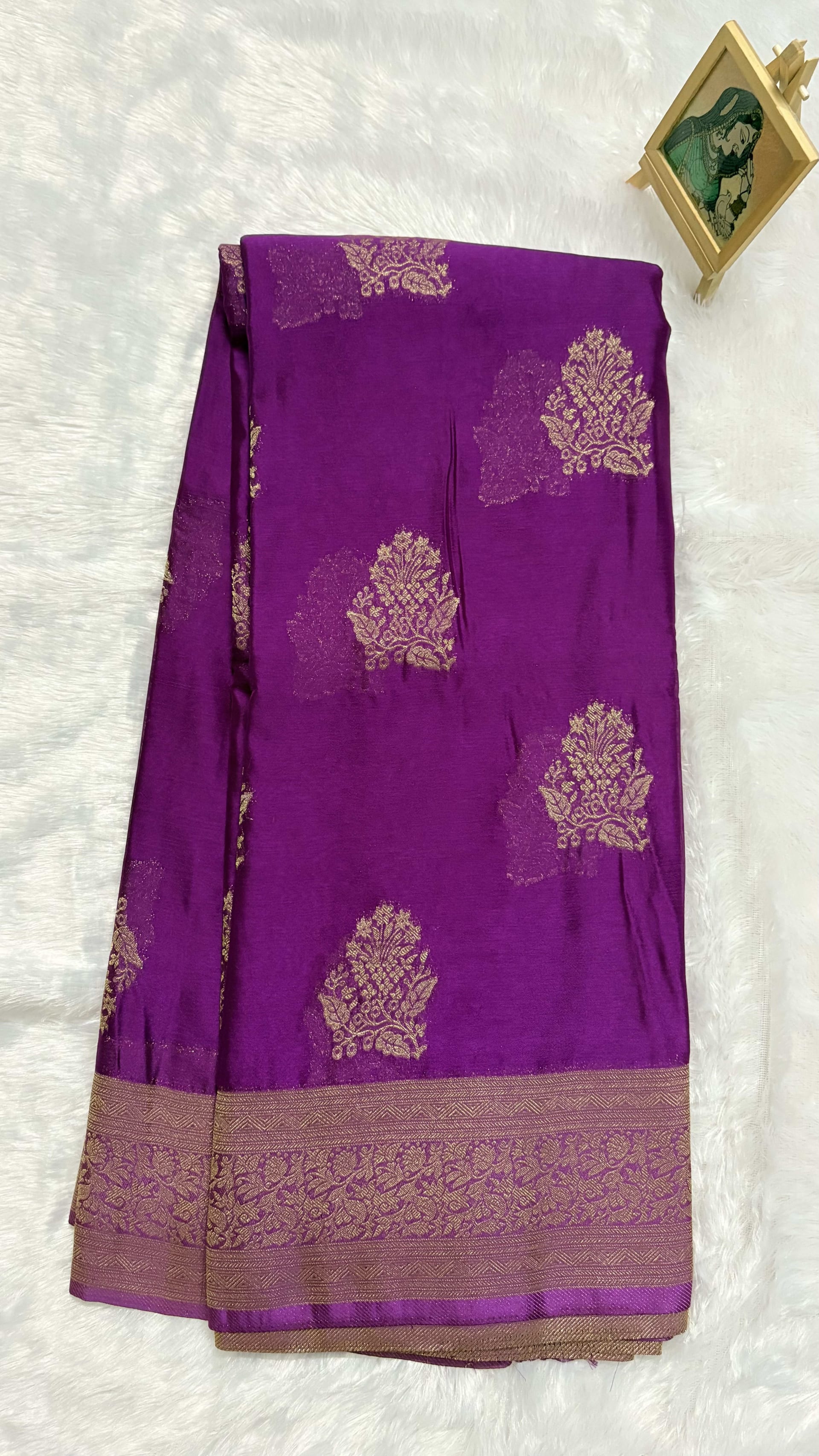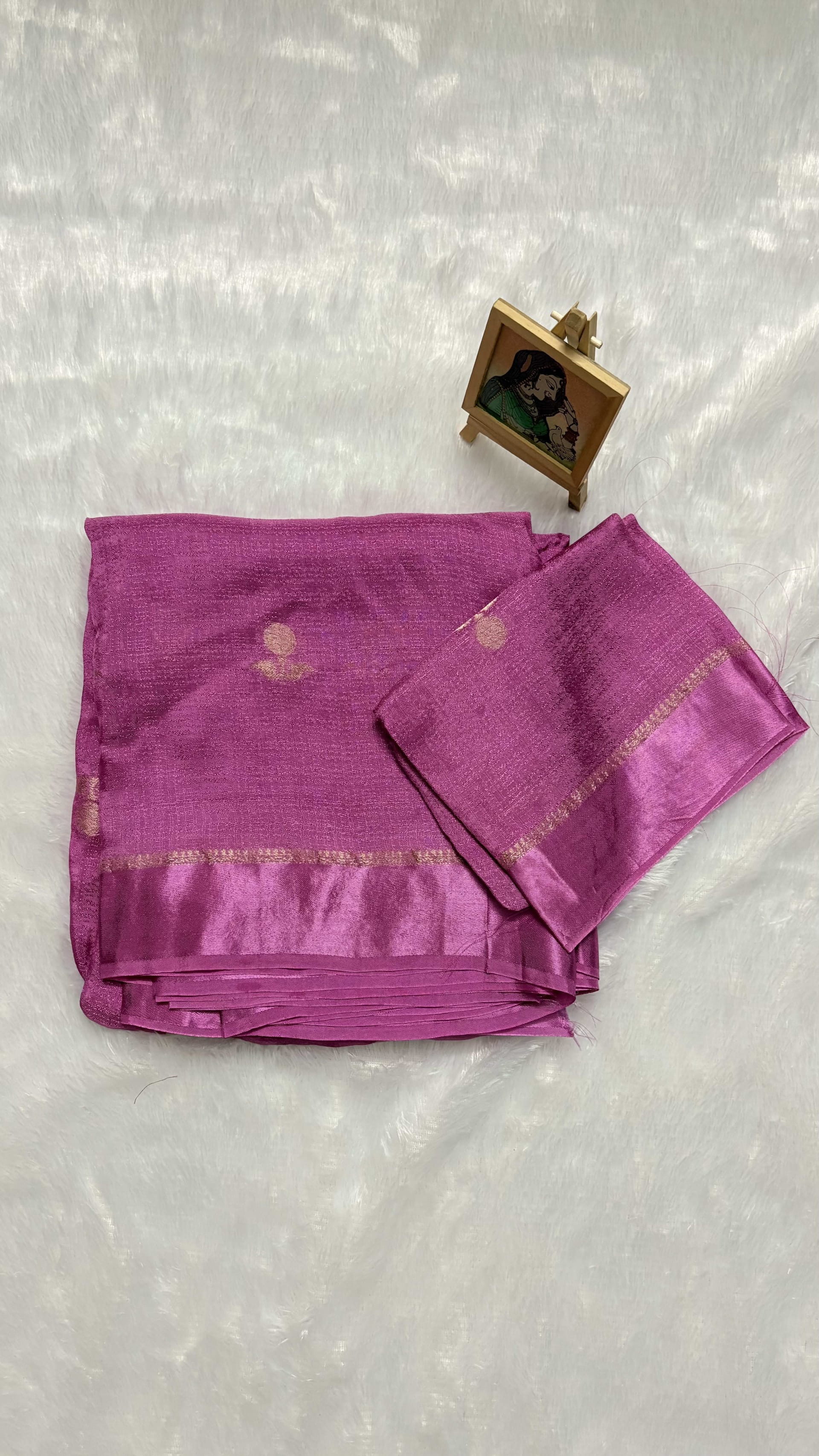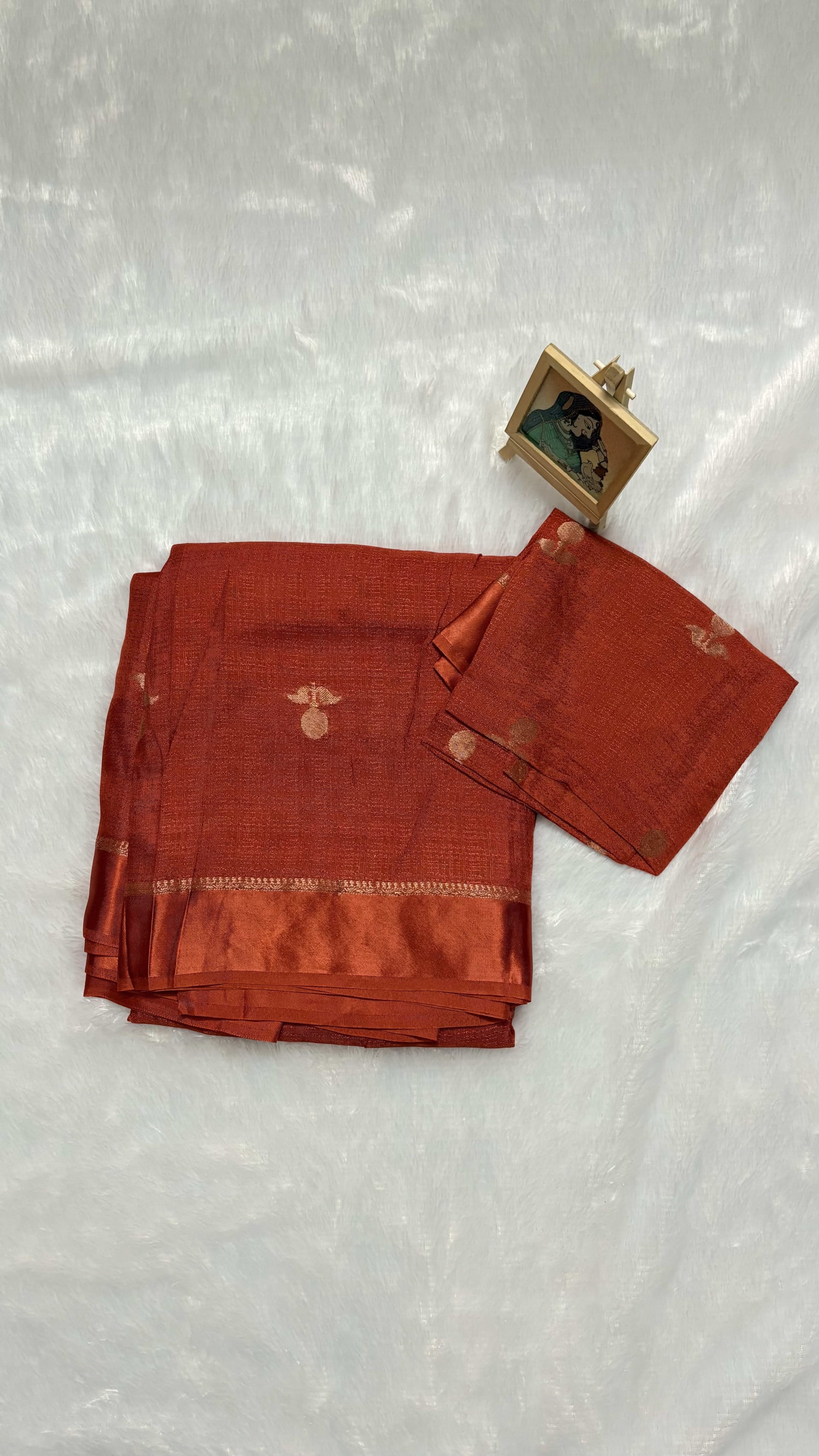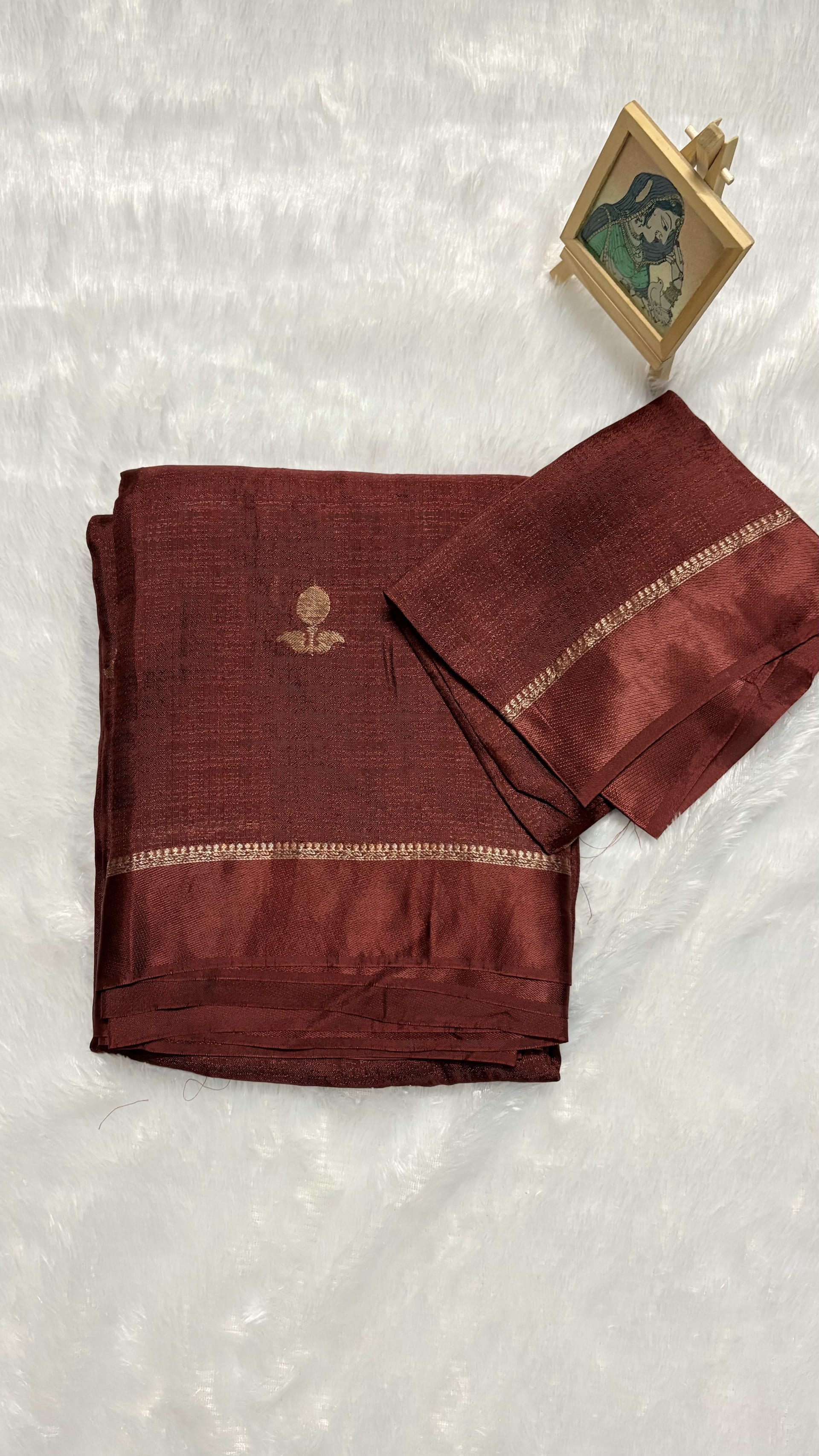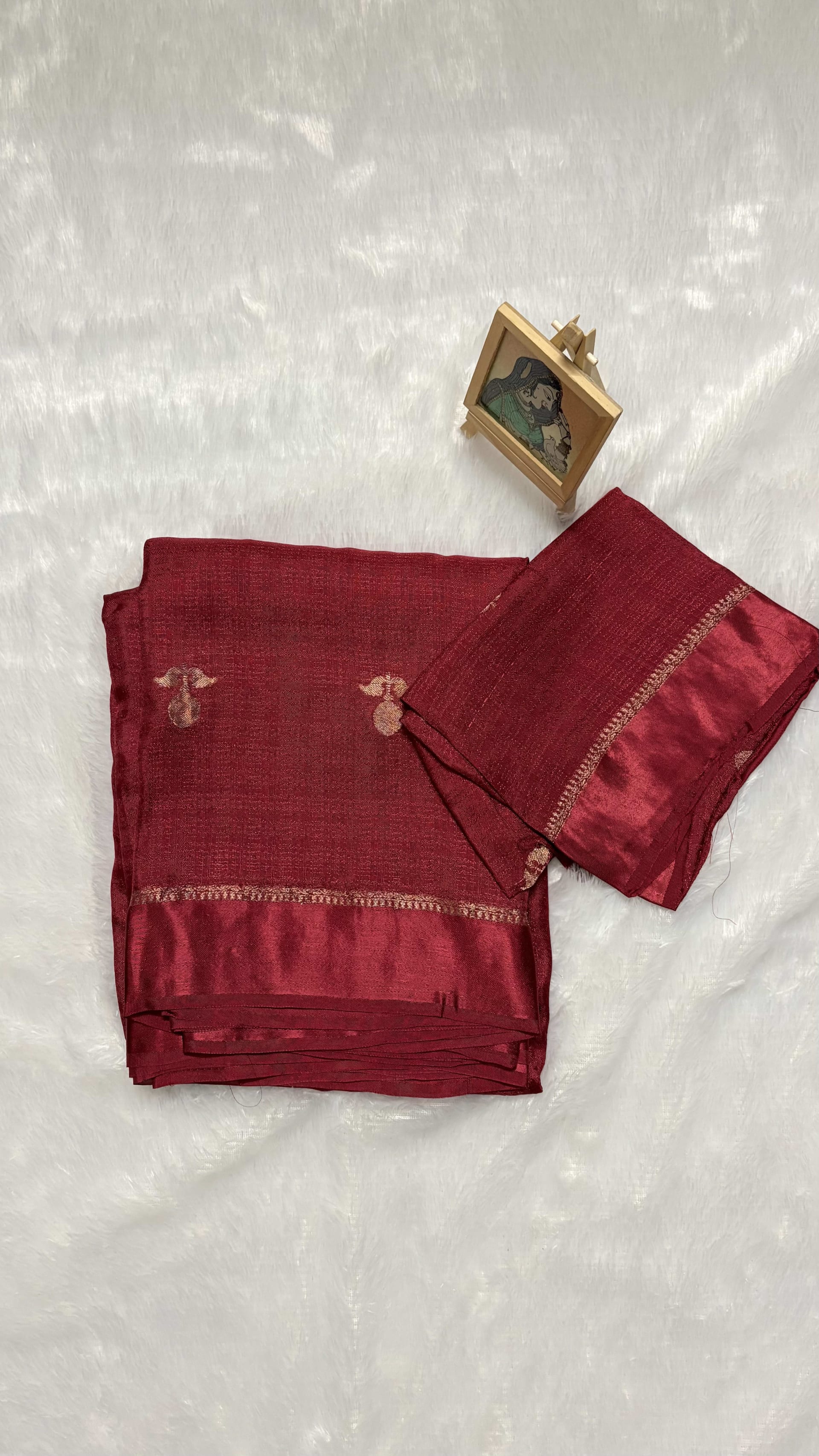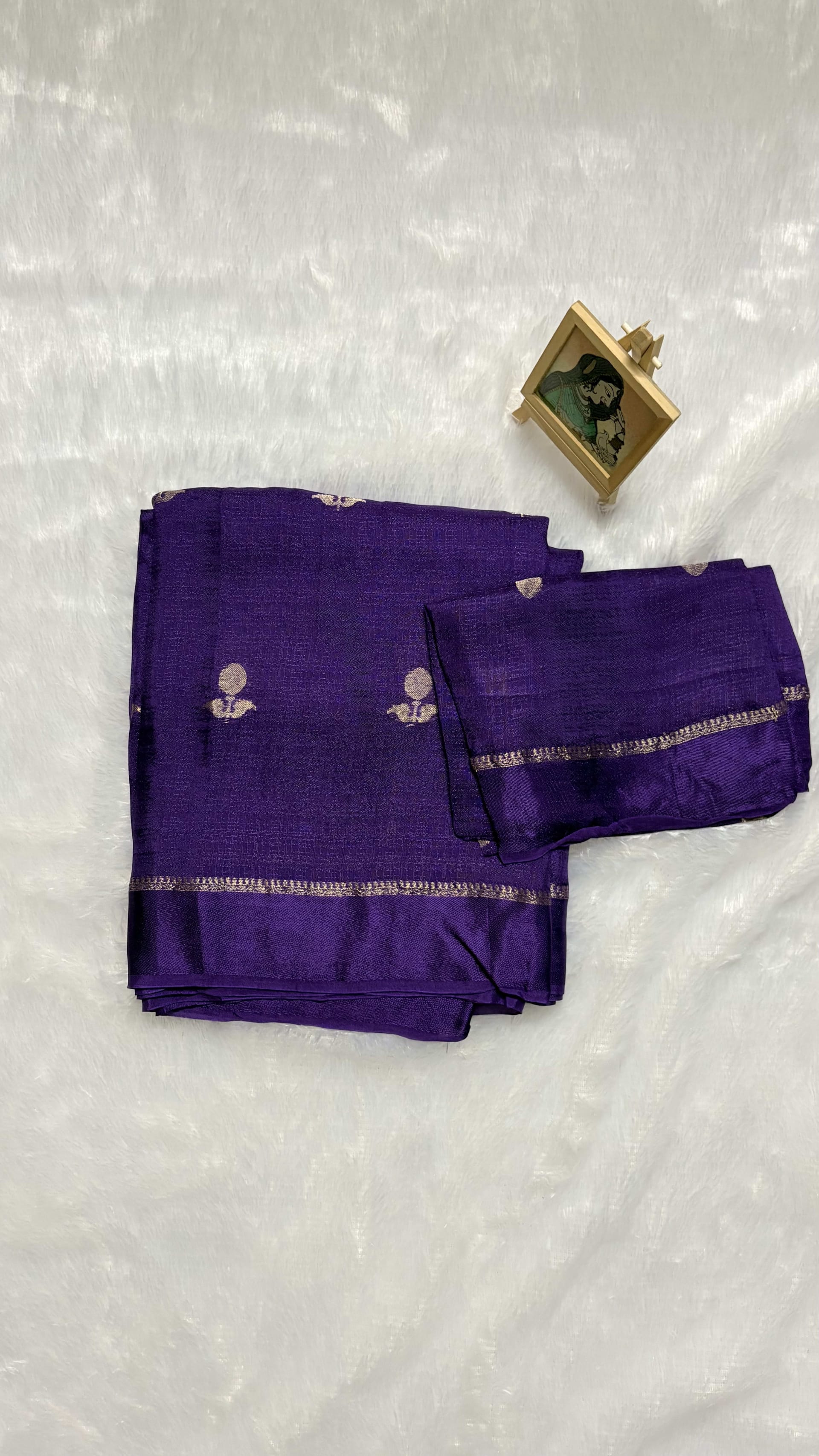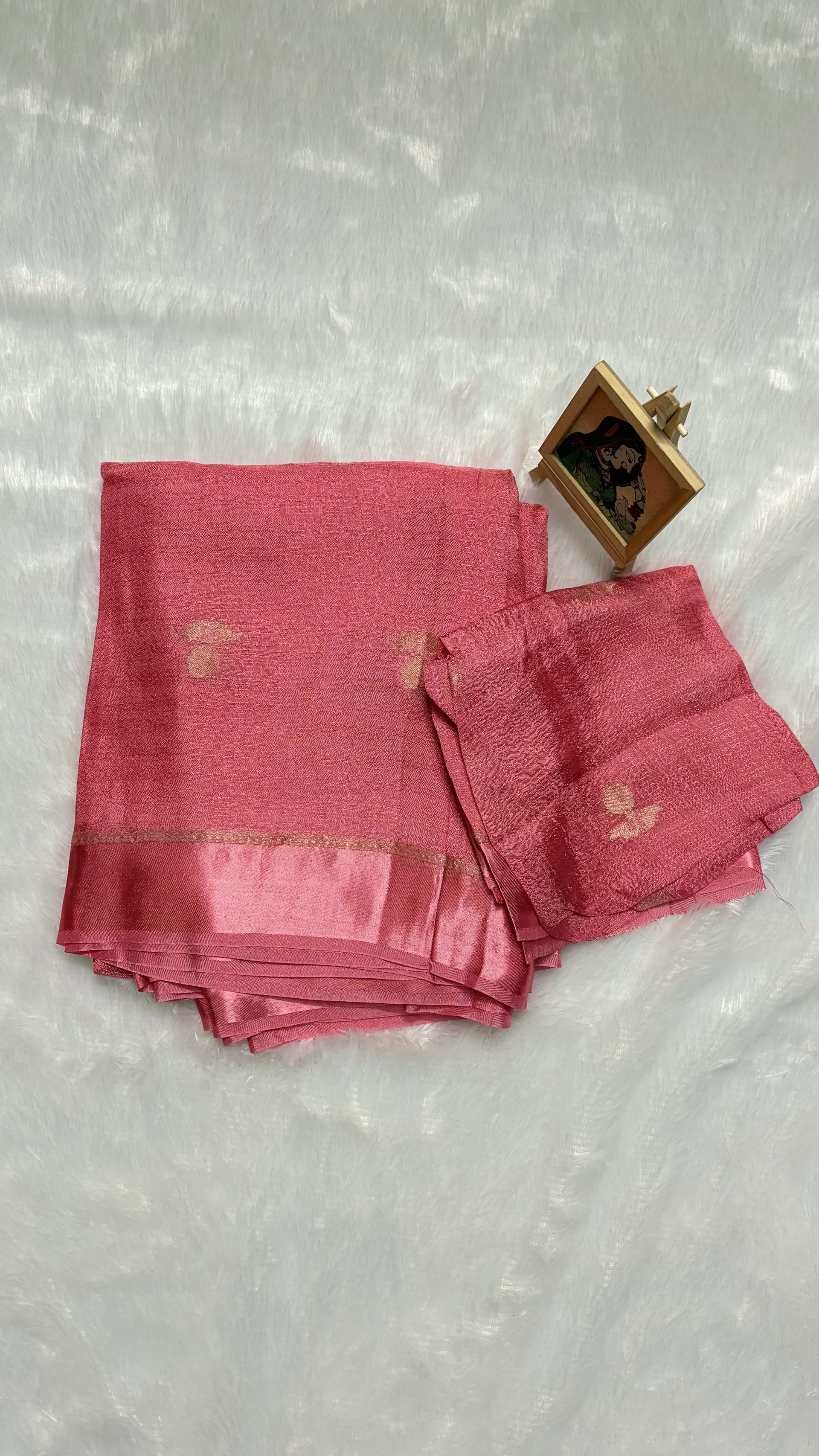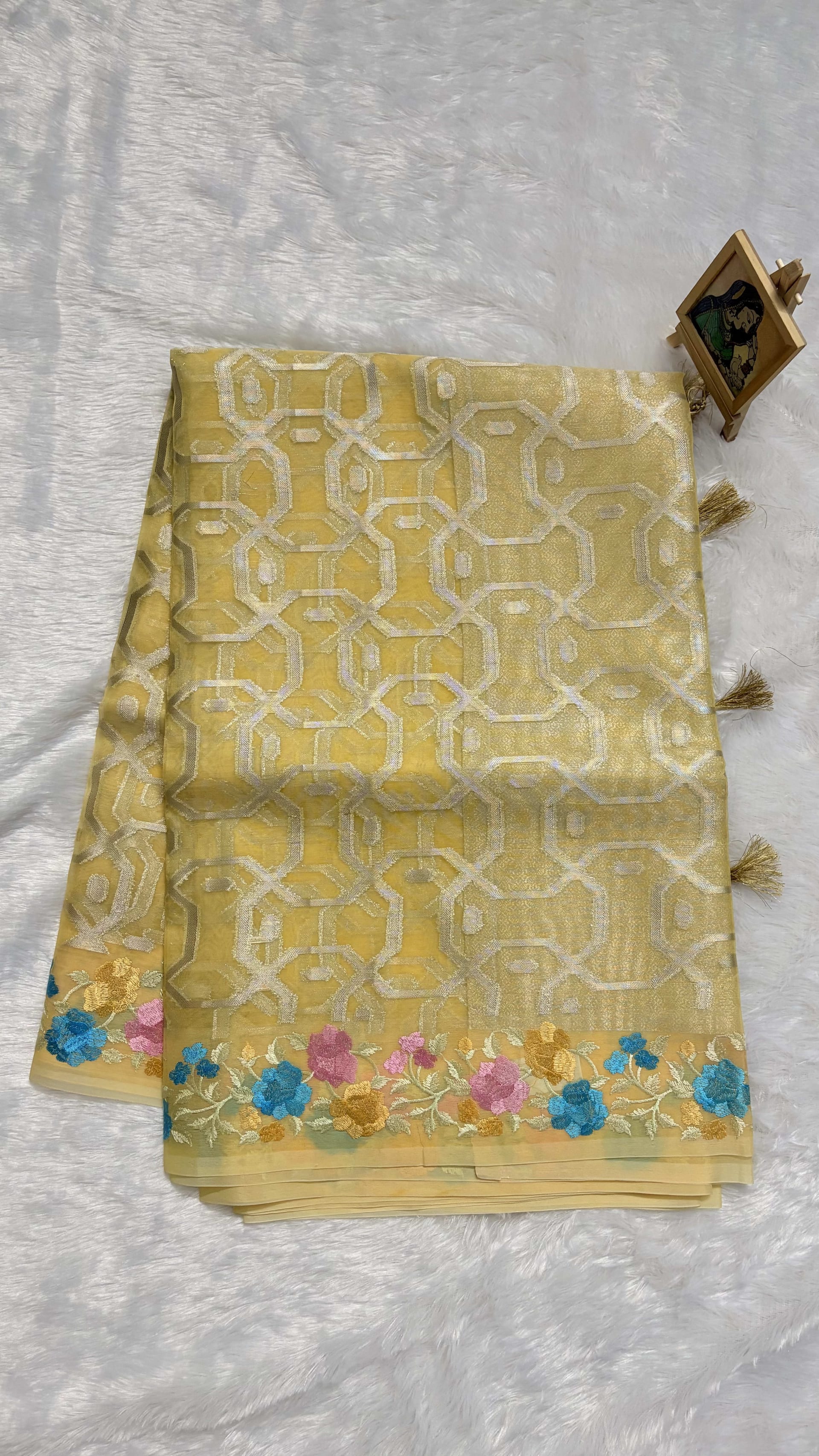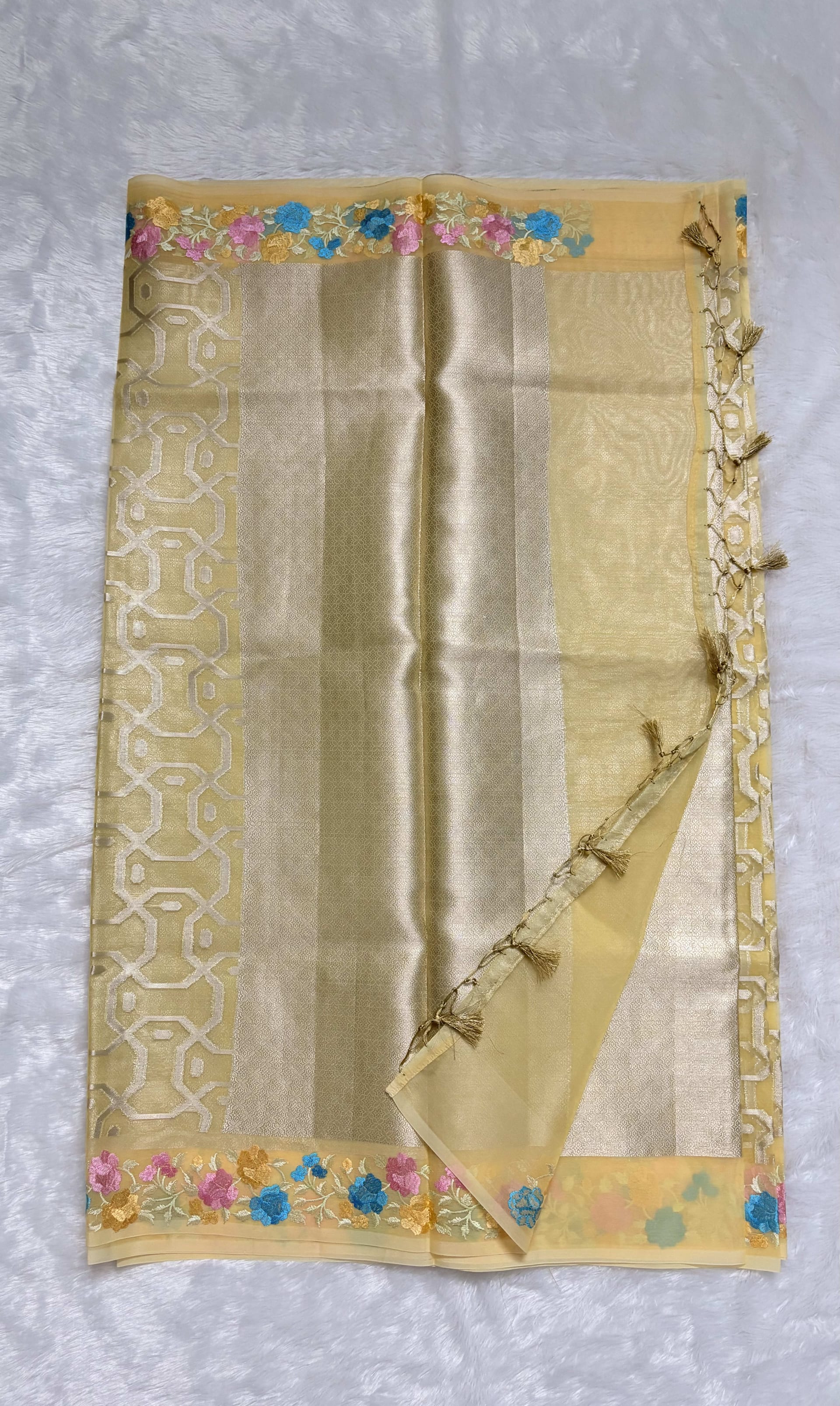
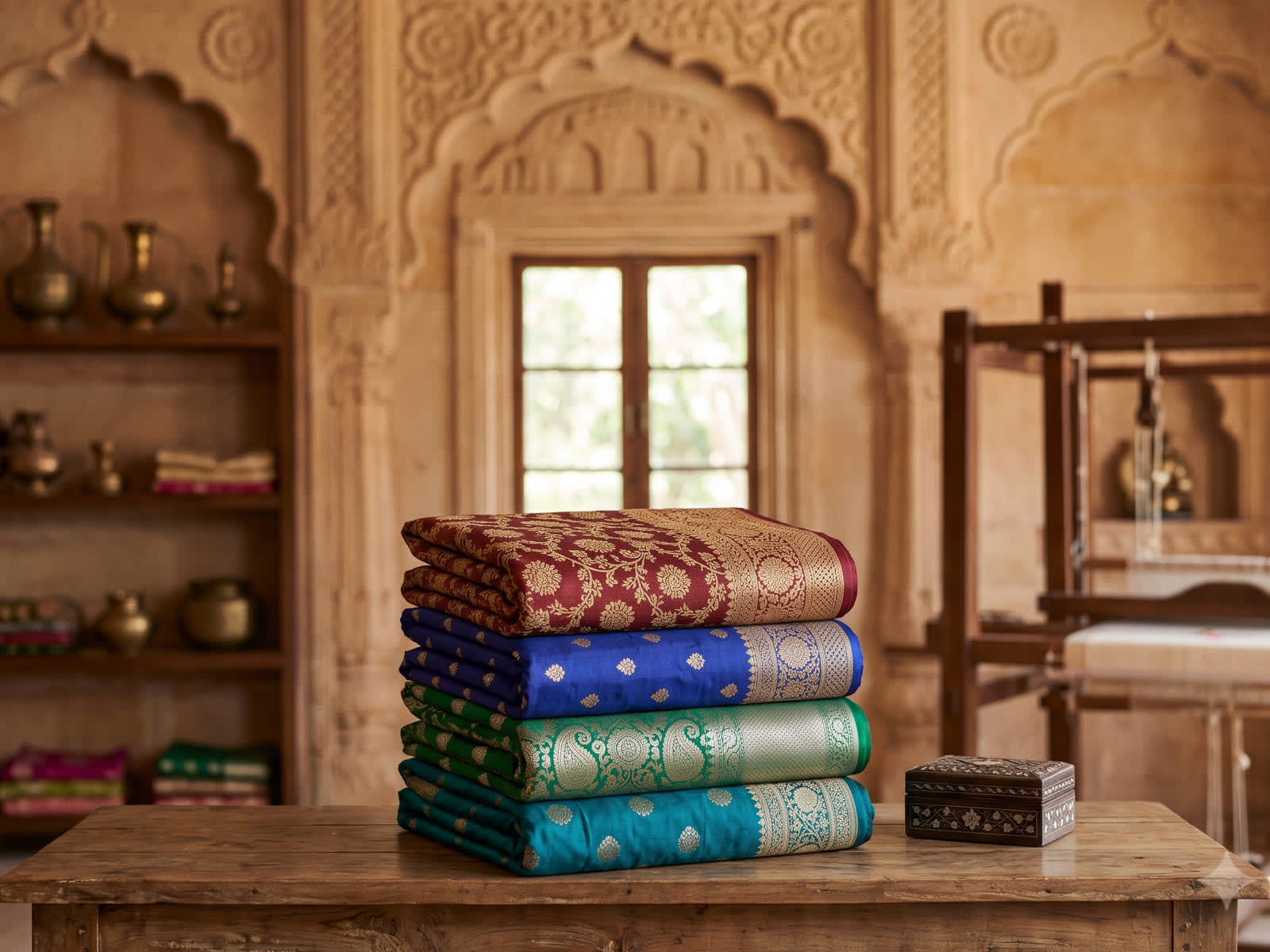
Where it comes from
Banaras has been weaving silk since at least the sixteenth century, and the sarees we recognise today carry the fingerprints of the Mughal court — the curling vine of the jhallar, the paisley kalga, the dense floral bel that runs the length of the border. Persian design ideas met Indian looms, and neither left the encounter unchanged.
The craft holds a Geographical Indication tag, granted in 2009. In practice that means a saree can only be called Banarasi if it was woven in Varanasi or a handful of neighbouring districts — Chandauli, Bhadohi, Jaunpur, Mirzapur, Azamgarh. It is a legal protection for a name that had been borrowed freely for decades, usually by mills several states away.
What the GI tag cannot tell you is whether a particular saree was woven by hand or by machine. Both happen in Varanasi. That distinction is yours to make, and the next two sections are about how.
How it is made
A Banarasi is a brocade: the pattern is not printed or embroidered onto the cloth afterwards, it is built into the cloth as it is woven, using supplementary threads that ride alongside the structural warp and weft.
There are two ways to do this, and the difference is most of the price.
Kadhwa means each motif is woven as its own separate event. The weaver stops, works the motif in with a small wooden spool called a tilli, ties it off, and moves on. Nothing runs between the motifs, because nothing needs to — every one is an island. On an ornate design this is often a two-person job, one working the ground cloth and the second carving out the motifs. A simple kadhwa saree takes twelve to fourteen days. An elaborate one can occupy a loom for eight or nine months.
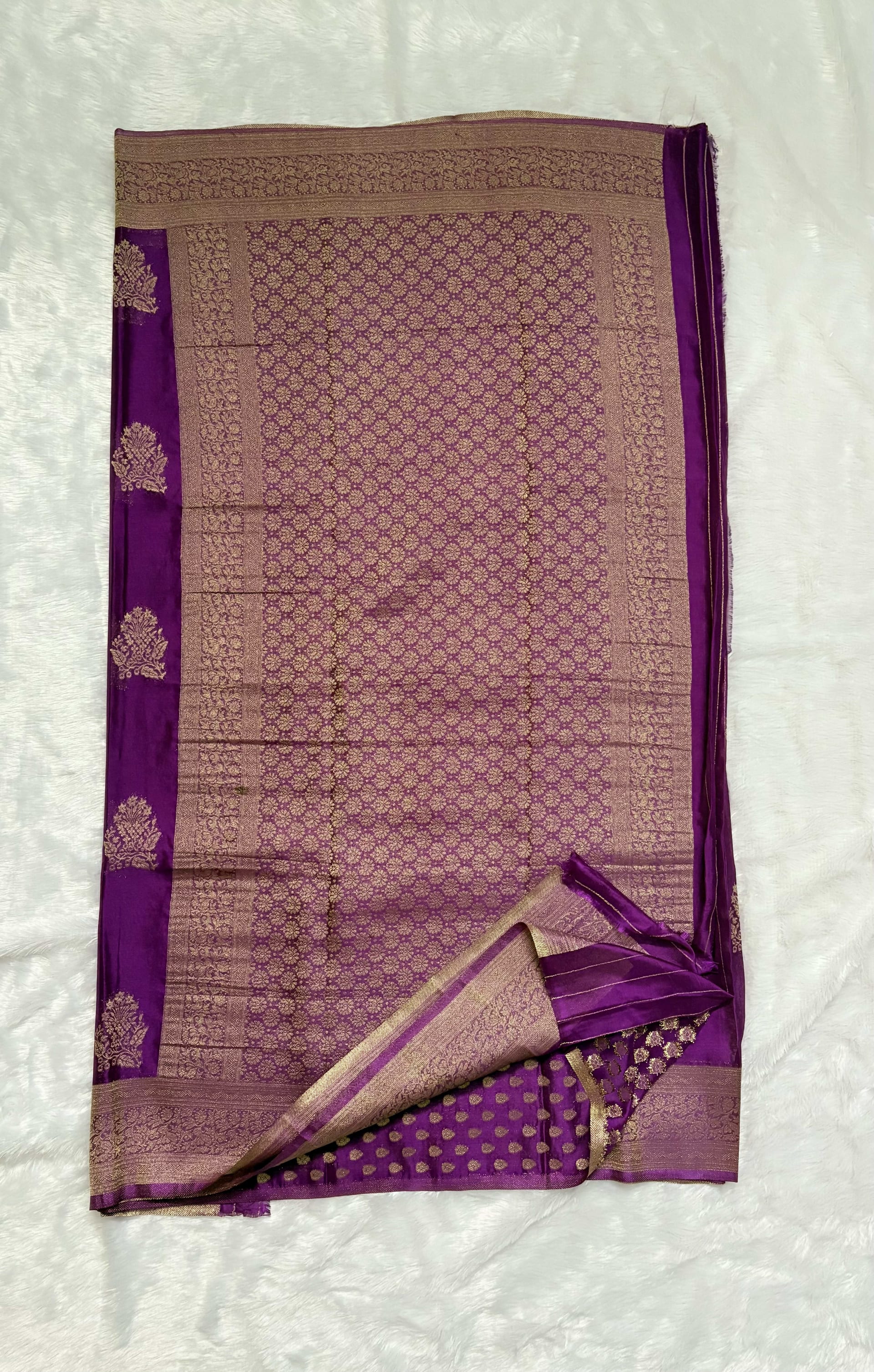
Cutwork gets to a similar-looking place faster. The motif threads run continuously across the back of the fabric from one motif to the next, and once the saree is off the loom those connecting floats are simply cut away. It is quicker, it is cheaper, and it is not dishonest — cutwork is a legitimate traditional technique, not a counterfeit. But a cutwork saree sheds a little thread over its life where the cut ends work loose, and it will never have the density of a kadhwa piece.
Neither is 'the fake one'. The fake one is the powerloom.
How to tell a real one — turn it over
Ignore the front. Everyone photographs the front, and a good powerloom copy will beat a modest handloom on first glance. Turn the saree over.
On a genuine handwoven Banarasi, the reverse is a mess — but a purposeful, structured mess. You will see loose threads floating between motifs, ends tied off where the weaver changed colour, small knots, and floats that vary in tension because a human being paused, adjusted, and started again. The back tells you about the making.
On a powerloom saree, the reverse is neat. Machine looms lock or trim their floats, so the back looks almost as tidy as the front, with uniform tension throughout and no knots at all, because there were no colour changes made by hand.
This is the most reliable test available to a shopper, and it needs no tools and no expertise. If the back is clean, it was not woven by hand. Nothing in the finishing process can fake a hand-woven reverse.
Two secondary checks worth knowing. Real zari is silk thread wrapped in silver, usually gilded — it tarnishes slowly and unevenly, warming rather than blackening, and it feels heavier than it looks. Plastic-coated zari stays aggressively bright, then flakes. And a genuine Banarasi has weight: silk of this density has real heft in the hand, and a saree that feels suspiciously light for its size usually is.
What it should cost, and why
Price on a Banarasi tracks three things: how much silk is in it, how much real zari is in it, and how many days it occupied a loom.
That last one is why the range is so wide. A cutwork saree in a repeating design is a fundamentally different amount of human time from a kadhwa piece with individually interlocked butis across the whole body. When you see two sarees that look similar at arm's length and one costs four times the other, the difference is almost always on the reverse, and it is almost always time.
Be suspicious of a very cheap 'pure silk Banarasi'. The arithmetic does not work: the raw silk and the zari alone set a floor below which nobody can weave by hand and eat.
Living with a Banarasi
Dry-clean it, at least for the first several cleans, and tell the cleaner it is real zari. Water and household detergent will dull metallic zari quickly and irreversibly.
Store it folded in a cotton or muslin cloth, never in a plastic bag or a sealed polythene cover — silk needs to breathe, and trapped humidity is what produces those brown spots you find on an heirloom saree that has been 'safely' put away for a decade.
Refold it along different lines once or twice a year. Silk that sits in the same crease for years eventually splits along it, and zari is especially unforgiving about this. It takes five minutes and it is the difference between a saree your daughter can wear and one she cannot.
Keep it out of direct sunlight. If you use naphthalene balls, do not let them touch the fabric — wrap them separately.