Where it comes from
Gajji belongs to Kutch, in western Gujarat, and to the long textile relationship between Kutch and Sindh that predates the border between them. The name refers to the weave rather than to a place: gajji is silk woven in satin structure, which is what produces the characteristic sheen.
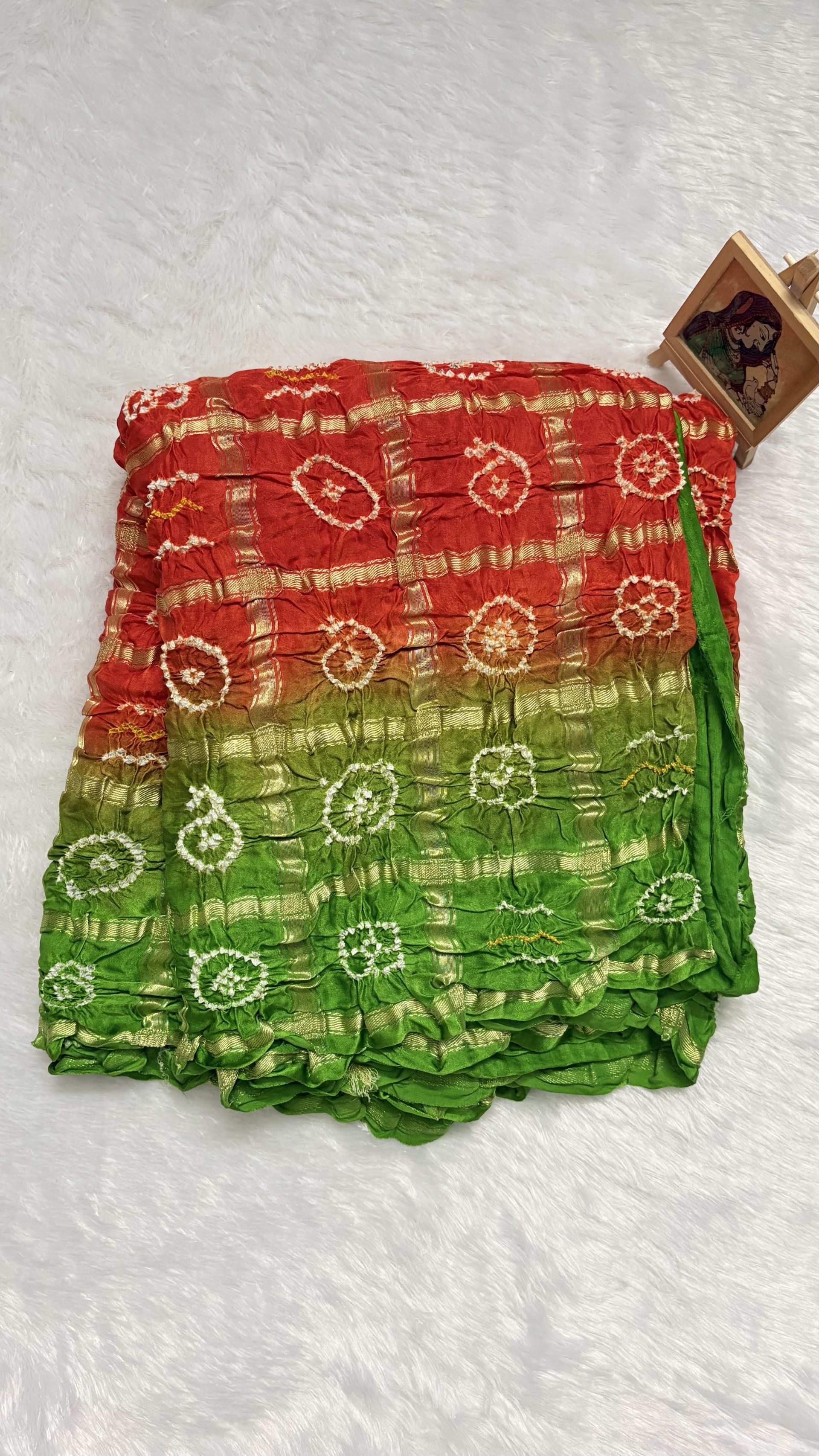
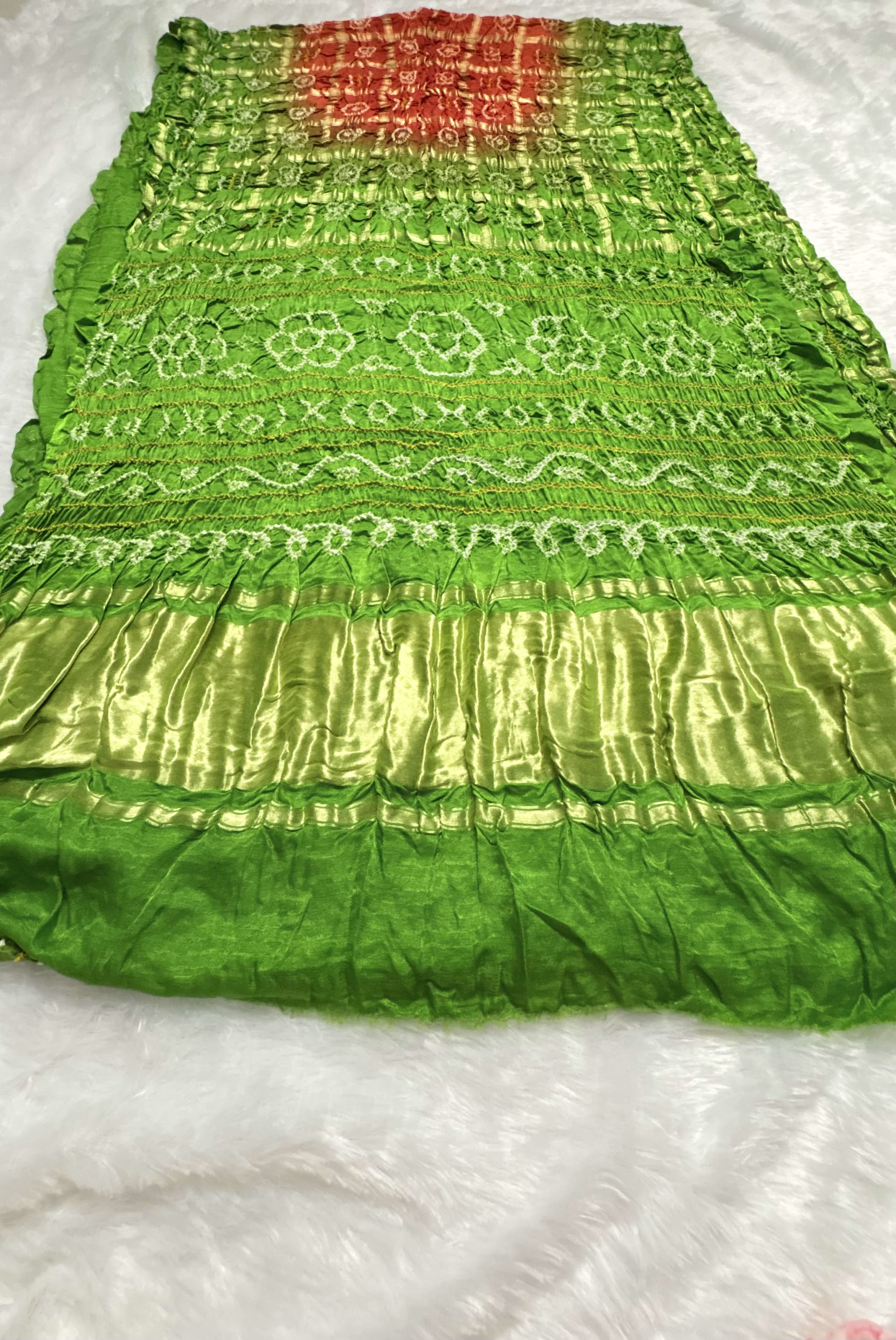
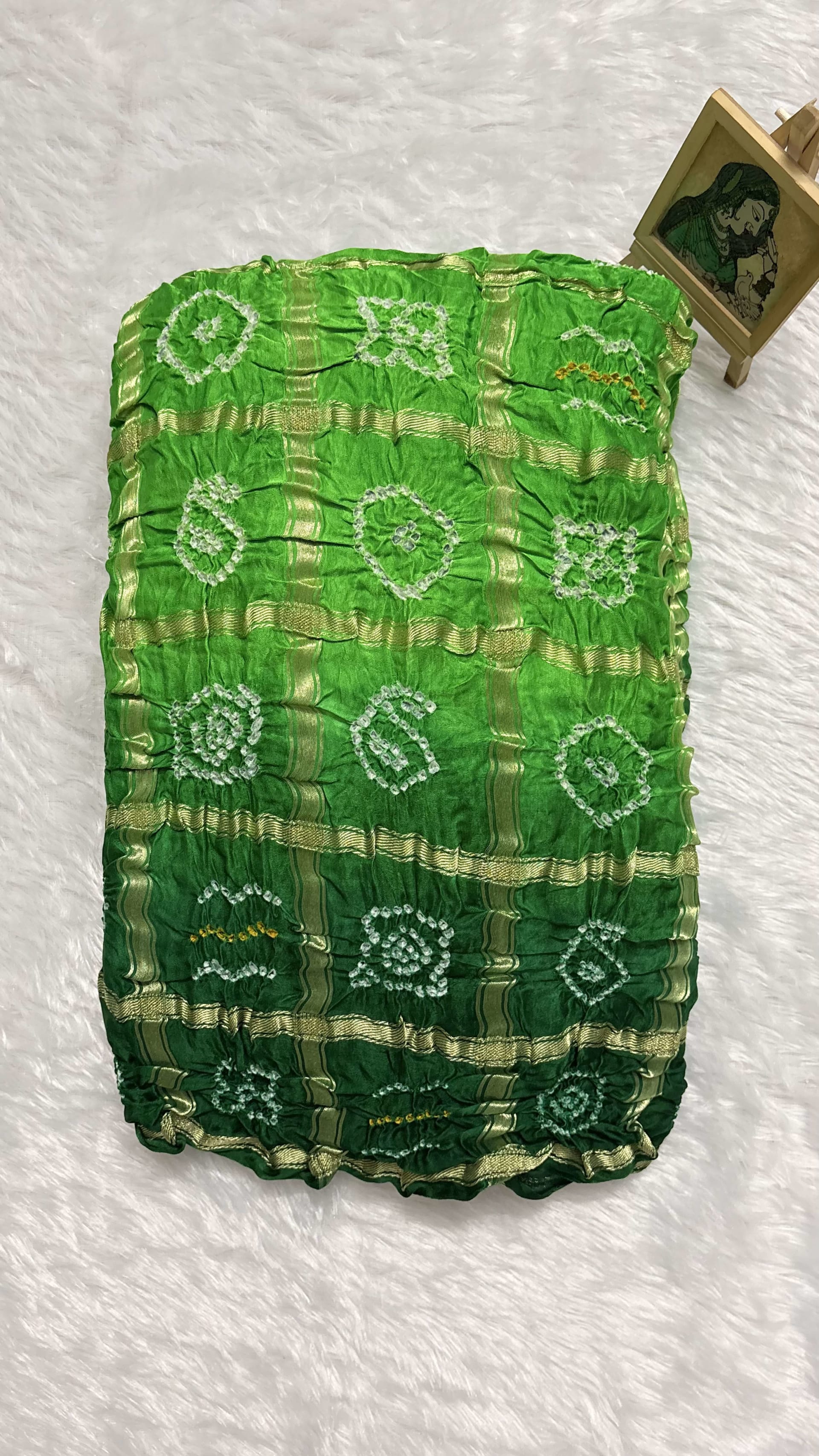
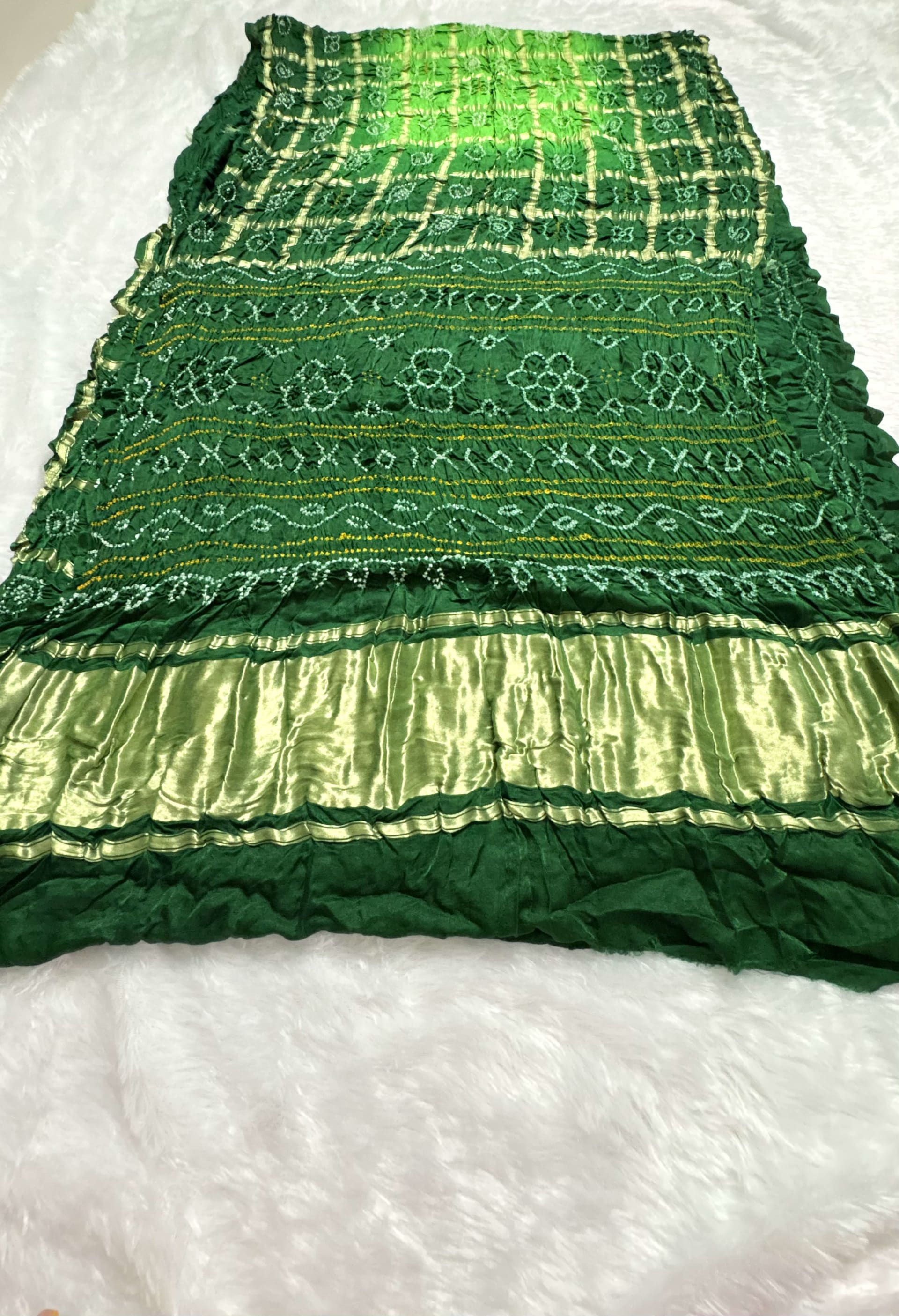
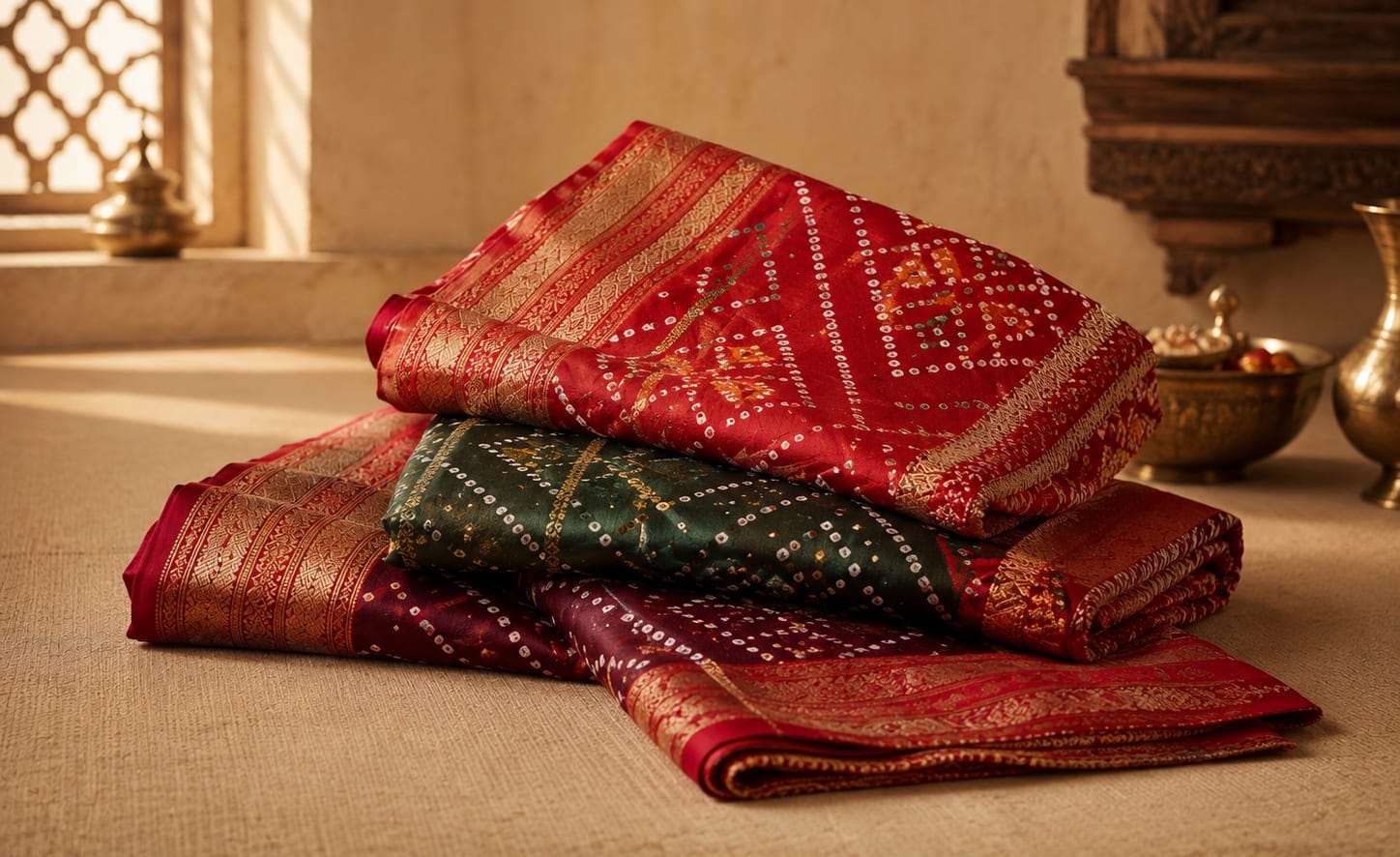
In Kutch it is bound up almost inseparably with bandhani. Bandhani cloth has been considered auspicious in the region for centuries and is worn by brides in both Hindu and Muslim communities — the gharchola and the panetar are Gajji bandhani at their most ceremonial. When people say 'a Gajji saree' in Gujarat, they usually mean a Gajji bandhani saree.
How it is made
Two separate crafts, done in sequence, by different people.
The weaving. Satin is a structure, not a fibre. In a satin weave each warp thread floats over several weft threads before dipping under one, so the surface is made almost entirely of unbroken thread — and unbroken thread reflects light in a single sheet rather than scattering it. That is the whole secret of the shine. It also explains the two-faced character of the cloth: the float side is glossy and slippery, the reverse is matte and has grip. Weavers sometimes call gajji the fabric of patience, because satin is slow and unforgiving to set up and a single broken float shows.
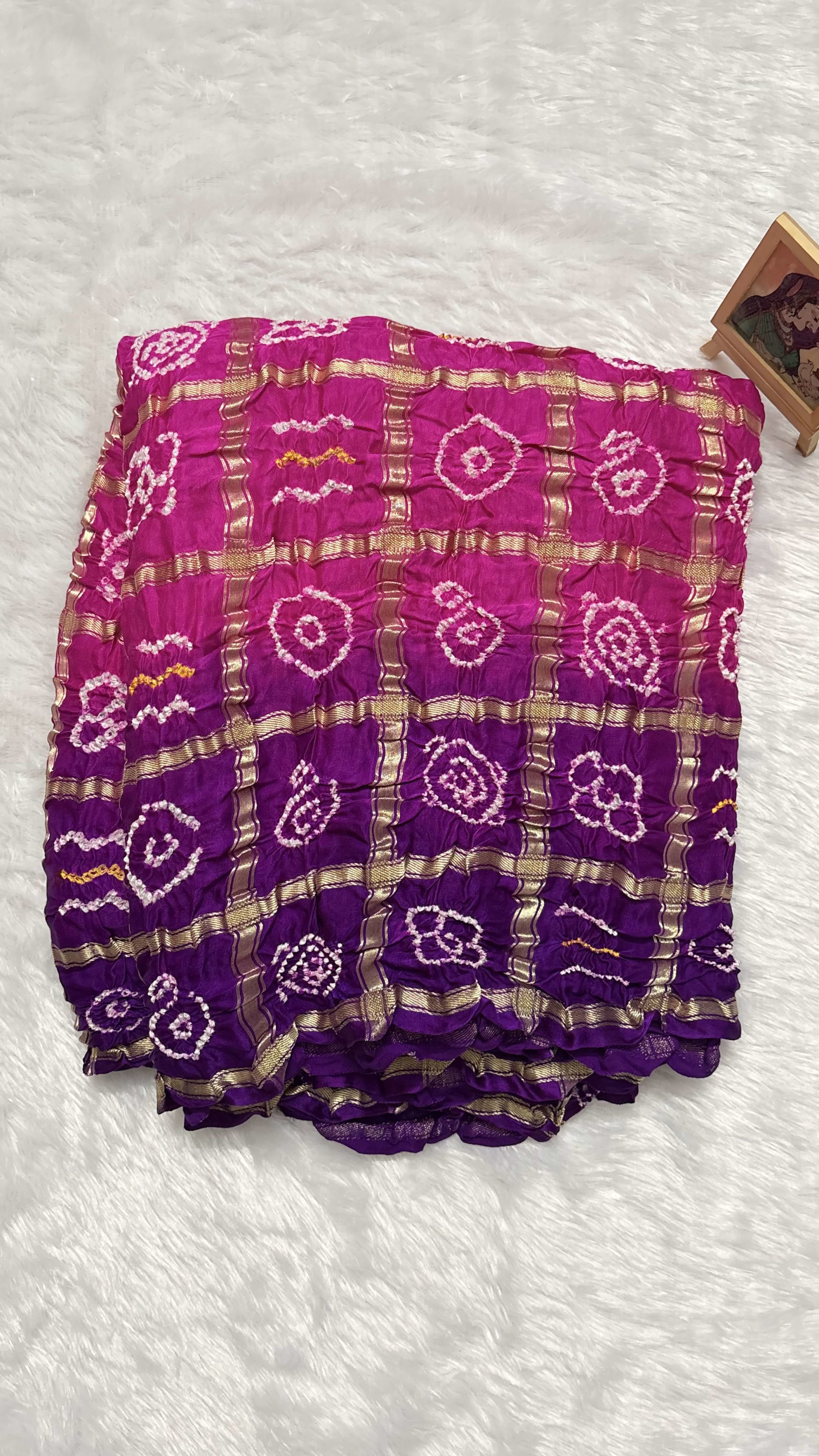
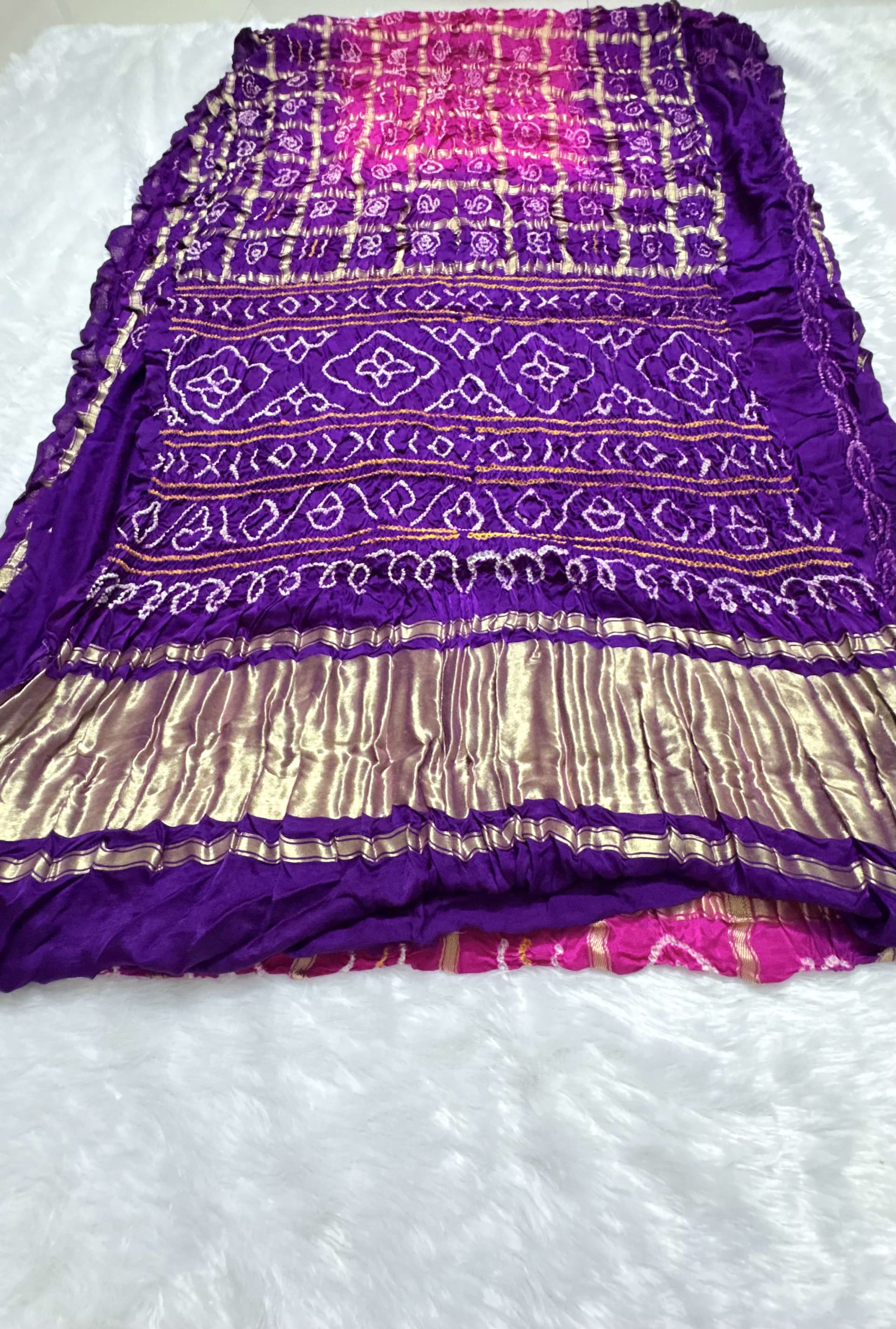
The bandhani. Then the woven cloth goes to the tiers. Bandhani is tie-resist dyeing at a scale that is hard to believe until you see it: every single dot is an individual knot, tied by hand, before the cloth ever touches dye. The artisan lifts a tiny peak of fabric — traditionally using a fingernail grown long for the purpose, sometimes a small metal point — and binds it tightly with thread. Then the next one. Then the next. A dense saree carries tens of thousands of these.
The cloth is dyed with the knots in place, so the bound points resist the colour and stay light. Multi-colour bandhani repeats the whole cycle: untie some, re-tie others, dye again. The knots are left in until the saree is sold, which is why a genuine bandhani arrives puckered and crinkled, with the pattern still slightly bunched.
How to tell real bandhani from printed
This is the single most useful thing on this page, because printed imitation bandhani is everywhere and it is cheap.
Look at the reverse. Real bandhani is dyed, so the pattern goes all the way through the cloth and the back looks essentially as strong as the front. A print sits on the surface — the reverse will be visibly paler, sometimes almost blank.
Look for the knots, or their ghosts. An unsold bandhani usually still has some threads tied in, and the fabric will not lie flat. Even after opening, the cloth keeps a fine crinkled texture where every knot was. Printed cloth is smooth and lies flat straight out of the fold.
Look for imperfection. Hand-tied dots are never perfectly regular. Their size wobbles, spacing drifts, and rows curve slightly. A printed 'bandhani' has dots of identical size at identical intervals, because a screen made them. Uniformity is the tell.
Check the edges of each dot. A resisted dot has a soft, slightly irregular boundary where dye crept toward the knot. A printed dot has a hard, mechanical edge.
On the Gajji itself: real satin silk is cool to the touch, drapes with weight, and shows its sheen differently depending on the angle you tilt it. Polyester satin looks glossy from every angle at once and warms up quickly in the hand.
What it should cost, and why
Bandhani is priced by knot count, more or less directly. A saree with widely spaced dots across a plain ground is a different order of labour from one with dense all-over tying, a patterned pallu and a worked border — and the second can represent months of one person's work.
Colour count matters too, because every additional colour means another full cycle of untying, re-tying and dyeing. A three-colour bandhani is not fifty per cent more work than a two-colour one; it is closer to double.
Gharchola and other traditional bridal formats sit at the top of the range for good reason: they combine dense tying with zari checks, and both are expensive.
Living with Gajji bandhani
Do not iron the crinkle out, at least not at first. That texture is the evidence of the craft, and pressing it flat immediately is a bit like sanding the brushstrokes off a painting. The pattern will open naturally as the saree is worn and handled.
Dry-clean it. Bandhani is dyed in deep, saturated colours and the first few washes are where colour runs — a good cleaner who is told it is bandhani will handle it correctly.
Satin snags. That long floating thread on the surface is exactly what a ring, a watch clasp or a rough fingernail catches. Take rings off when you drape it, and store it away from anything with a hook or a zip.
Store folded in cotton or muslin, out of sunlight. Bright bandhani colours fade with sustained light exposure, and reds are the first to go.