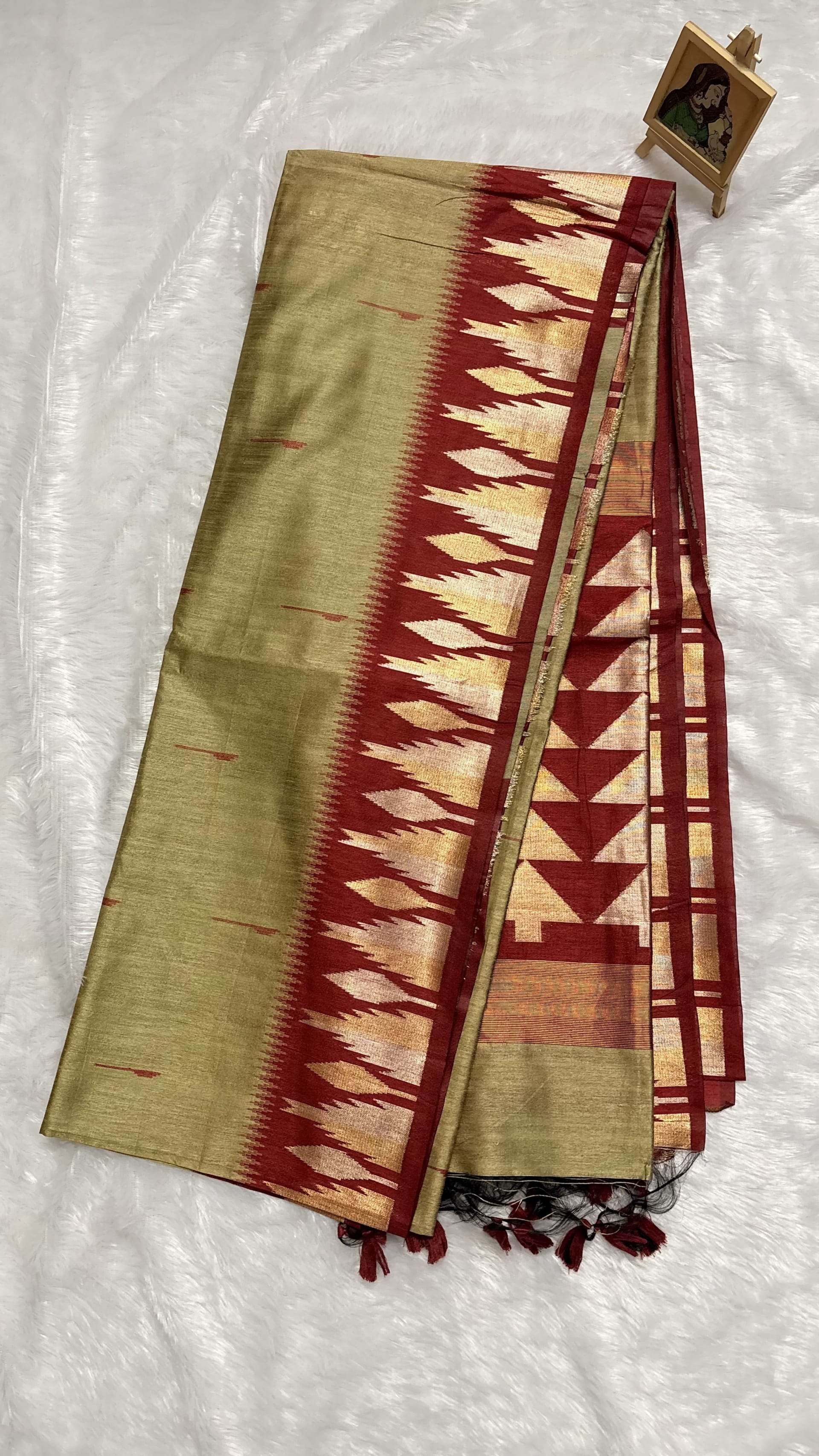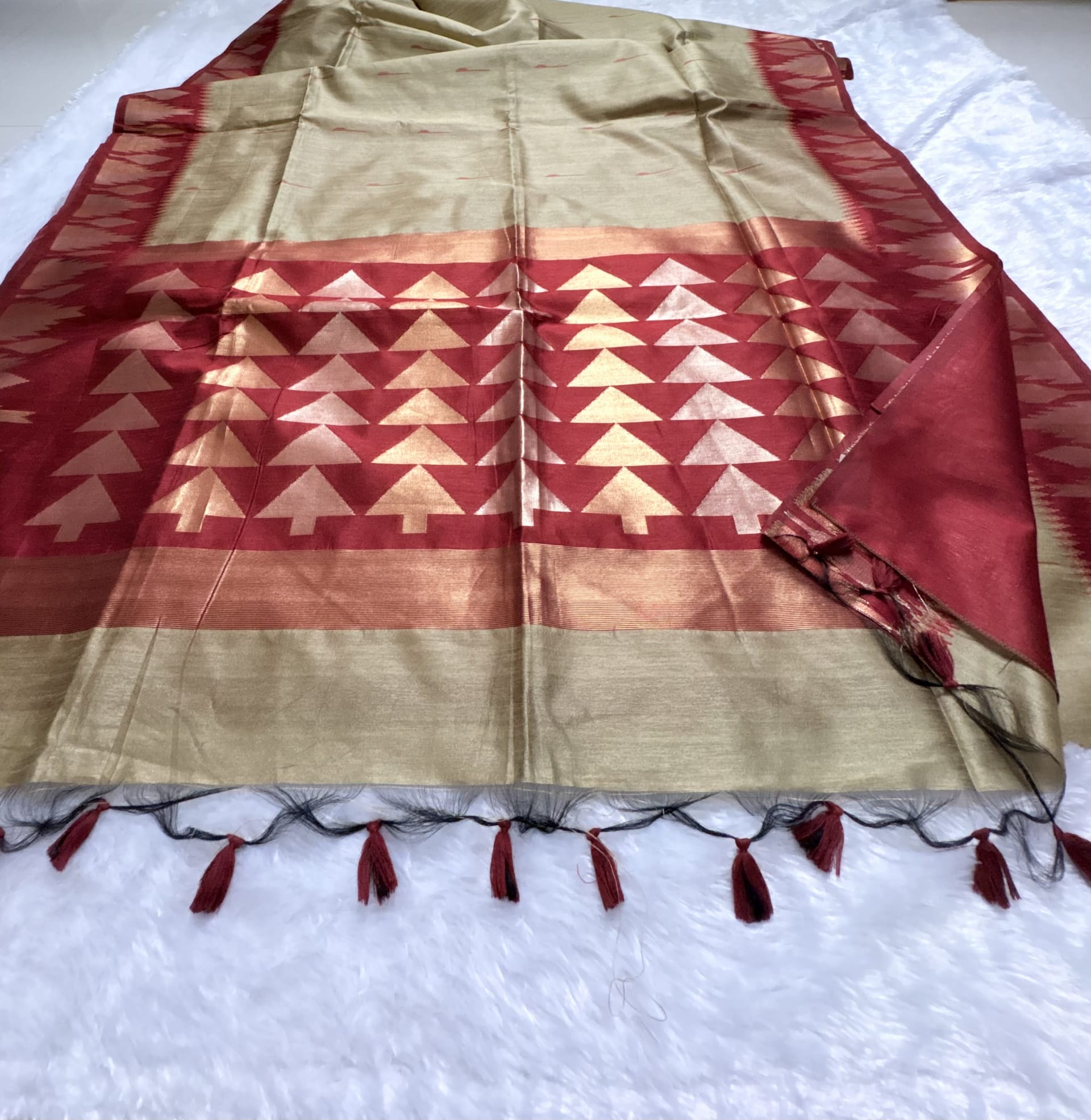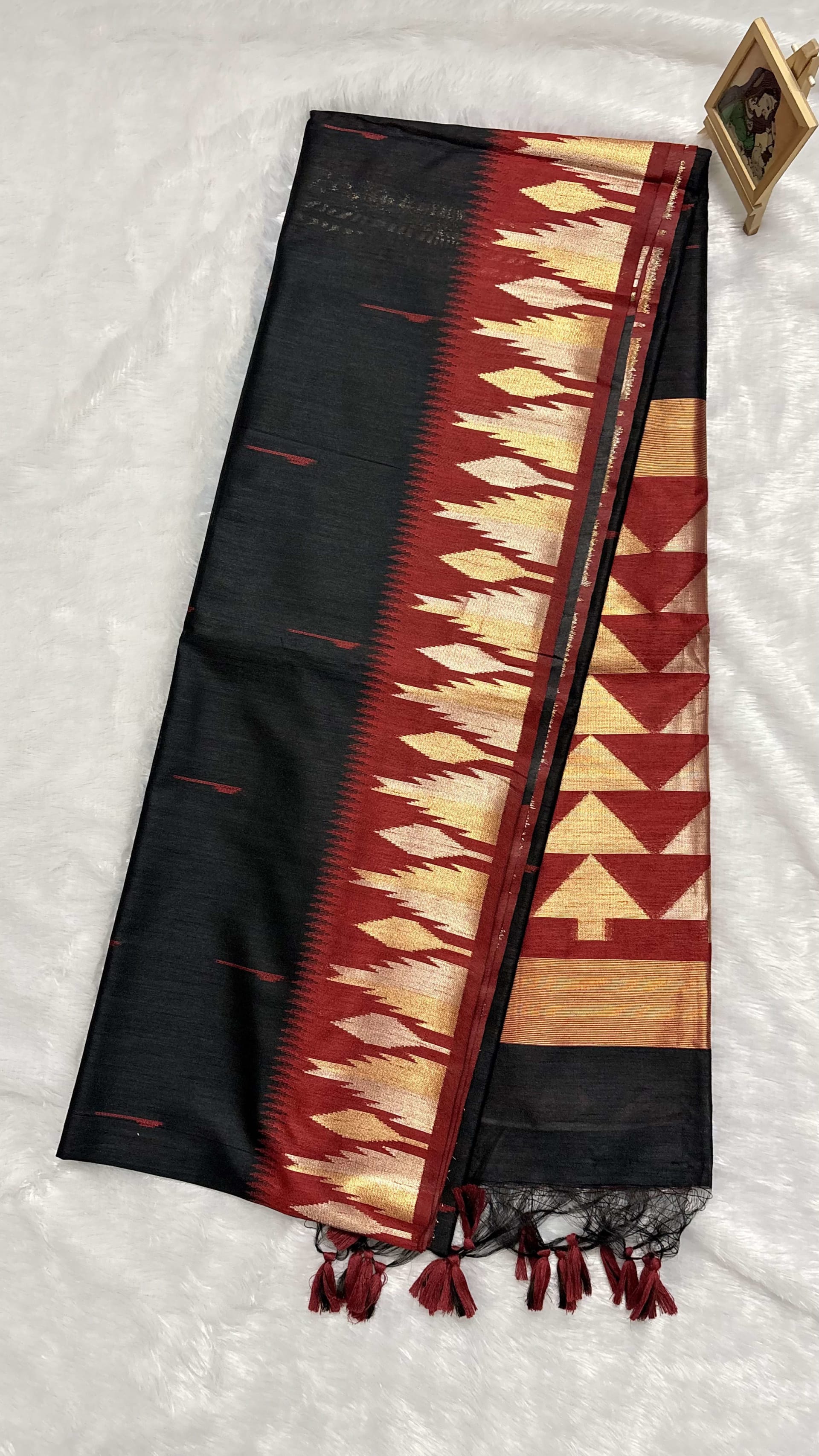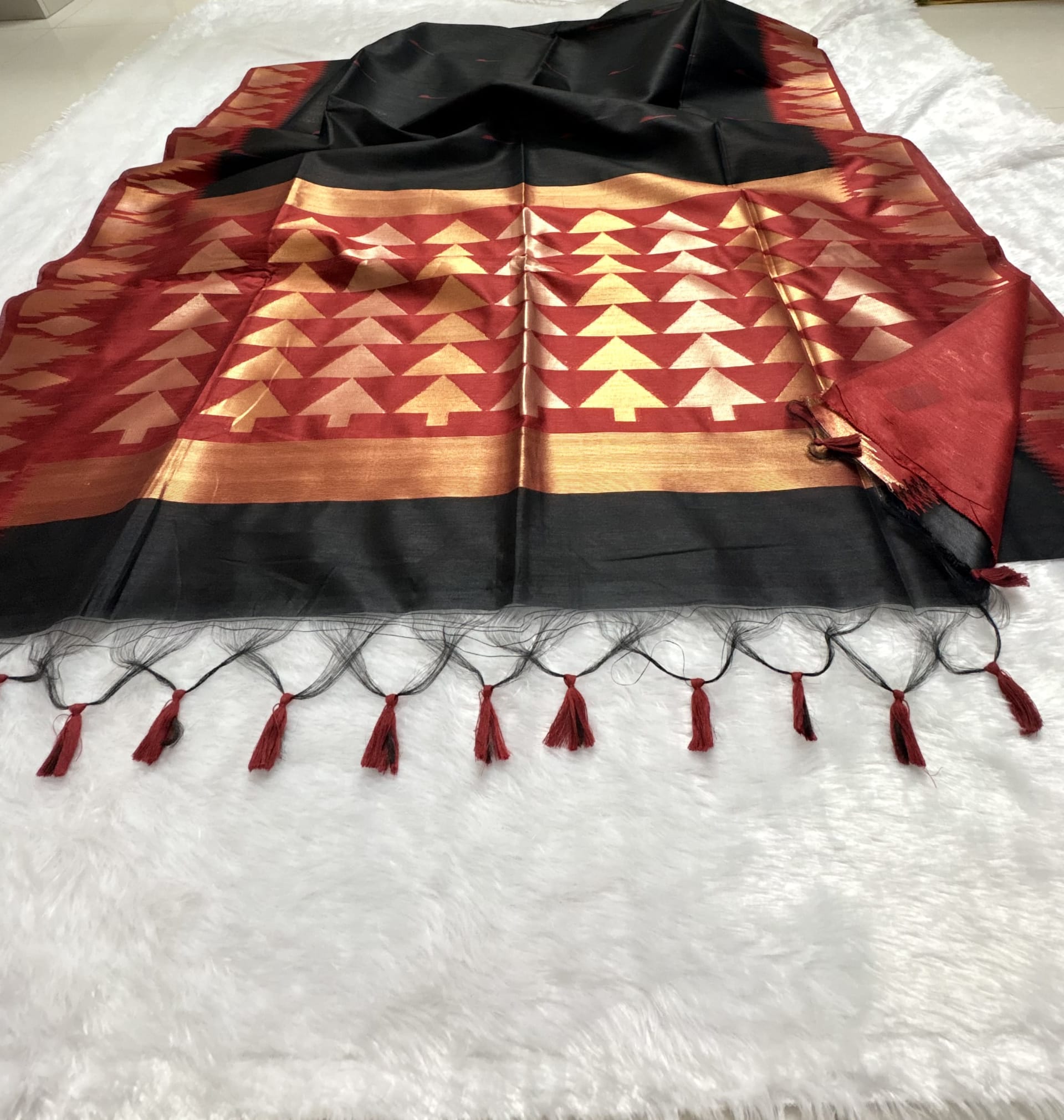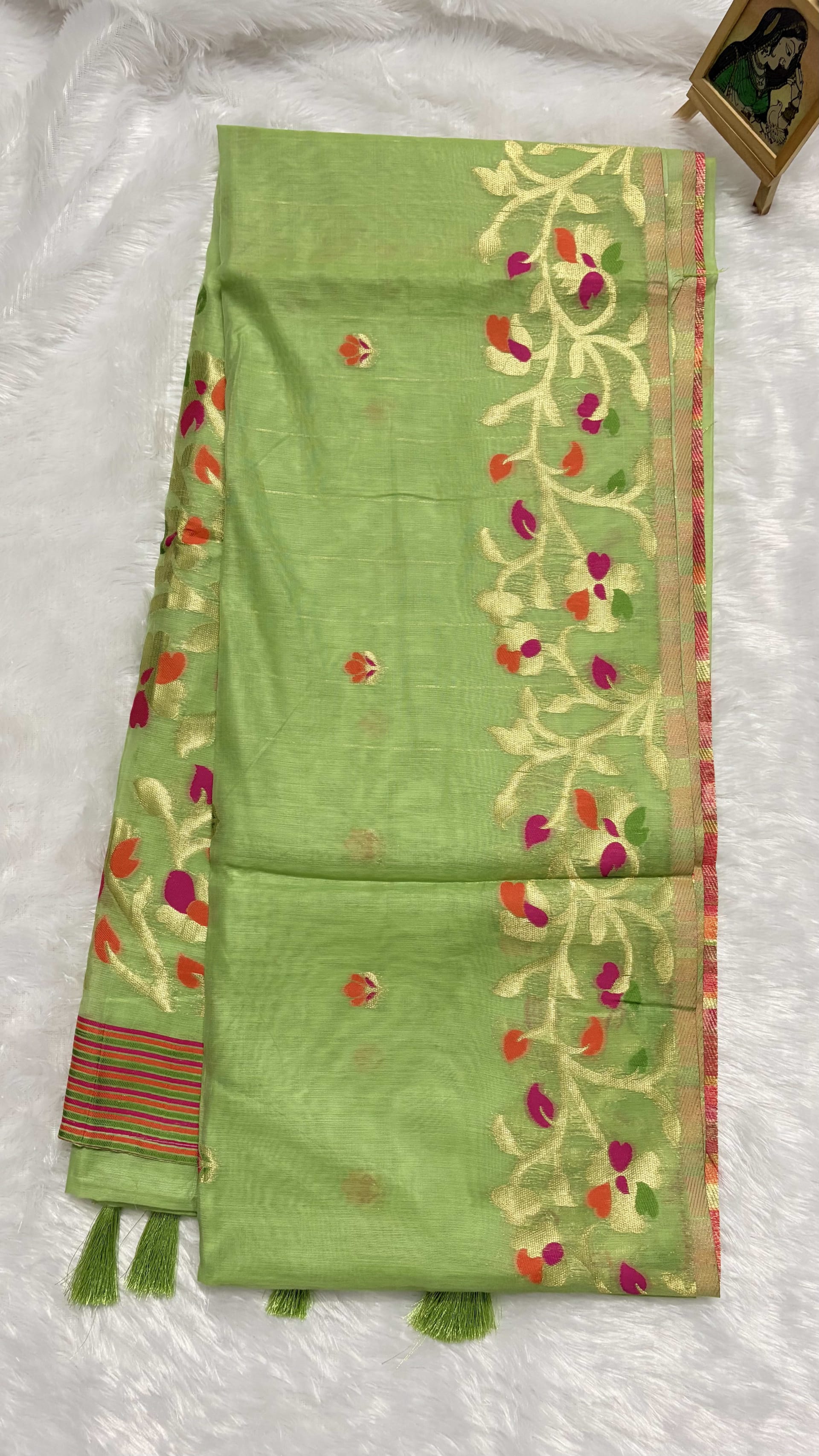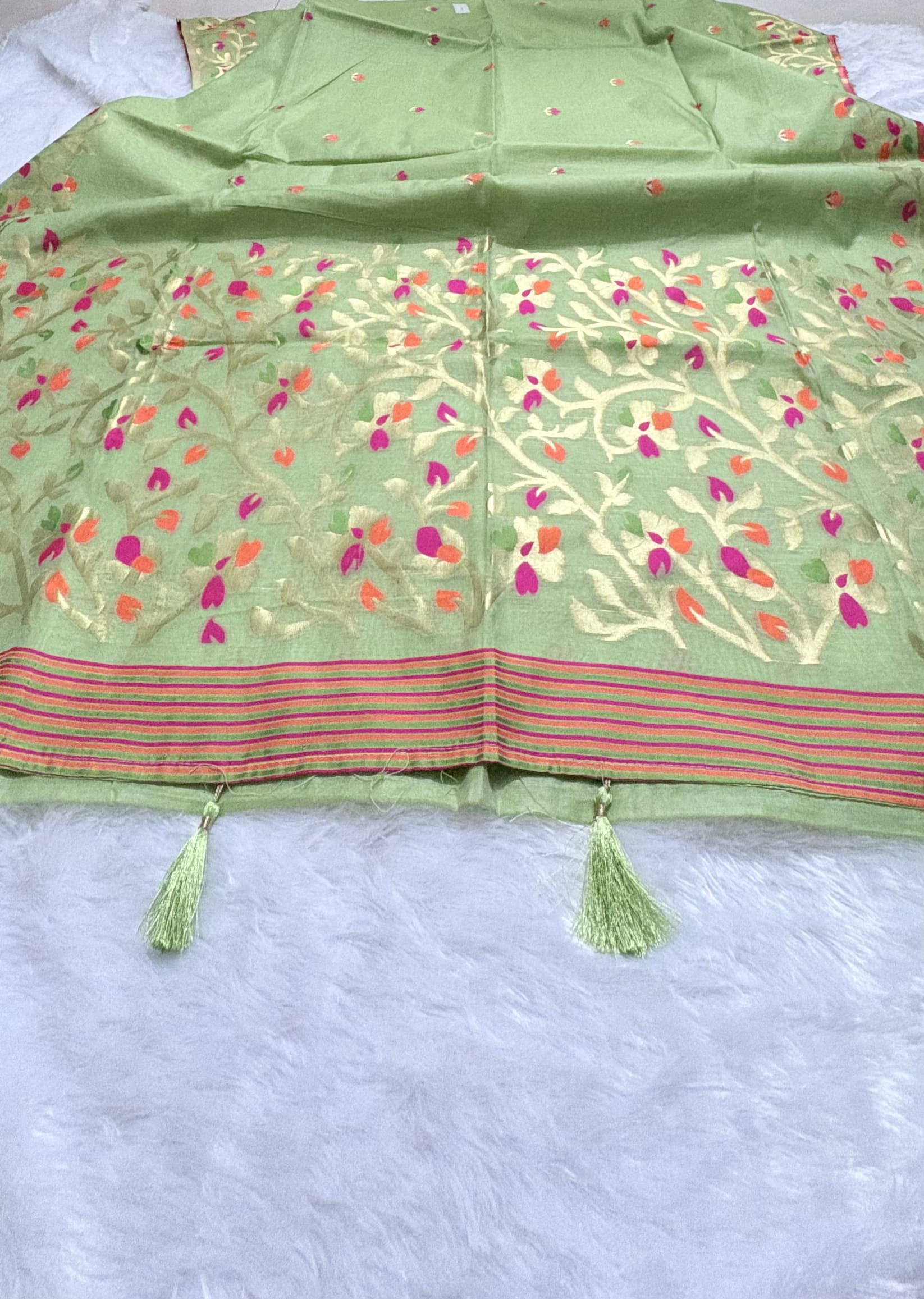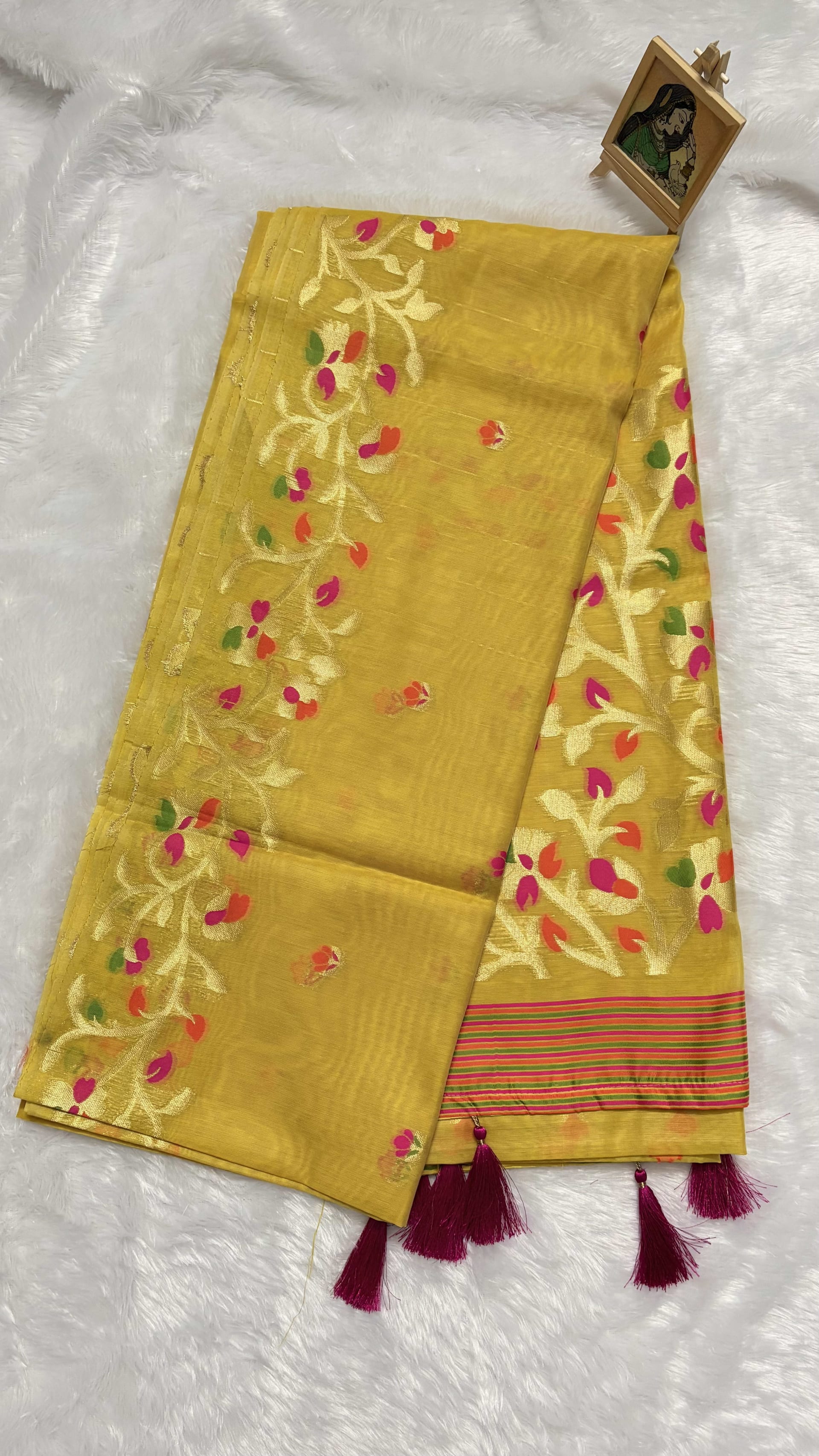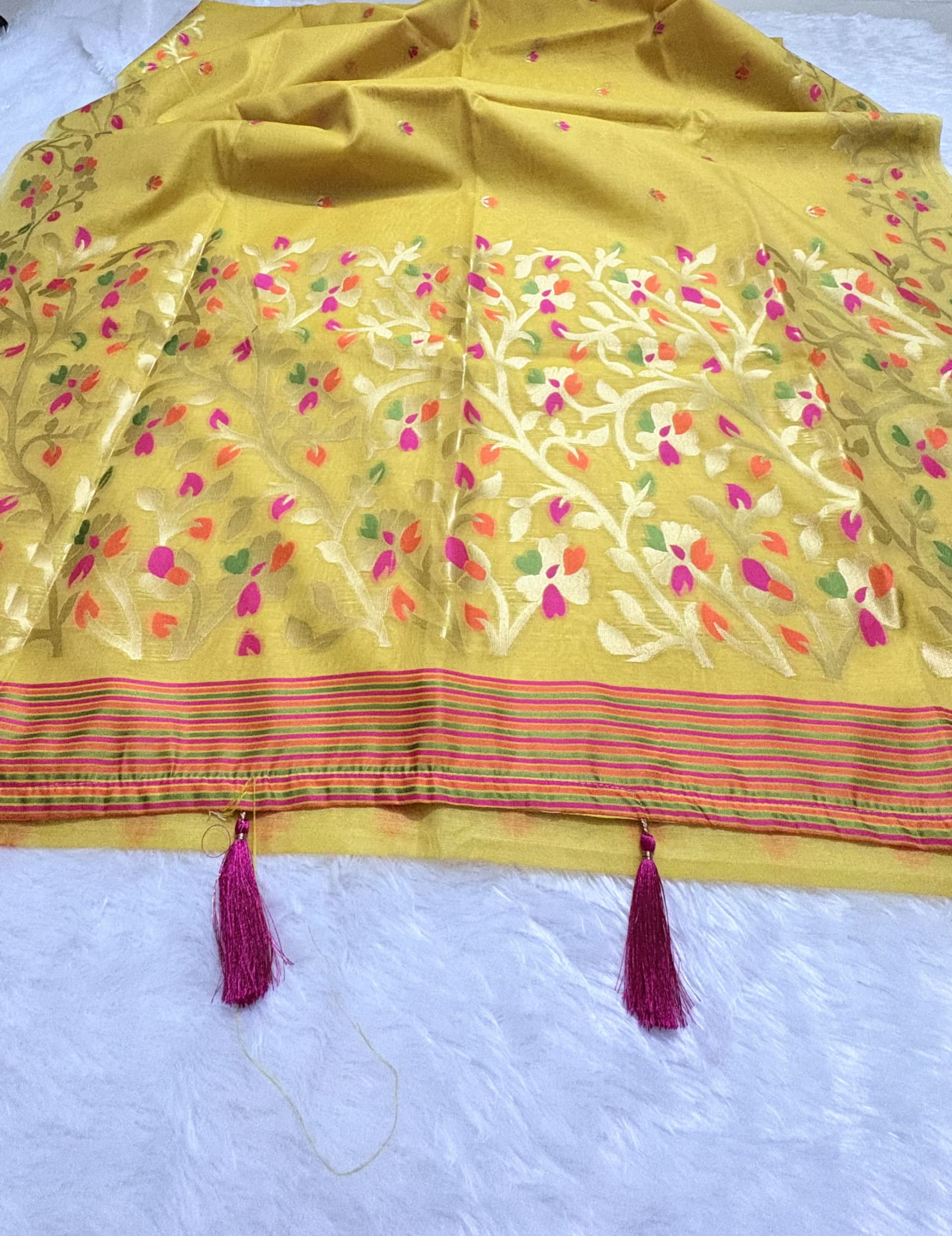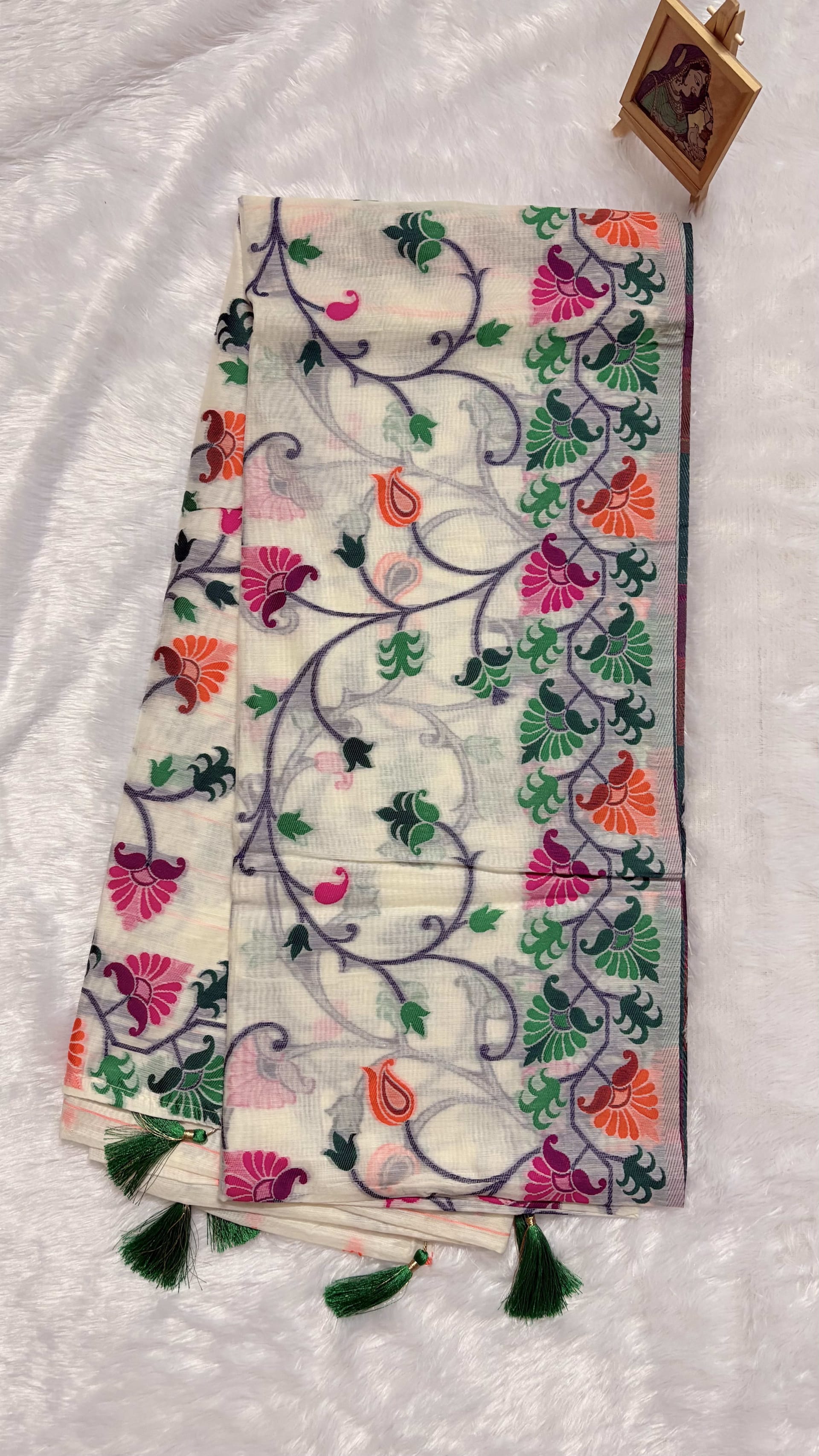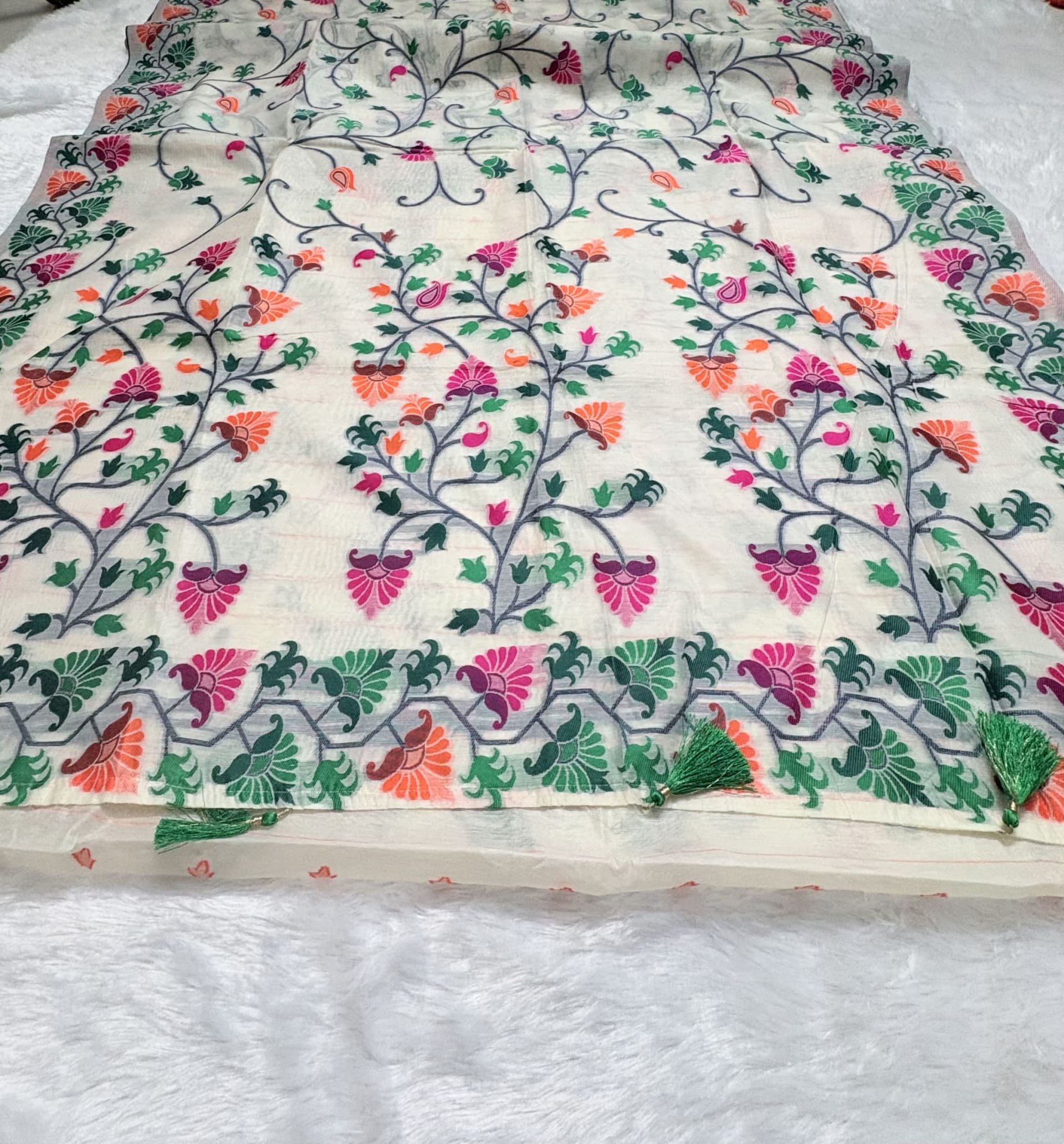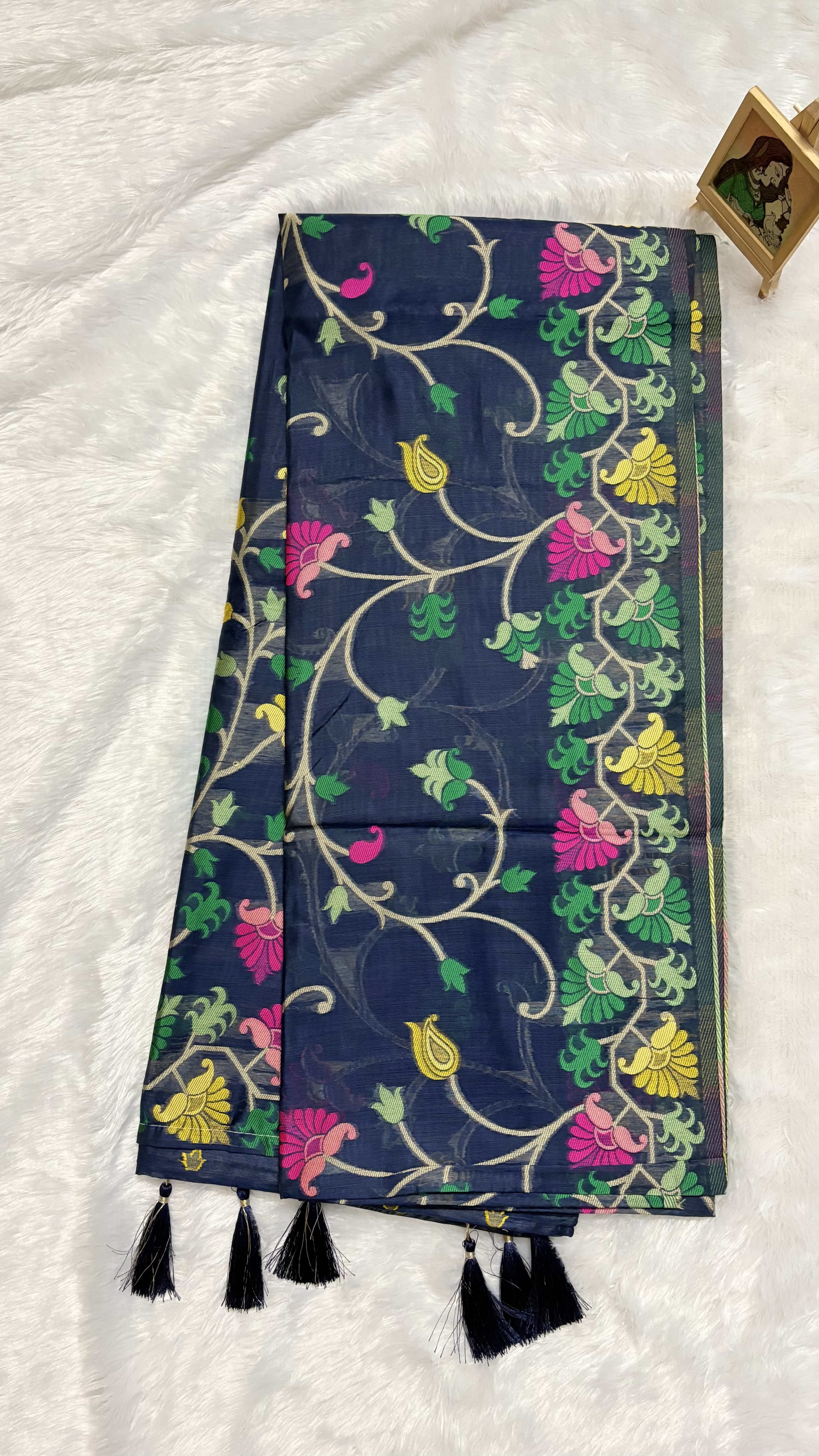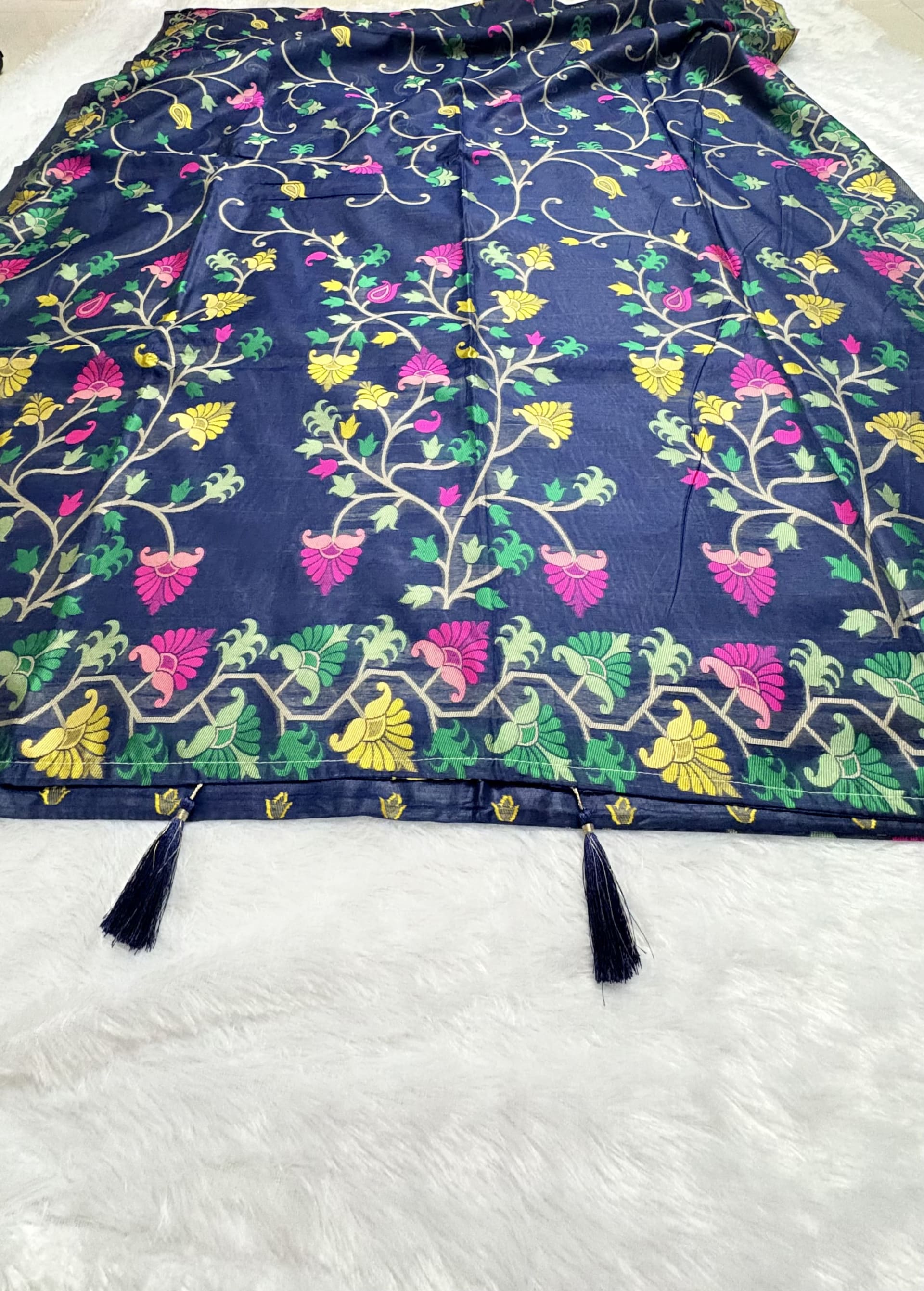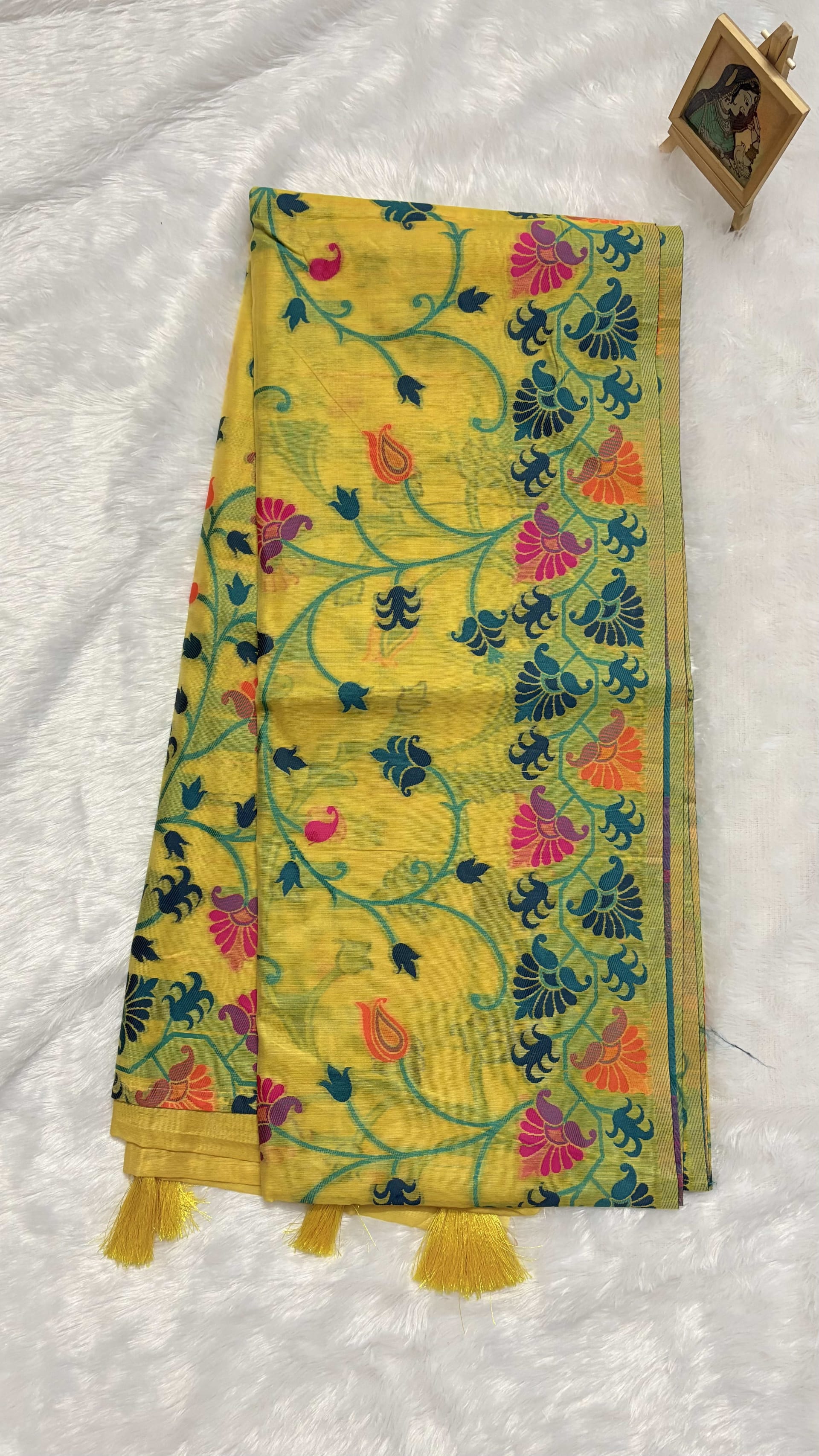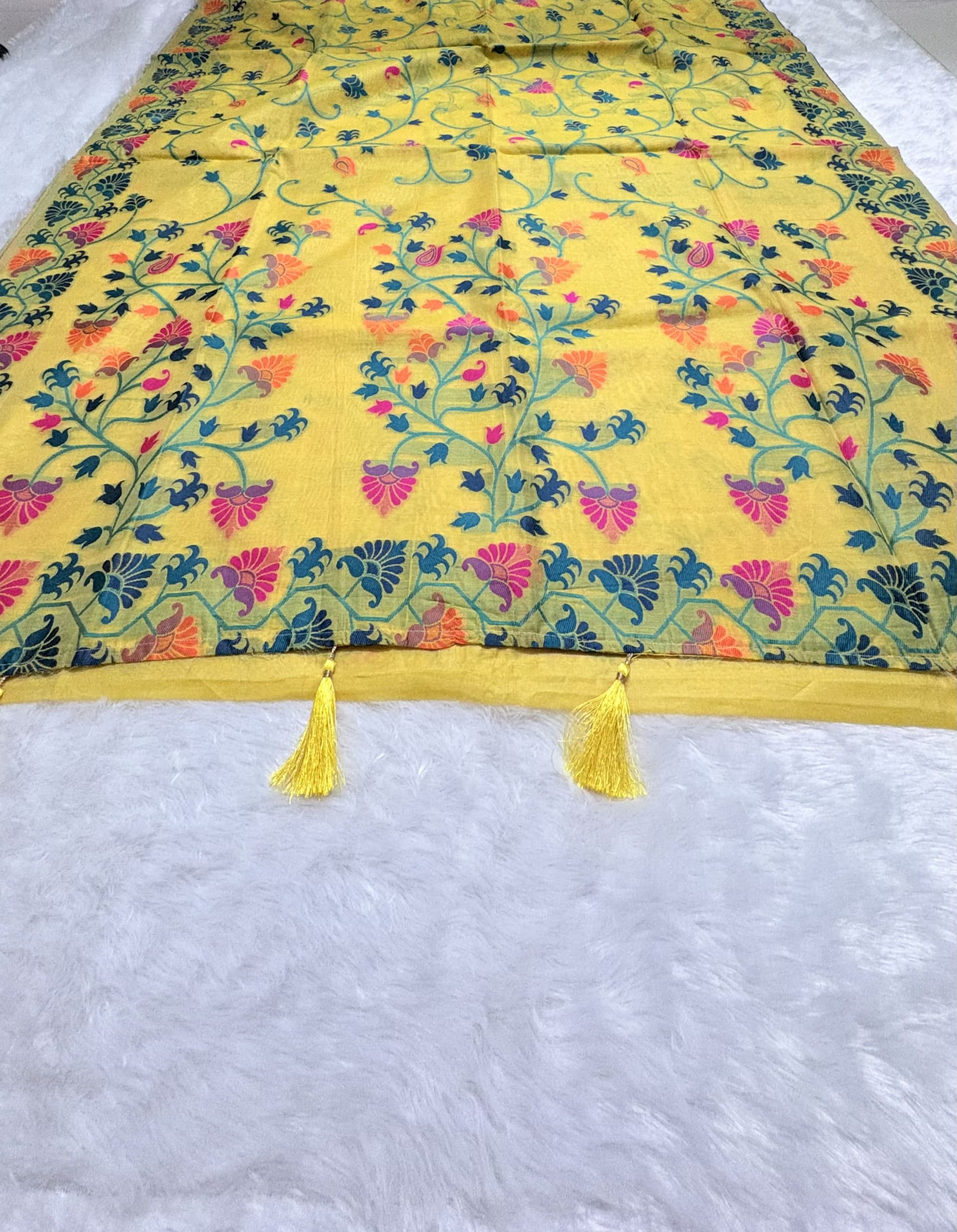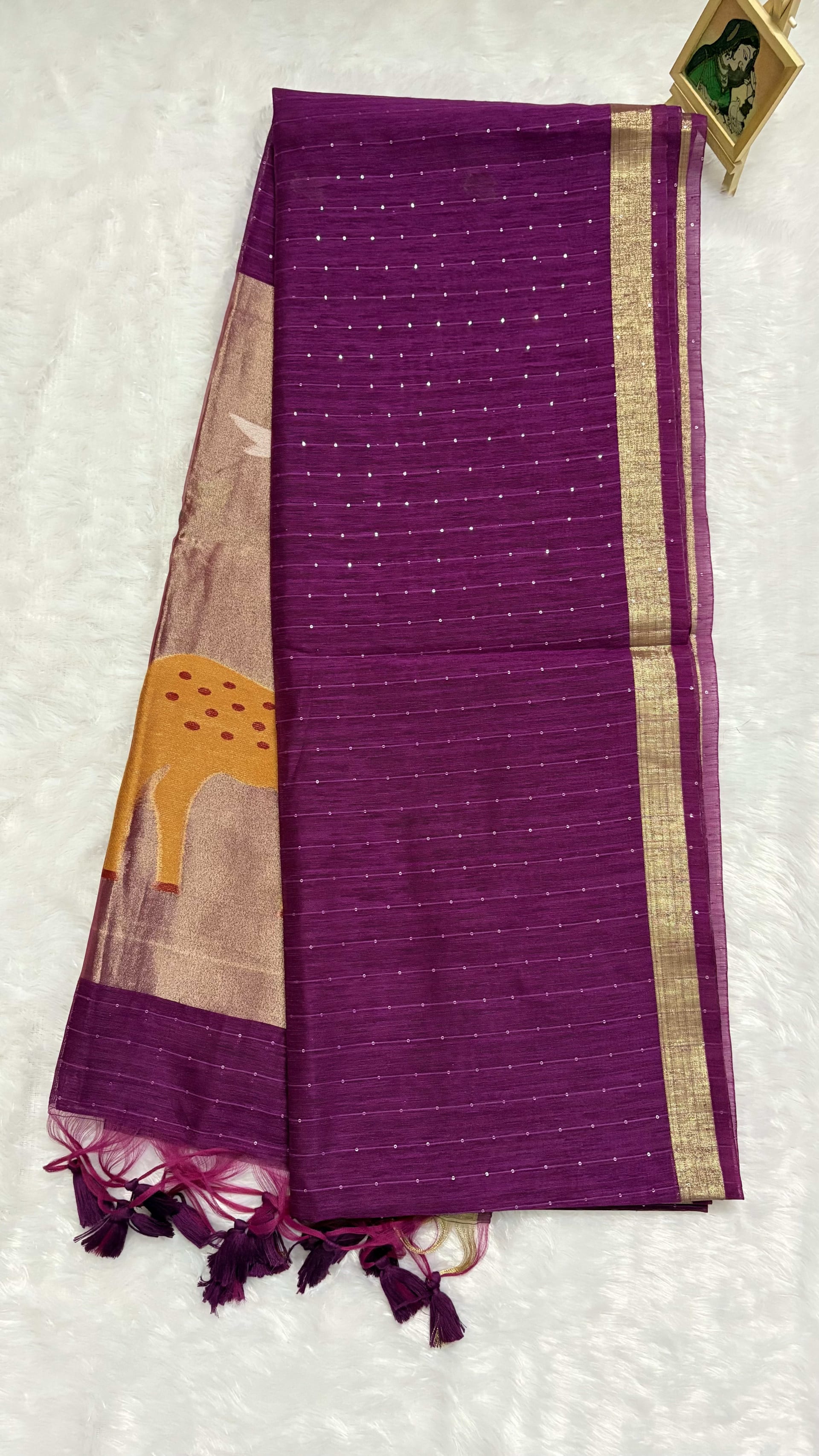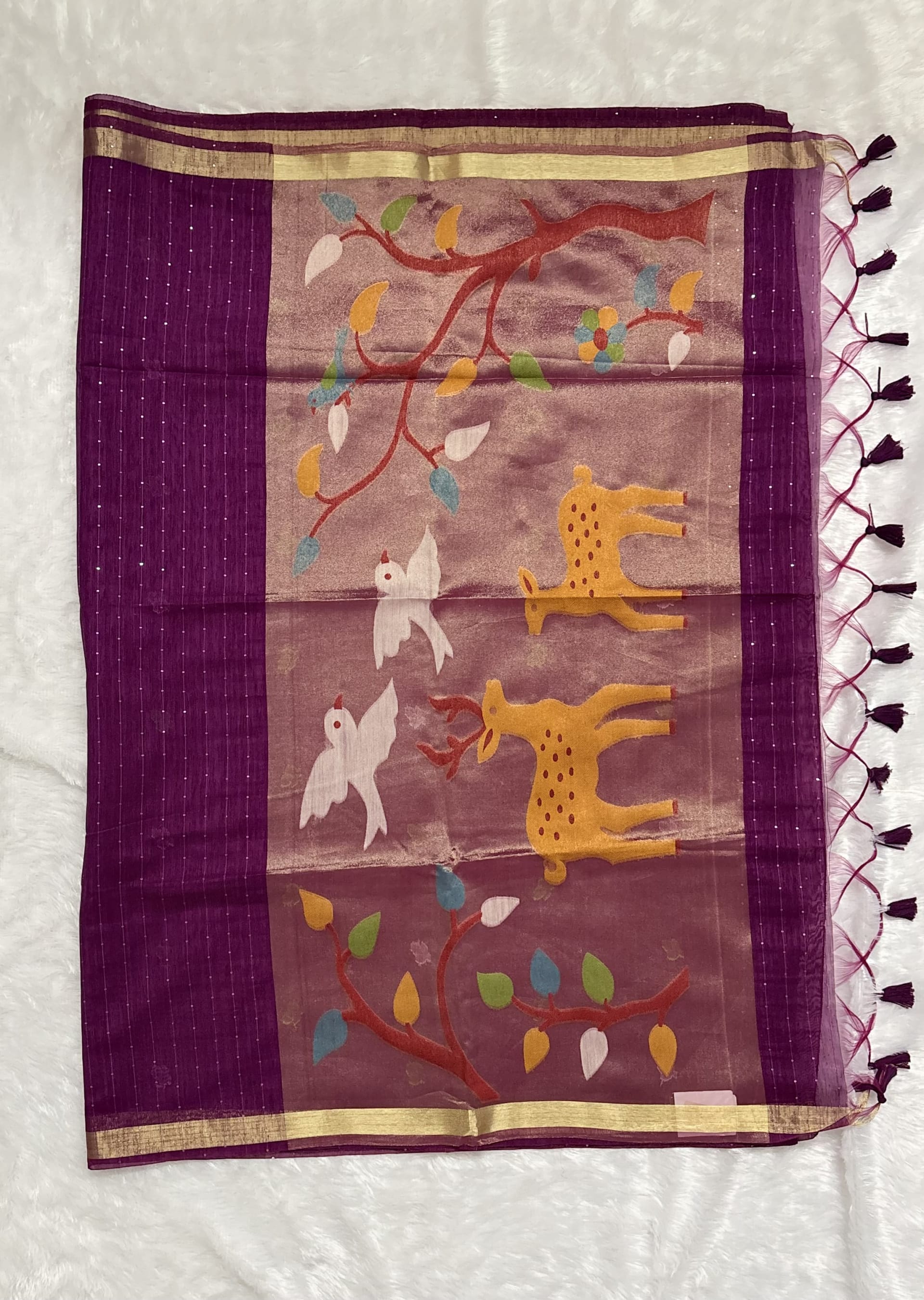
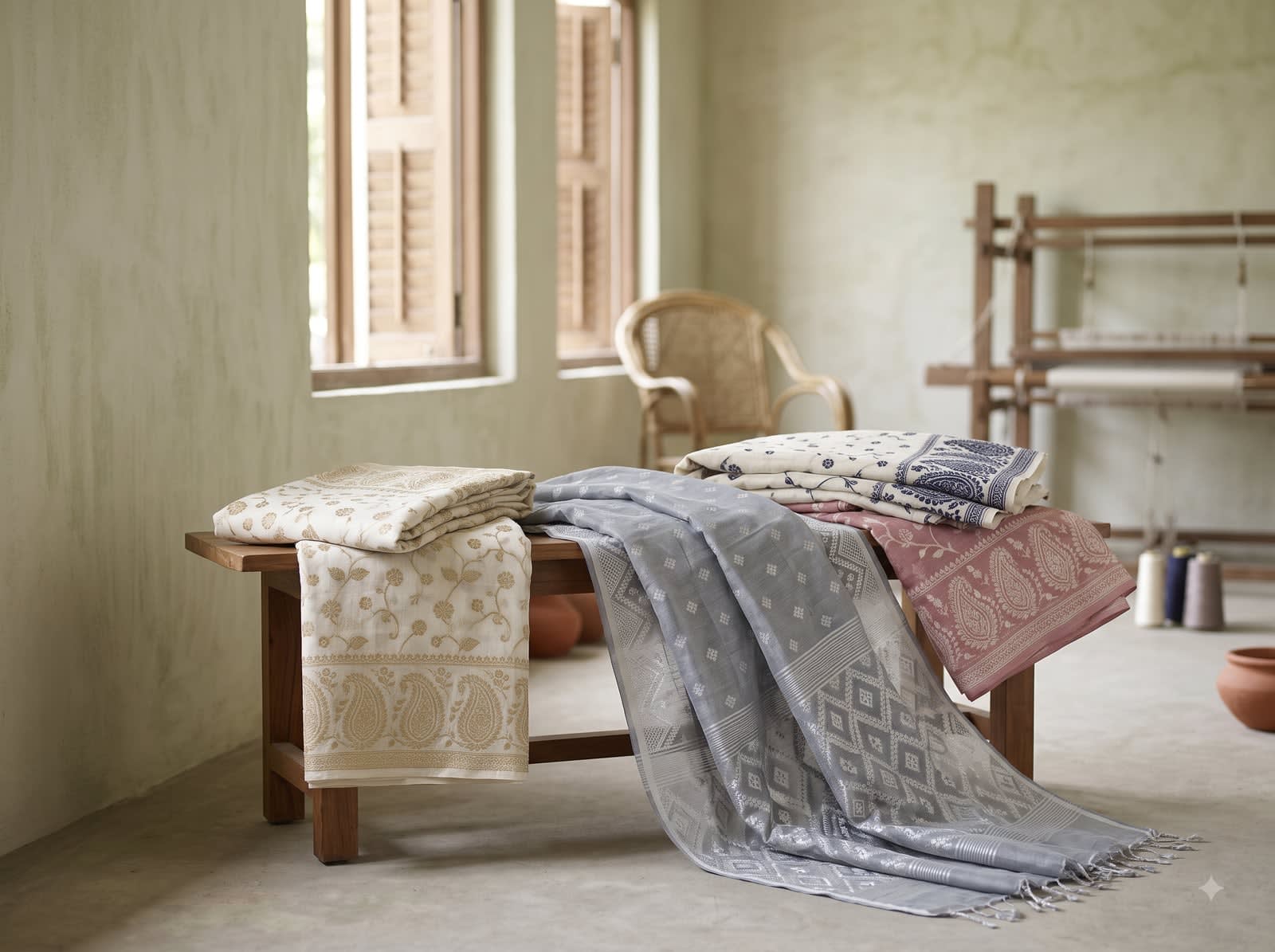
Three cloths, one technique
Jamdani is a Bengali weave. Its historic home is the Dhaka region: the villages of Sonargaon, Rupganj, Siddhirganj and Demra, along the Shitalakshya river in what is now Narayanganj district, Bangladesh. The cloth was originally called Dhakai, after the city. Jamdani is a Persian word and came into use under the Mughals, whose court language was Persian. By the reigns of Akbar or Jahangir, the figured, flowered muslin of Dhaka was known by that name.
UNESCO inscribed the traditional art of Jamdani weaving on the Representative List of the Intangible Cultural Heritage of Humanity in 2013, on a nomination from Bangladesh. In 2016 Bangladesh registered Jamdani Sari as a Geographical Indication, the first GI it ever granted to any of its own products.
India's claim on the weave is real, and it is a different claim. Partition in 1947, and further movement between 1965 and 1971, brought weaving families across to West Bengal, notably from the Basak community. They settled in Nadia district, around Shantipur and Phulia, and in Purba Bardhaman, around Kalna, Dhatrigram and Samudragarh, carrying the technique with them. Bengal jamdani is a genuine continuation of the Dhaka tradition rather than an imitation of it. It is also a distinct product, woven on the other side of a border.
India has no Geographical Indication registered simply as "Jamdani". It has Uppada Jamdani Saree, registered in March 2009, which applies the jamdani technique to silk in Uppada and Tatiparthi in Kakinada district, Andhra Pradesh, where around three thousand looms work. And it has Tangail Saree of Bengal, registered on 2 January 2024 and covering Nadia and Purba Bardhaman, which uses jamdani extra-weft work and which provoked a public dispute with Bangladesh over whose heritage the Tangail name describes.
So there are three cloths here. Dhakai jamdani, Bengal jamdani and Uppada jamdani, one technique practised in three places. Sellers blur them constantly, and a listing that says only jamdani has told you almost nothing.
Two people, one loom, and where the months go
Everything that makes a jamdani expensive happens on the loom. It is woven. It is not embroidery, not print, and not a machine-figured imitation of either.
The ground is fine cotton, historically the Dhaka muslins, and sometimes silk or a silk-cotton mix. The loom is a pit loom, and there are generally two people at it, sitting side by side: a master weaver and an assistant or apprentice, working in coordination through every pick.
No jacquard head. No dobby, no punch cards. The design is drawn out on graph paper and placed underneath the warp, and the weavers read it off and count threads as they go. Nothing is ever sketched onto the cloth.
The technique is discontinuous supplementary weft. Alongside the ordinary structural weft that holds the warp together, extra threads are introduced purely to make the pattern. Each comes off its own small spool, and the weaver lifts it into the warp by hand, traditionally with a fine bamboo stick or a needle, thread by thread, only across the width of the motif. The shuttle passes, the reed beats, and the row is locked in. A motif is built up a few picks at a time, row by row, for as long as it takes.
Discontinuous is the load-bearing word there. The extra weft does not travel from one motif to the next behind the cloth. It starts at the motif and stops at the motif. That is why the ground stays sheer and open in between, why nothing needs cutting off the back, and why the pattern reads on both faces of the fabric.
Then the arithmetic. A jamdani saree commonly takes one to six months on the loom depending on the density of the design, with two weavers working long days, and the most intricate pieces take considerably longer. Uppada, weaving the same technique in silk, is documented at ten to sixty days with two or three weavers putting in about ten hours a day.
Three levers set how long any given piece takes, and therefore what it costs, because a jamdani is priced almost entirely in loom-hours.
Motif density. Widely scattered butis on a plain body with a worked pallu is a completely different quantity of human labour from an all-over jaal, where the motifs cover the whole field. Every motif on both was inserted by hand, thread by thread. When two jamdanis look broadly similar and one costs several times the other, count the motifs.
Yarn count. The finer the ground yarn, the more threads per inch, the slower the weaving, the greater the skill required, and the more fragile the warp is while it is on the loom. The sheerest jamdani is difficult even to weave without breakage, and that difficulty is priced in.
Colours in the supplementary weft. Each additional colour is another set of spools handled by hand through the same rows. Two colours to five is not a small increment.
Materials sit on top of all three. Cotton jamdani and silk jamdani start from very different floors, and where real zari is used as the extra weft, as at Uppada with silver zari, the material cost alone rises sharply before any labour is counted. Origin does the same: genuine Bangladeshi Dhakai reaching Indian buyers carries import cost and scarcity on top of the weaving.
The sanity check is crude and it works. Two weavers spend weeks or months on one saree. If a densely patterned "jamdani" is priced close to a plain handloom cotton, nobody was paid for that time, and a machine almost certainly made the pattern.
The back of the cloth settles it
Handwoven jamdani, powerloom jamdani and printed jamdani all sit in Indian shops under the same word. The reverse of the fabric settles it in about ten seconds.
Look at the ends of the motifs on the back. On a handwoven jamdani the supplementary weft reaches the edge of the motif and turns back, so you see small loops or U-turns at the extremities, and short loose ends left uncut where a thread was finished off. On the machine imitation those ends are trimmed flush, which is why the trade calls fake jamdani "cutwork".
Run a fingertip across the reverse. Woven motifs stand slightly proud and you can feel them as low ridges. A printed jamdani is flat and smooth on both faces, and no amount of clever photography changes that.
Check both sides of the motif. The pattern is woven into the structure, so a genuine jamdani motif reads on the back as well as the front. On a print the front is strong and the back is pale.
Look at the ground between the motifs. Real jamdani stays sheer and open in the plain areas because nothing is floating behind them. Hold it up to the light. If you can see threads running across the empty ground from one motif to the next, it is a different weave.
Look for stepped edges and slight drift. The design is built on a thread grid, so curves resolve into small angular steps, and across a full width the motifs vary a little in size and spacing. Perfectly identical, perfectly spaced motifs mean a machine set them out.
Then there is the word Dhakai, which deserves its own warning. In India it is used loosely as a style name rather than an origin. Genuine Dhakai jamdani is woven in Bangladesh, and a great deal of what is sold as Dhakai here is Bengal jamdani from Nadia or Purba Bardhaman. That is good cloth with a real lineage. Ask where the piece was actually woven, and treat a vague answer as an answer.
Never wring it
A jamdani is fine cloth whose supplementary weft threads are anchored only by the light structure around them. Everything here follows from that.
Never wring it. Twisting pulls those threads out of position and is the commonest way people damage a jamdani. Press the water out between the folds of a dry towel.
Wash cotton jamdani by hand, alone, cold water, mild detergent, for the first several washes at least. No bleach, no brush, no scrubbing over the motifs. Silk jamdani and anything carrying real zari goes to the dry-cleaner, who should be told what it is.
Dry it in the shade: sunlight fades the colours and weakens fine cotton over time. Use a wide line or dry it flat, since a thin one leaves a hard crease down the middle.
Starch lightly or not at all. Heavy starch makes fine cotton brittle and it cracks along the folds.
Iron on the reverse, low to medium heat, with the cloth very slightly damp and a thin cloth laid over the motifs.